
At its core, a concrete batching plant is a specialized factory designed to produce high-quality concrete by precisely combining various ingredients. Its function is to automate the entire process of measuring raw materials—like aggregates, sand, cement, and water—and then mixing them to create a perfectly uniform concrete mixture ready for transport and use in construction.
The true function of a concrete batching plant is not merely to mix ingredients, but to operate as a high-precision manufacturing system. It guarantees consistency, quality, and speed at a scale that is impossible to achieve with manual methods.
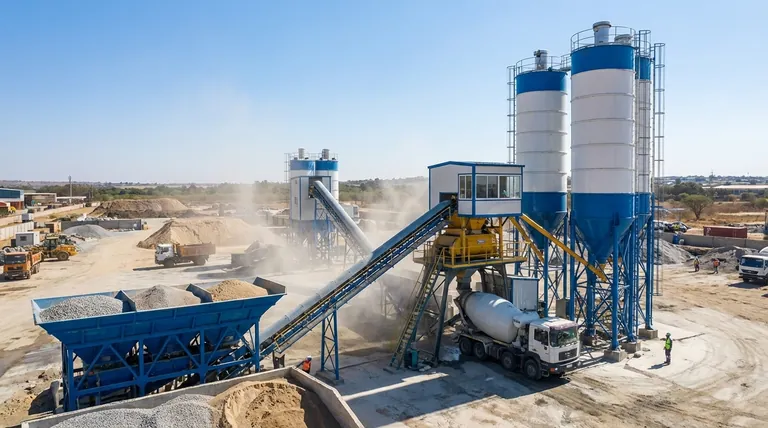
How a Batching Plant Ensures Concrete Quality
A common misconception is that a batching plant is just a large mixer. In reality, its primary value lies in the precise, automated weighing and transfer of materials before they are mixed. This process is known as batching.
The Flow of Aggregates
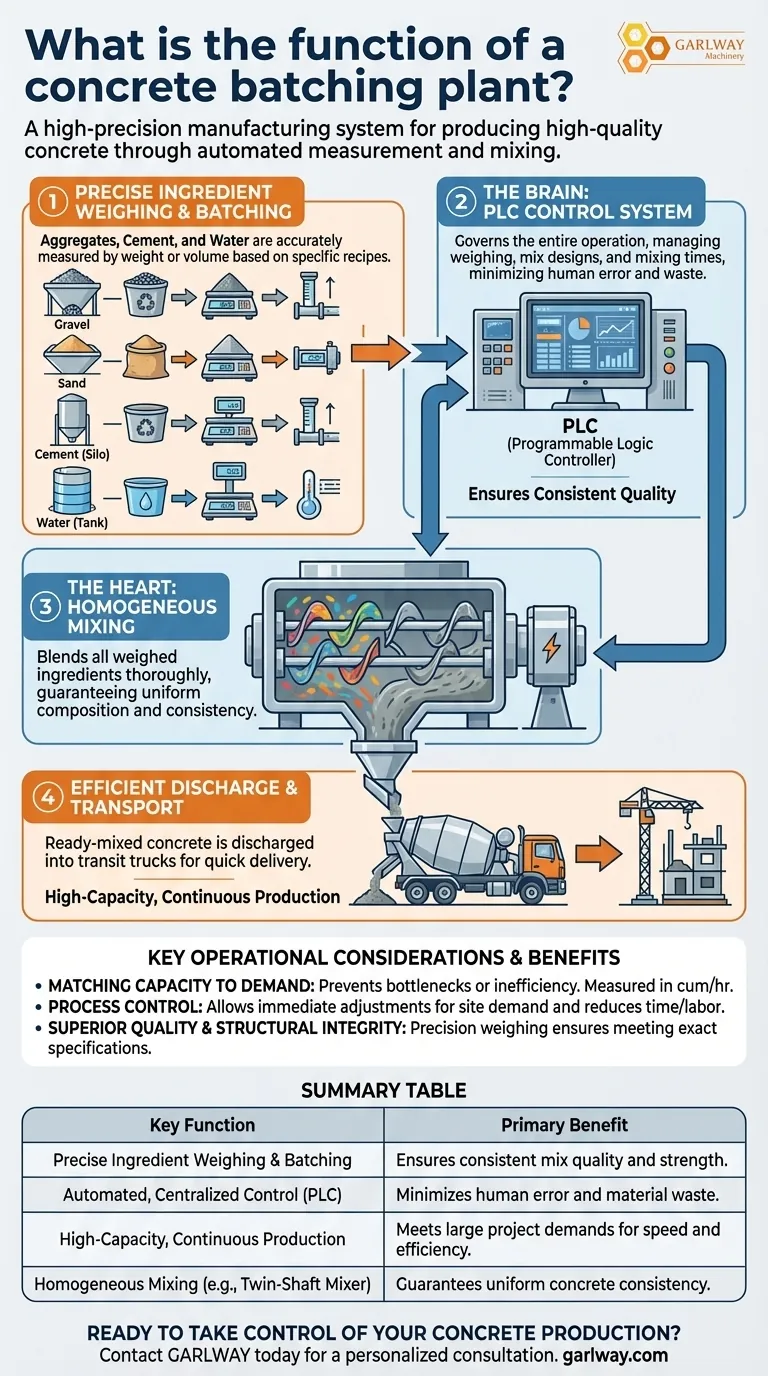
The process begins with aggregates like gravel and sand being fed into separate storage bins or hoppers. This segregation is critical for controlling the recipe.
Each aggregate is weighed precisely according to the specific concrete design mix loaded into the system. Once weighed, a conveyor system transfers the materials to the central mixing unit.
The Precision of Binders and Water
Cement is stored in a dedicated silo to protect it from moisture and is weighed separately using its own weigh conveyor. This ensures the most critical component is measured accurately.
Water is added via a metered system that measures the exact volume required. This automation maintains the crucial water-to-cement ratio, which is a primary determinant of the final concrete's strength and durability.
The Brain of the Operation: The Control System
The entire operation is governed by a central control panel, often equipped with a PLC (Programmable Logic Controller). This system acts as the plant's brain.
It manages the weighing of every ingredient, saves and retrieves specific mix design recipes, and controls the mixing time. This level of control minimizes human error and material wastage, directly contributing to consistent output.
The Heart of the Plant: The Mixer
Once all the weighed ingredients are in the mixing unit, the mixer's job is to create a completely homogeneous mixture.
Modern plants often use a powerful twin-shaft mixer that blends the materials thoroughly, ensuring every part of the batch has the same composition and consistency. After the programmed mixing time is complete, the fresh concrete is discharged directly into a transit mixer truck.
Key Operational Considerations
Understanding the function of a batching plant also requires understanding the operational factors that make it effective for a given project. The goal is to align the plant's capabilities with the construction demands.
Matching Capacity to Project Demand
The productivity of a batching plant is measured in cubic meters per hour (cum/hr). It is essential that the plant's rated capacity exceeds the project's peak concrete requirement.
Choosing an undersized plant can create bottlenecks and delays, while an oversized one leads to unnecessary capital expenditure and operational inefficiency.
The Value of Process Control
The automated system provides a level of process control that is simply unattainable manually. It allows for immediate adjustments to production volume based on site demand.
This control ensures that high-quality, perfectly mixed concrete is produced and delivered quickly, reducing both the time and labor required for a project.
Making the Right Choice for Your Goal
Ultimately, the function of a concrete batching plant is to provide control over the most fundamental material in modern construction.
- If your primary focus is project efficiency and speed: The plant's ability to produce large, continuous volumes of concrete on demand is its greatest asset.
- If your primary focus is structural integrity and quality: The system's precision in weighing every component ensures that each batch meets exact engineering specifications.
A concrete batching plant transforms concrete production from a variable construction task into a reliable manufacturing process.
Summary Table:
| Key Function | Primary Benefit |
|---|---|
| Precise Ingredient Weighing & Batching | Ensures consistent mix quality and strength |
| Automated, Centralized Control (PLC) | Minimizes human error and material waste |
| High-Capacity, Continuous Production | Meets large project demands for speed and efficiency |
| Homogeneous Mixing (e.g., Twin-Shaft Mixer) | Guarantees uniform concrete consistency |
Ready to take control of your concrete production?
A GARLWAY concrete batching plant is more than just equipment; it's a strategic investment in the success of your construction projects. We specialize in providing robust and reliable machinery—including winches, concrete mixers, and batching plants—to construction companies and contractors worldwide.
Let us help you achieve superior quality, efficiency, and cost-effectiveness. Contact GARLWAY today for a personalized consultation and discover the perfect solution for your needs.
Visual Guide
Related Products
- HZS120 Ready Mix Concrete Batching Plant Commercial Mud Cement Mixer
- HZS35 Small Cement Concrete Mixing Batch Plant
- HZS75 Concrete Batching Plant Cement Mixer Price Concrete Mixer Bunnings Mixing Plant
- HZS180 Ready Mix Concrete Plant for Foundations with Sand and Cement
- Commercial Electric Concrete Mixer Machine HZS 50 Small Batch Plant for Sale
People Also Ask
- What is a ready mix concrete batching plant? The Engine of Modern Construction
- What is the name of the machine used in ready mix? Unpacking the Complete Concrete System
- What is the core component of a concrete batching plant? The Mixer Unit Defines Your Concrete Quality
- What are the types of concrete mixers used in batching plants? Choose the Right Mixer for Your Project
- What are the advantages and disadvantages of concrete batching plants? Maximize Quality & Efficiency





