
In short, a winch's line pull rating is the maximum weight it is certified to pull with a single line on the very first layer of rope spooled around the drum. This rating is the single most important factor in determining if a winch is strong enough for your vehicle and is crucial for safe and effective recovery operations.
The key is to understand that the advertised rating is a best-case scenario. Your winch's actual pulling power decreases with every additional layer of rope on the drum, a critical detail for real-world recovery.
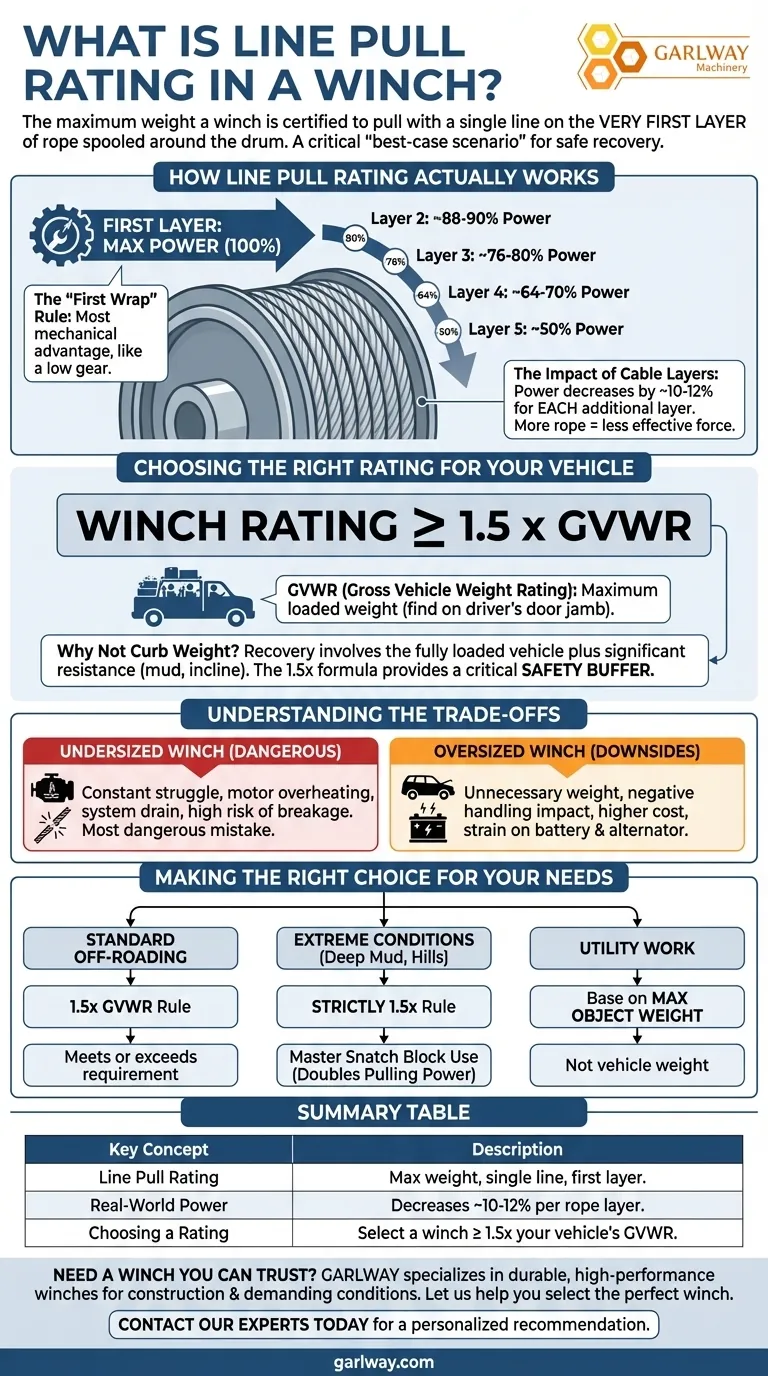
How Line Pull Rating Actually Works
A winch's power is not constant. The advertised number on the box is a starting point, but its true capability changes based on how much cable is spooled out.
The "First Wrap" Rule
The maximum rated pull is only achievable on the first layer of winch rope wrapped around the drum. This is when the winch motor has the most mechanical advantage, similar to using a low gear on a bicycle.
The Impact of Cable Layers
For each additional layer of rope spooled onto the drum, the effective pulling power can decrease by about 10-12%.
As the diameter of the spooled rope increases, the motor has to work harder to turn the drum, reducing its effective pulling force. A winch with five layers of rope on the drum may only have about half of its rated pulling power.
Why This Matters in the Real World
In many recovery situations, you may only be able to unspool a short length of cable. If your winch is loaded with rope, you will be pulling on an outer layer, giving you significantly less power than the rating suggests.
Choosing the Right Rating for Your Vehicle
Selecting the correct line pull rating isn't about matching the winch to your vehicle's curb weight; it's about preparing for the resistance of being stuck.
The 1.5x GVWR Formula
The industry-standard recommendation is to choose a winch with a line pull rating of at least 1.5 times your vehicle's Gross Vehicle Weight Rating (GVWR).
The GVWR is the maximum loaded weight of your vehicle, including passengers, fuel, and cargo. You can find this number on the sticker inside your driver's side door jamb.
Why Not Just Use Curb Weight?
Your vehicle's curb weight is its weight when empty. A recovery situation involves the fully loaded vehicle, plus the significant force required to overcome whatever it's stuck in (like mud, sand, or a steep incline). The 1.5x formula provides a critical safety and performance buffer.
Understanding the Trade-offs
Choosing a winch is a balancing act. Going too big or too small both come with significant downsides.
The Danger of an Undersized Winch
An underrated winch will constantly struggle. This leads to the motor overheating, a massive drain on your electrical system, and an increased risk of breaking the winch line or other components. It is the most dangerous mistake you can make.
The Downsides of an Oversized Winch
While it seems safer, a winch that is too large adds unnecessary weight to the front of your vehicle, which can negatively affect suspension and handling. It also costs more and puts a greater strain on your vehicle's battery and alternator.
Making the Right Choice for Your Needs
Use your vehicle's GVWR and intended use as your guide to select a winch that is both safe and effective.
- If your primary focus is standard off-roading: Multiply your vehicle's GVWR by 1.5 and choose the winch rating that meets or exceeds that number.
- If you frequently face extreme conditions like deep mud or steep hills: Adhere strictly to the 1.5x rule and master the use of a snatch block, which can nearly double your winch's pulling power.
- If you primarily use your winch for utility work: You can base your choice on the maximum weight of the objects you intend to pull, rather than your vehicle's weight.
Choosing the right winch ensures you have the power you need when it matters most.
Summary Table:
| Key Concept | Description |
|---|---|
| Line Pull Rating | The maximum weight a winch can pull with a single line on the first layer of rope. |
| Real-World Power | Pulling power decreases by ~10-12% for each additional layer of rope on the drum. |
| Choosing a Rating | Select a winch with a rating of at least 1.5x your vehicle's GVWR. |
Need a winch you can trust for your toughest recoveries?
GARLWAY specializes in durable, high-performance construction machinery, including powerful winches designed for demanding conditions. Our winches provide reliable pulling power for construction companies, contractors, and serious off-roaders globally.
Let us help you select the perfect winch for your vehicle and applications. Contact our experts today for a personalized recommendation and ensure your next recovery is a success.
Visual Guide
Related Products
- Small Electric Winch 120V and 240V for Compact Applications
- Best 18000 Pound Drum Anchor Trailer Winch
- 12000 lb Heavy Duty Electric Boat Winch
- 12000 lb Electric Boat Trailer Winch with Windlass Anchor Warn
- Electric 120V Boat Winch by Badlands
People Also Ask
- What makes electric winches suitable for off-road use? Key Features for Reliable Vehicle Recovery
- What are the common applications of electric winches? Power Your Lifting & Pulling Tasks
- What are the common uses of an electric winch? A Guide to Safe and Efficient Heavy Lifting
- What are the uses of electric winches in mining and tunneling? Enhance Safety and Efficiency Underground
- How do electric winches contribute to energy savings? Maximize Efficiency and Lower Costs


