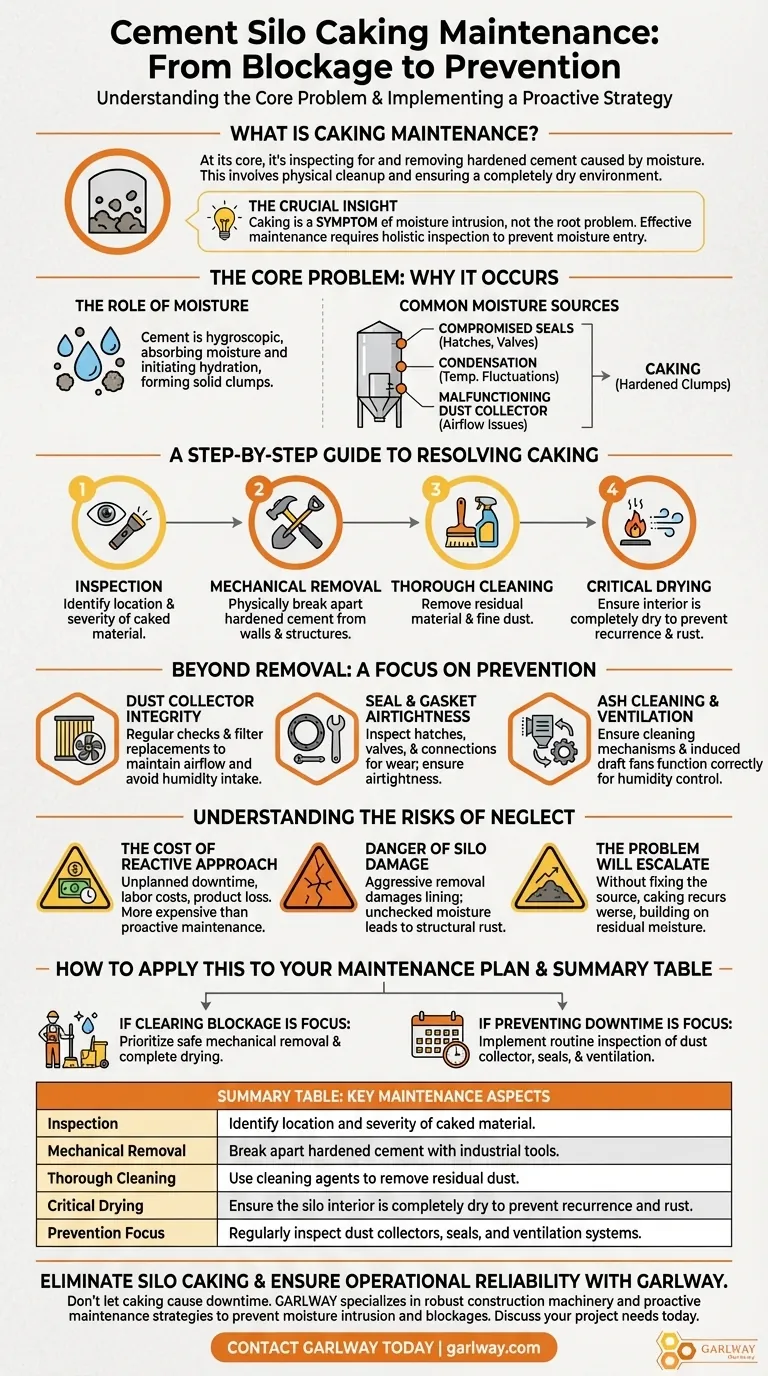
At its core, caking maintenance in a cement silo is the process of inspecting for and removing hardened cement caused by moisture. This involves physically breaking up the caked material, thoroughly cleaning the silo's interior, and ensuring the environment is completely dry to prevent recurrence and corrosion.
The crucial insight is that caking is not the root problem, but a symptom of moisture intrusion. Therefore, effective maintenance must go beyond simply removing clumps and focus on a holistic inspection of the entire silo system to prevent moisture from entering in the first place.
The Core Problem: Why Cement Caking Occurs
Cement caking is a chemical process initiated by a single culprit: moisture. Understanding how and why moisture gets into your silo is the first step toward preventing the issue.
The Role of Moisture
Cement is hygroscopic, meaning it readily absorbs moisture from the air. When cement powder is exposed to water or high humidity, it begins the hydration process, hardening into solid clumps known as "caking."
Common Moisture Sources
This unwanted moisture typically enters the silo through compromised seals, condensation due to temperature fluctuations, or a malfunctioning dust collection system that fails to manage airflow and humidity properly.
A Step-by-Step Guide to Resolving Caking
When caking is discovered, a methodical approach is required to resolve the immediate blockage and clean the silo for continued operation.
Step 1: Inspection
The process begins with a thorough internal inspection to identify the location and severity of the caked material. This helps determine the right tools and approach for removal.
Step 2: Mechanical Removal
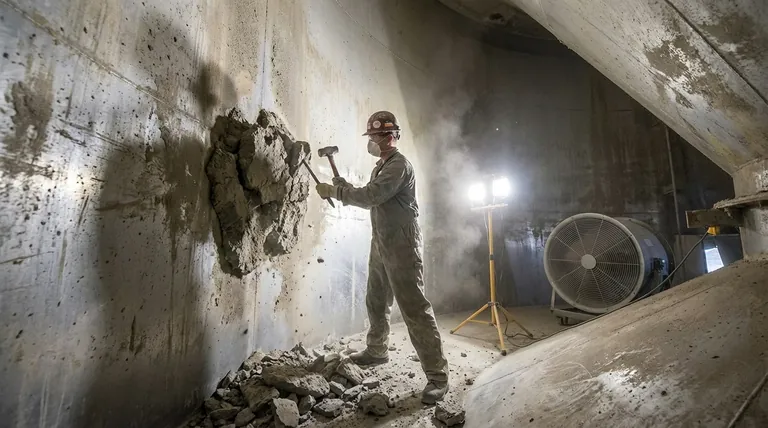
Hardened cement must be physically removed. This is often done using manual tools like industrial hammers or shovels to break apart the caked sections from the silo walls and interior structures.
Step 3: Thorough Cleaning
After the large clumps are removed, the silo's interior should be cleaned with an appropriate cleaning agent. This step removes any residual material and fine dust that could trap moisture.
Step 4: Critical Drying
Finally, it is absolutely essential to ensure the silo's interior is completely dry. Any remaining moisture will not only lead to new caking but can also cause rust and corrosion, compromising the structural integrity of the silo itself.
Beyond Removal: A Focus on Prevention
Simply removing caked cement is a temporary fix. A long-term strategy involves maintaining the systems designed to keep moisture out. This preventative approach is far more effective and less costly.
Dust Collector Integrity
The dust collector is a critical component. A clogged or malfunctioning filter can disrupt airflow, leading to pressure changes that draw humid ambient air into the silo. Regular checks and filter replacements are vital.
Seal and Gasket Airtightness
Every hatch, valve, and connection point is a potential point of failure. Regularly inspect all seals and gaskets for wear and tear, ensuring the silo remains completely airtight.
Ash Cleaning and Ventilation Systems
Ensure any internal ash cleaning mechanisms are functioning correctly to prevent buildup that can trap moisture. Likewise, check that components like induced draft fans are operating as designed to maintain proper ventilation and humidity control.
Understanding the Risks of Neglect
Ignoring the root causes of caking creates significant operational and financial risks that extend beyond a simple blockage.
The Cost of a Reactive Approach
Continuously reacting to caking events leads to unplanned downtime, labor costs for removal, and potential loss of valuable product. It is always more expensive than proactive, preventative maintenance.
Danger of Silo Damage
Aggressive mechanical removal using heavy tools can damage the silo's interior lining or even its structure over time. Furthermore, unchecked moisture leads to internal rust, which weakens the steel and can contaminate your stored cement.
The Problem Will Escalate
If the source of moisture intrusion is not identified and fixed, caking will inevitably recur. Each incident can become progressively worse as residual moisture and hardened material provide a foundation for new formations.
How to Apply This to Your Maintenance Plan
Your strategy should be dictated by your immediate operational status and long-term reliability goals.
- If your primary focus is clearing an existing blockage: Prioritize the safe and thorough mechanical removal of the caked cement, followed by a complete drying of the silo's interior.
- If your primary focus is preventing future downtime: Implement a routine inspection schedule for the dust collector, all seals, and ventilation components to eliminate moisture sources before they cause a problem.
Ultimately, shifting your mindset from reactive removal to proactive system maintenance is the key to guaranteeing the long-term reliability of your cement silo.
Summary Table:
| Key Maintenance Aspect | Critical Action |
|---|---|
| Inspection | Identify location and severity of caked material. |
| Mechanical Removal | Break apart hardened cement with industrial tools. |
| Thorough Cleaning | Use cleaning agents to remove residual dust. |
| Critical Drying | Ensure the silo interior is completely dry to prevent recurrence and rust. |
| Prevention Focus | Regularly inspect dust collectors, seals, and ventilation systems. |
Eliminate silo caking and ensure operational reliability with GARLWAY.
Don't let cement caking cause unplanned downtime and damage your equipment. GARLWAY specializes in providing robust construction machinery, including high-performance concrete batching plants and supporting systems designed for maximum efficiency and minimal maintenance.
Our expertise helps construction companies and contractors globally implement proactive maintenance strategies to prevent moisture intrusion and silo blockages.
Contact GARLWAY today to discuss your project needs and discover how our solutions can enhance your operation's reliability and profitability.
Visual Guide
Related Products
- HZS35 Small Cement Concrete Mixing Batch Plant
- HZS120 Ready Mix Concrete Batching Plant Commercial Mud Cement Mixer
- JW1000 Mobile Cement Mixer Concrete Mixer Truck and Batching Plant
- Portable Cement Mixer with Lift Concrete Machine
- HZS75 Concrete Batching Plant Cement Mixer Price Concrete Mixer Bunnings Mixing Plant
People Also Ask
- Why buy concrete batch plant parts only from the manufacturer? Protect Your Investment and Maximize Uptime
- Why is proper maintenance important for a concrete batch mix plant? Maximize Uptime & Profitability
- What is the advantage of a mobile concrete batching plant? Achieve On-Site Production & Total Control
- What are the advantages and disadvantages of concrete batching plants? Maximize Quality & Efficiency
- What are the two methods of material charging in a concrete mixing station? Single vs. Multiple Charging Explained