
The gypsy is the critical link between your anchor and your boat. It is the specially notched metal wheel on a windlass that engages and grips the anchor chain, allowing the windlass to haul it in or pay it out with mechanical force. Sizing a gypsy is not about its overall dimension, but about ensuring its notches are perfectly calibrated to the specific standard and size of your anchor chain.
The core principle of anchor system safety is that the windlass gypsy and the anchor chain must be an exact match. This match is defined not just by the chain's diameter, but by a specific manufacturing standard (like DIN 766 or ISO 4565) that dictates the precise geometry of each link.
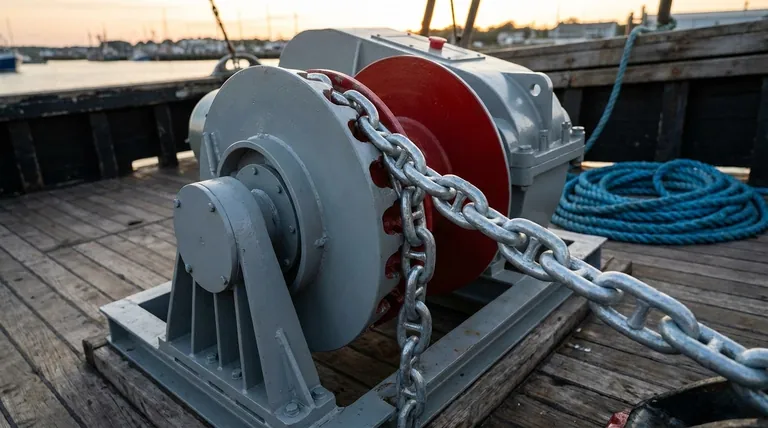
The Role of the Gypsy in an Anchoring System
A windlass is designed to handle immense loads, but it can only do so effectively if it can maintain a secure grip on the anchor rode (the line or chain connecting the anchor to the boat). The gypsy is the component engineered for this specific task.
How a Gypsy Grips the Chain
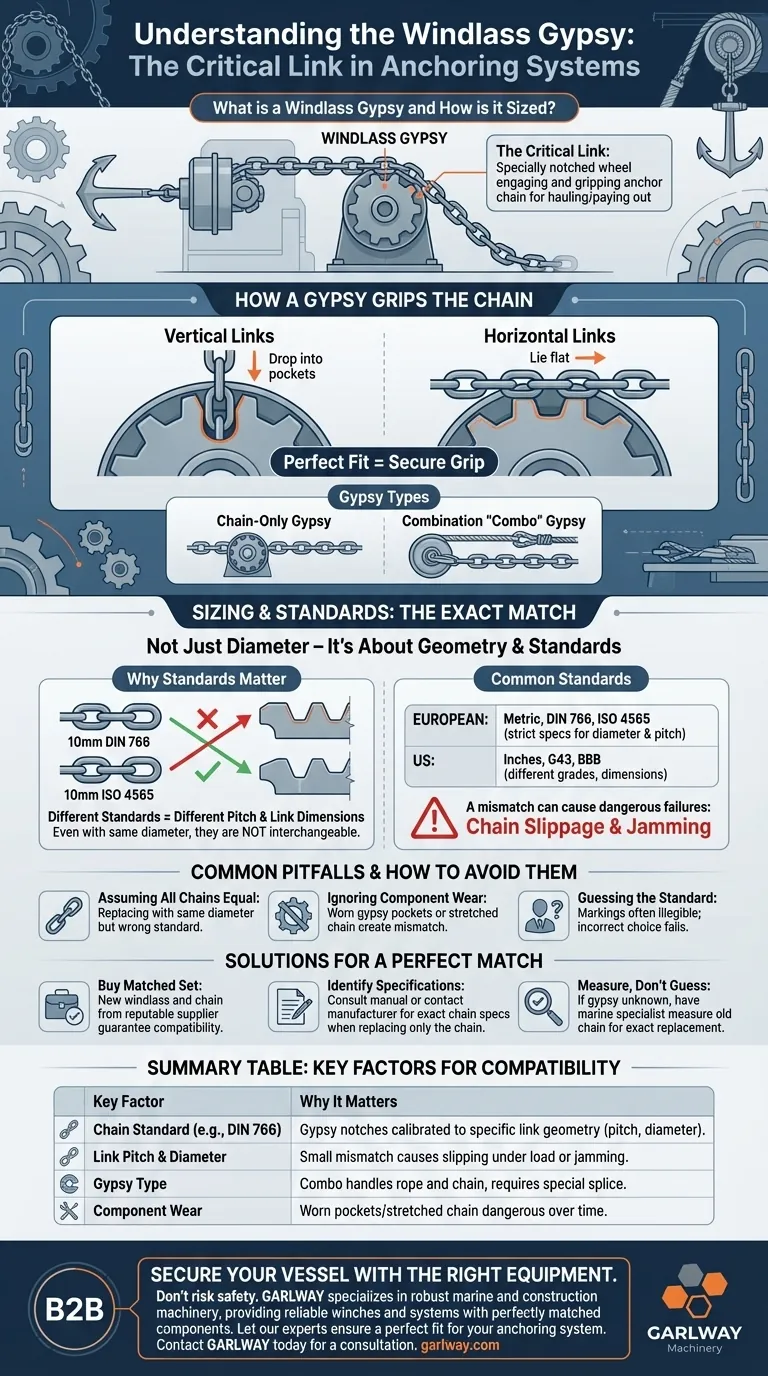
The gypsy features carefully shaped pockets or notches around its circumference. As the chain passes over it, the vertical links drop into these pockets while the horizontal links lie flat across the top. This perfect fit allows the gypsy to grip the chain securely and pull it from the anchor locker without slipping.
Chain-Only vs. Combination Gypsies
Most gypsies are designed exclusively for chain. However, some models, known as combination or "combo" gypsies, have a secondary shape that can also grip rope. These require a special rope-to-chain splice to ensure a smooth transition and are common on smaller vessels.
Why an Exact Size Match is Non-Negotiable
A mismatched gypsy and chain is one of the most common and dangerous failures in an anchoring system. The consequences range from premature wear to a complete loss of anchoring ability during a critical moment.
The Dangers of a Mismatch
If the chain links are too small for the gypsy's pockets, the chain can jump and skip under load. If the links are too large or the wrong shape, the chain will jam in the gypsy, potentially stalling or damaging the windlass motor. Both scenarios can lead to a loss of control when you need it most.
Decoding Chain Standards
Sizing is about matching manufacturing standards. A "10mm" chain from one region is not necessarily the same as a "10mm" chain from another.
- European Standards: These are typically metric and adhere to strict standards like DIN 766 or ISO 4565. These specifications control both the link's wire diameter and its pitch (the internal length of the link).
- US Standards: These are measured in inches (e.g., 3/8") and come in different grades with different link dimensions, such as G43 (High Test) or BBB.
A gypsy designed for 10mm DIN 766 chain will not work properly with 10mm ISO 4565 chain, because the link pitch is different.
Understanding the Trade-offs and Pitfalls
Simply knowing your chain's diameter is not enough. Many boat owners encounter problems by making incorrect assumptions about their equipment, leading to costly and hazardous situations.
Pitfall 1: Assuming All Chains are Equal
The most common mistake is replacing an old chain with a new one of the same diameter but a different standard. Even a millimeter of difference in link pitch can cause consistent jamming or slippage. The gypsy is calibrated to the standard, not just the diameter.
Pitfall 2: Ignoring Component Wear
An older gypsy that has seen heavy use may have worn pockets. Similarly, an old anchor chain can "stretch" slightly over years of strain. This wear can create a mismatch even if the components were originally a perfect pair, leading to new performance issues.
Pitfall 3: Guessing the Standard
If you are replacing a chain and don't know the exact specification for your windlass gypsy, you cannot guess. The markings on the gypsy are often hard to find or worn away. An incorrect choice will fail.
How to Ensure a Perfect Match
Your goal is to create a seamless system where the gypsy and chain function as a single, reliable unit. The correct approach depends on your situation.
- If you are buying a new windlass and chain: Purchase them together as a matched set from a single, reputable supplier. They will guarantee compatibility.
- If you are replacing only the chain: You must identify the exact make, model, and chain specification for your windlass. Consult the manufacturer's manual or contact their support with your windlass model number.
- If you cannot identify your gypsy: Do not guess. Take a small section (1-2 feet) of your old, functional chain to a marine rigging specialist. They can measure it precisely and order an exact replacement.
Ensuring this critical match is fundamental to the safety and reliability of your entire ground tackle system.
Summary Table:
| Key Factor | Why It Matters |
|---|---|
| Chain Standard (e.g., DIN 766) | Gypsy notches are calibrated to a specific standard's link geometry, not just diameter. |
| Link Pitch & Diameter | Even a small mismatch can cause the chain to slip under load or jam in the gypsy. |
| Gypsy Type (Chain-only vs. Combo) | Combination gypsies handle rope and chain but require a special splice. |
| Component Wear | Worn gypsy pockets or a stretched chain can create a dangerous mismatch over time. |
Secure Your Vessel with the Right Equipment
Don't leave your safety to chance. A mismatched gypsy and chain is a critical failure point. GARLWAY specializes in robust marine and construction machinery, providing reliable winches and systems for professionals who depend on durable, perfectly matched components.
Let our experts help you ensure a perfect fit for your anchoring system. We can guide you to the right solution for your specific needs.
Contact GARLWAY today for a consultation and ensure your gear is up to the task.
Visual Guide
Related Products
- Heavy Duty Electric Boat Winch Windlass Anchor
- Quick Windlass Portable Winch for Truck and Boat Best Boat Winch
- 12000 lb Electric Boat Trailer Winch with Windlass Anchor Warn
- Warn Winch Windlass Boat Trailer Winch
- Electric Hoist Winch Boat Anchor Windlass for Marine Applications
People Also Ask
- How do electric boat winches work? Unlock Effortless Launching & Retrieval
- How much current does an electric boat winch draw? Plan Your Electrical System for Peak Performance
- Can an electric winch be used as a hoist? Understand the Critical Safety Differences
- What is the major advantage of an electric-powered winch? Unmatched Self-Recovery When Your Engine Fails
- What makes electric winches suitable for off-road use? Key Features for Reliable Vehicle Recovery


