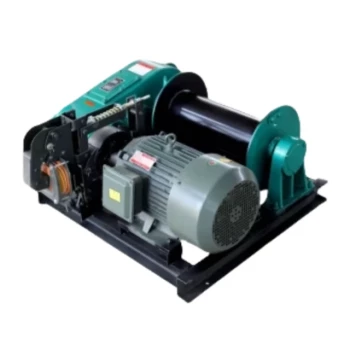
At its core, a winch is a mechanical device designed to pull or lift heavy objects that are otherwise immovable. Its primary and most recognized use is for vehicle recovery—leveraging the immense tension of a cable to pull a truck or 4x4 out of mud, sand, water, or up a steep incline it cannot climb under its own power.
A winch is fundamentally a force multiplier. It converts a motor's rotational energy into a powerful linear pull, allowing a single person or vehicle to move thousands of pounds with controlled precision.
The Core Principle: How a Winch Amplifies Force
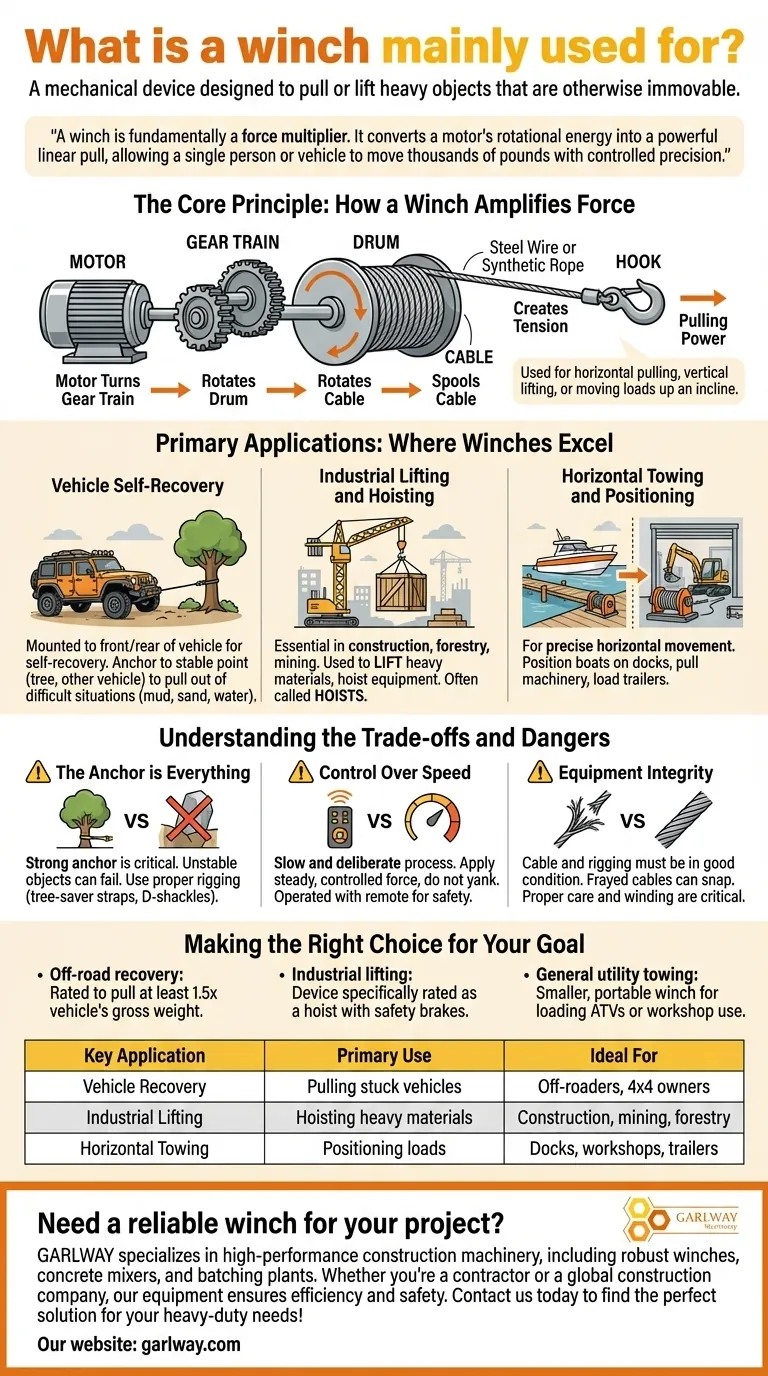
Understanding a winch isn't about complex engineering; it's about a simple, powerful concept. A motor turns a gear train, which in turn rotates a drum, creating immense pulling power.
The Basic Components
A winch consists of a few key parts working in unison. A motor (often electric) provides the power. This power is channeled through gears to a rotating drum. A strong cable (steel wire or synthetic rope) is wound around this drum, with a hook on its end to attach to the load.
The Mechanics of Movement
When the motor is engaged, it turns the drum, which spools the cable. This winding action creates powerful tension along the cable, pulling the object it is attached to. This process can be used for horizontal pulling, vertical lifting, or moving loads up an incline.
Primary Applications: Where Winches Excel
While vehicle recovery is its most famous application, the winch is a versatile tool used across numerous industries where heavy lifting and pulling are required.
Vehicle Self-Recovery
This is the classic use case. A winch is mounted to the front or rear of a vehicle, allowing the driver to anchor the cable to a stable point (like a tree or another vehicle) and pull themselves out of a difficult situation.
Industrial Lifting and Hoisting
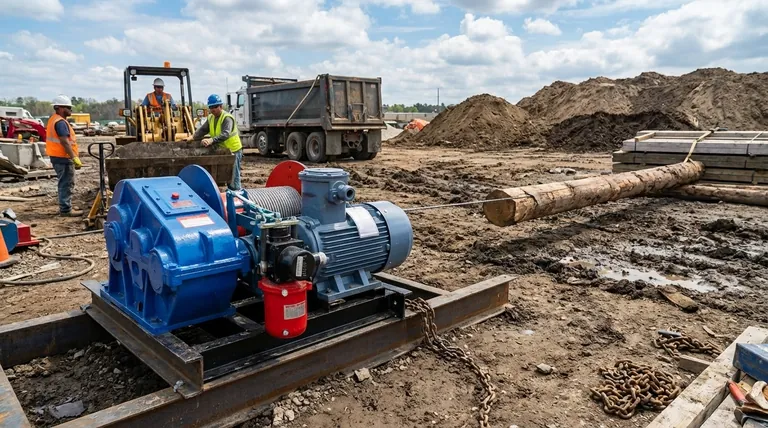
In fields like construction, forestry, and mining, winches are essential. They are often used as components in larger machinery to lift heavy materials, hoist equipment to different levels, or move raw materials like logs and minerals. In these contexts, they are often called hoists.
Horizontal Towing and Positioning
Winches are also used for precise horizontal movement. On docks, they can be used to position boats or cargo. In workshops, they can pull heavy machinery into place or load equipment onto a trailer.
Understanding the Trade-offs and Dangers
The immense power of a winch also demands respect and an understanding of its limitations. Improper use is not only ineffective but extremely dangerous.
The Anchor is Everything
A winch is only as strong as its anchor point. Attaching a winch to an unstable object can cause the anchor to fail, turning it into a dangerous projectile. Using proper rigging, like tree-saver straps and D-shackles, is non-negotiable for safety and effectiveness.
Control Over Speed
Winching is a slow and deliberate process. The goal is to apply steady, controlled force, not to yank an object quickly. Most winches are operated with a remote control, allowing the operator to stand at a safe distance and manage the pull carefully.
Equipment Integrity
The winch cable and all associated rigging must be in good condition. A frayed steel cable or a damaged synthetic rope can snap under load. Proper care, including cleaning the cable and winding it tightly onto the drum after use, is critical for longevity and safety.
Making the Right Choice for Your Goal
The right winch depends entirely on the task you need to accomplish.
- If your primary focus is off-road vehicle recovery: You need a winch rated to pull at least 1.5 times your vehicle's gross weight to ensure you have enough power for any situation.
- If your primary focus is industrial lifting: You need a device specifically rated as a hoist, which has different braking mechanisms and safety features designed for vertical loads.
- If your primary focus is general utility towing: A smaller, more portable winch can be sufficient for tasks like loading an ATV onto a trailer or moving heavy objects around a workshop.
Ultimately, a winch is a tool that grants you the power to overcome immense physical obstacles safely and efficiently.
Summary Table:
| Key Application | Primary Use | Ideal For |
|---|---|---|
| Vehicle Recovery | Pulling stuck vehicles | Off-roaders, 4x4 owners |
| Industrial Lifting | Hoisting heavy materials | Construction, mining, forestry |
| Horizontal Towing | Positioning loads | Docks, workshops, trailers |
Need a reliable winch for your project? GARLWAY specializes in high-performance construction machinery, including robust winches, concrete mixers, and batching plants. Whether you're a contractor or a global construction company, our equipment ensures efficiency and safety. Contact us today to find the perfect solution for your heavy-duty needs!
Visual Guide
Related Products
- Warn Winch Windlass Boat Trailer Winch
- Electric and Hydraulic Winch for Heavy Duty Applications
- Small Electric Winch 120V and 240V for Compact Applications
- Hydraulic Winding Engine Harbor Freight Winch
- Quick Windlass Portable Winch for Truck and Boat Best Boat Winch
People Also Ask
- What are the main components of a boat trailer winch? A Guide to Safe & Efficient Boat Loading
- What factors should be considered when choosing a boat trailer winch? Ensure Safe and Effortless Boat Loading
- What is the purpose of boat trailer winches? Safely and Efficiently Load Your Boat
- What are the two main types of boat trailer winches? Manual vs. Electric Explained
- How often should a boat trailer winch be replaced? Your Guide to Safety and Longevity