
The efficiency and simplicity of rotary drum blenders stem directly from their fundamental design: a rotating vessel that uses gravity to gently tumble and mix materials. Key features enhancing this core function include a smooth, unobstructed interior for total discharge, sanitary construction for rapid cleaning, and a low-energy mechanism that protects sensitive ingredients. These elements combine to deliver consistent blends with minimal product loss, low operating costs, and simplified maintenance.
The true advantage of a rotary drum blender is not found in complex machinery, but in its inherent simplicity. The gentle, gravity-driven tumbling action is the source of its efficiency, directly leading to lower energy use, superior product integrity, and minimal operational waste.
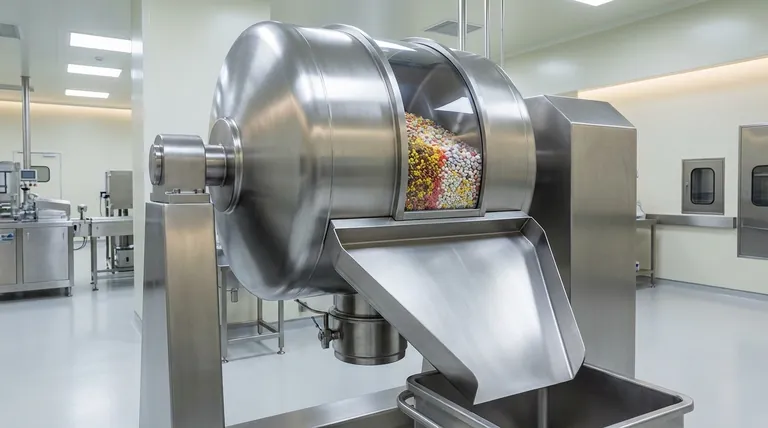
How Design Drives Blending Performance
The effectiveness of a rotary drum blender originates from its core mechanical principle. Unlike blenders that rely on high-speed impellers or augers, the drum blender uses a much gentler and more energy-efficient method.
The Gentle Tumbling Action
The slow rotation of the drum continuously lifts the material. As the material reaches the top of the rotation, gravity causes it to cascade or tumble down over the rest of the batch.
This constant folding and dividing action thoroughly mixes the components without applying aggressive force or high shear.
Achieving Homogeneity without Damage
This gentle process is ideal for blending fragile materials, such as granules, coated particles, or crystalline powders, that would be damaged or broken down by more aggressive mixers.
The result is a uniform, homogeneous blend where the physical integrity of each ingredient is preserved, ensuring final product quality.
Features for Operational Efficiency
Beyond the mixing action itself, specific design features are engineered to minimize waste, reduce downtime, and lower long-term operational costs.
Total Discharge to Maximize Yield
Rotary drum blenders are designed with smooth, polished internal surfaces and are free of baffles, agitators, or other internal obstructions where the product can get trapped.
This ensures complete discharge of the blended material, which maximizes product yield and is critical for preventing cross-contamination between different batches.
Sanitary Design for Fast, Effective Cleaning
Constructed typically from stainless steel, these blenders adhere to high sanitary standards. The simple, open design allows for easy access for inspection and cleaning.
This ease of cleaning drastically reduces downtime between production runs, a significant factor in overall plant efficiency.
Low Power Consumption
Because the blender only needs to rotate a balanced drum at a low speed, its motor and power requirements are significantly lower than those of high-shear mixers.
This translates directly into lower energy bills and reduced operating costs over the life of the equipment.
Built-in Safety and cGMP Compliance
Modern rotary drum blenders are built with safety guards, emergency stops, and interlocks to protect operators.
Their sanitary design and verifiable cleanliness are also critical for complying with Current Good Manufacturing Practice (cGMP) standards required in the pharmaceutical, nutraceutical, and food industries.
Common Pitfalls and Limitations
While highly effective for many applications, the rotary drum blender is not a universal solution. Understanding its limitations is key to making a correct assessment.
Incompatibility with High-Shear Mixing
The gentle tumbling action is a disadvantage when tasks require high shear. Applications like de-agglomerating clumps, creating fine emulsions, or blending thick pastes are not suitable for this equipment.
Potential for Static Buildup
The tumbling of fine, dry powders can sometimes generate static electricity, which may cause certain particles to cling to the drum walls. This is a factor to consider depending on the materials being blended.
Batch Size and Footprint Limitations
Drum blenders operate on a batch basis and can have a significant physical footprint relative to their capacity. This must be factored into facility layout and workflow planning.
Making the Right Choice for Your Application
Selecting the right blender requires matching its core strengths to your primary operational goal.
- If your primary focus is preserving particle integrity: The gentle, low-shear action of a rotary drum is ideal for fragile granules, coated particles, or sensitive powders.
- If your primary focus is minimizing operational costs: The combination of low energy use, total discharge (less waste), and fast cleaning cycles makes this an economically sound choice.
- If your primary focus is batch-to-batch purity: The smooth, easily cleaned interior and compliance with sanitary standards are critical for preventing cross-contamination in food or pharmaceutical applications.
Ultimately, understanding how a rotary drum's simple design translates directly into these key operational benefits is the first step to leveraging it effectively in your process.
Summary Table:
| Feature | Key Benefit |
|---|---|
| Gentle Tumbling Action | Preserves fragile materials; ensures uniform blending without damage. |
| Smooth, Unobstructed Interior | Enables total product discharge, maximizing yield and preventing contamination. |
| Sanitary Stainless Steel Design | Allows for fast, effective cleaning and compliance with cGMP standards. |
| Low Power Consumption | Reduces long-term energy costs compared to high-shear mixers. |
Ready to enhance your blending process with reliable, cost-effective machinery?
GARLWAY specializes in robust construction machinery, including industrial mixers and batching plants. Our solutions are designed for construction companies and contractors who value efficiency, durability, and simplicity.
Contact our experts today to discuss how our equipment can bring gentle, high-yield mixing to your operation.
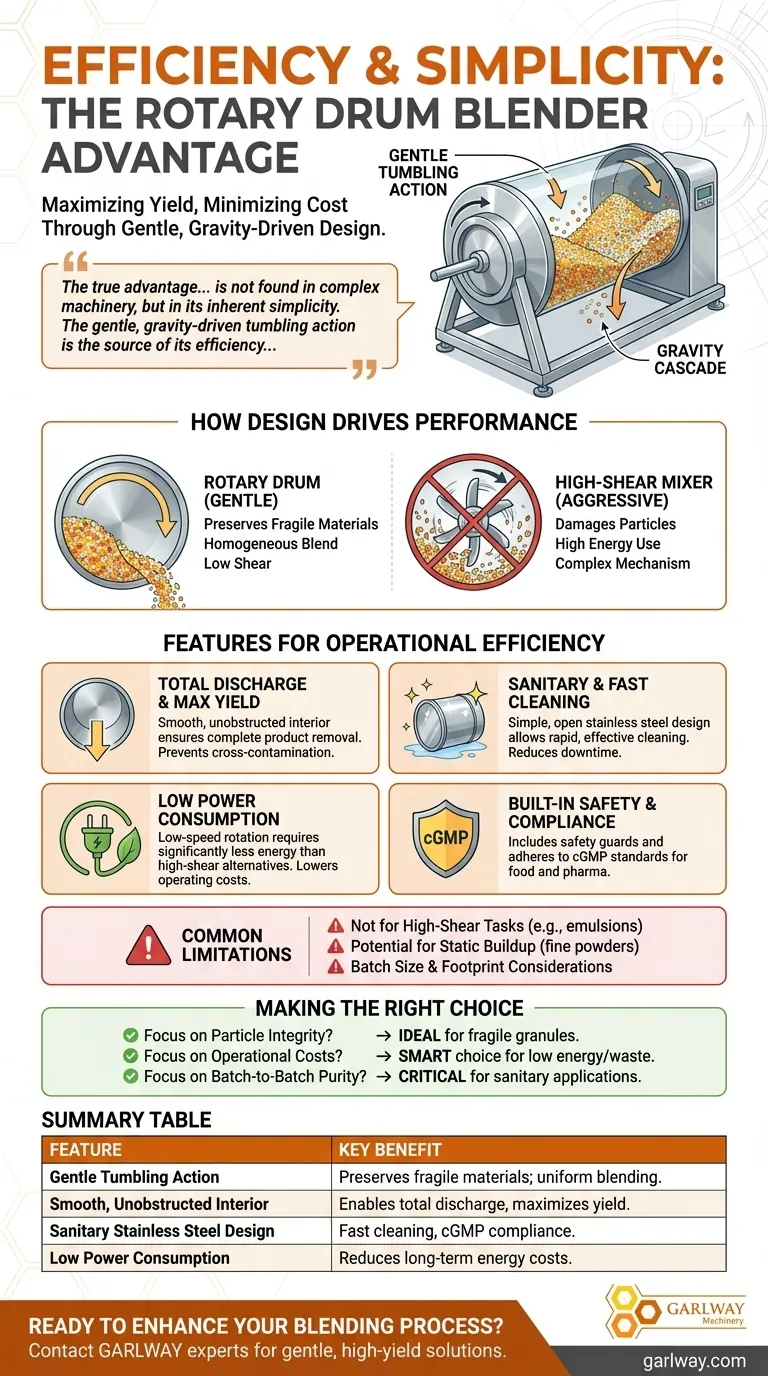
Visual Guide
Related Products
- Belle Mixer Drum Self Loading Mortar Mixers JS3000
- Concrete Cement Mixer Machine Drum Mixer for Construction
People Also Ask
- What are the features of mobile transporting in a self loading mixer? Boost On-Site Efficiency
- Why is timely cleaning important for a self loading mixer? Prevent Costly Downtime and Mix Failure
- How is discharging accomplished in a self loading mixer? Master Precise Concrete Placement
- What is the purpose of keeping the drum rotating during transportation in a self loading concrete mixer? Ensure Quality & Consistency
- What components are involved in the loading process of a self loading concrete mixer? A Guide to the Key Systems

