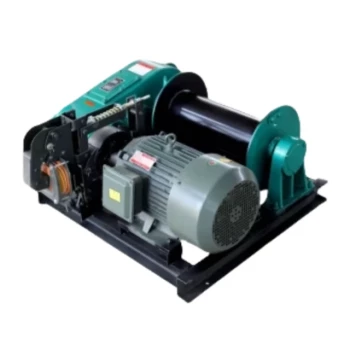
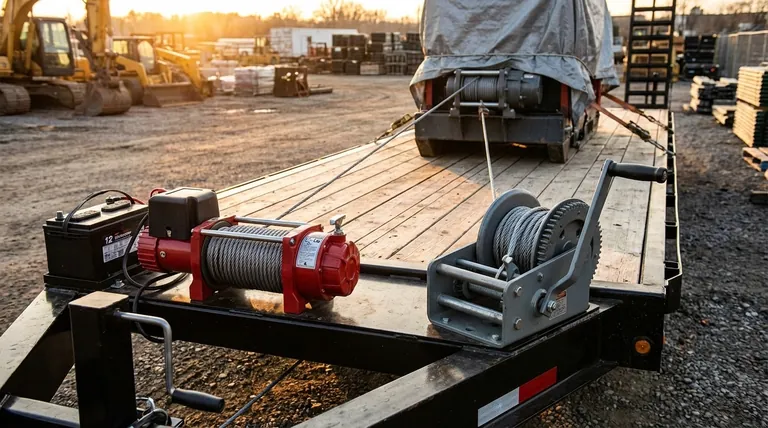
To be direct, the two main types of winches available for trailers are manual winches and electric winches. A manual winch operates through physical hand-cranking to gain mechanical advantage, while an electric winch uses a 12-volt motor powered by the towing vehicle to do the heavy pulling automatically.
The choice between a manual and an electric winch is a direct trade-off. Manual winches offer simplicity and cost-effectiveness for light, infrequent tasks, whereas electric winches provide the necessary power and convenience for heavy or regular use.
Understanding the Core Mechanisms
To select the right tool, you first need to understand how each one works. The fundamental difference lies in the source of power: your effort versus a motor's.
Manual Winches: The Power of Leverage
A manual winch is a simple machine that relies on a hand crank and a set of internal gears.
By turning the crank, you multiply your force through a gear ratio, allowing you to pull loads that would be impossible to move by hand alone. Their operation is straightforward and entirely dependent on physical effort.
Electric Winches: The Convenience of Automation
An electric winch contains a powerful 12-volt DC motor connected to a similar gear system.
This motor draws power directly from your tow vehicle's battery, turning the winch drum with the push of a button, often via a wired or wireless remote. This automates the pulling process, removing the need for physical exertion.
Key Applications for Each Winch Type
While both pull objects onto a trailer, their ideal use cases are distinctly different. The weight and frequency of your task should guide your decision.
When to Choose a Manual Winch
Manual winches excel in situations where the loads are relatively light and the usage is infrequent.
They are a perfect fit for small aluminum fishing boats, jet skis, or for pulling light equipment onto a utility trailer. Their independence from a power source also makes them reliably functional in any situation.
When to Choose an Electric Winch
Electric winches are the standard for heavier and more frequent tasks, such as loading cars, heavy equipment, or large boats.
They are essential for vehicle recovery and are the go-to choice for car haulers and equipment trailers where speed and power are critical for efficient operation.
A Note on Hydraulic Winches
While less common for standard trailers, a third type, the hydraulic winch, does exist. These are typically reserved for heavy industrial or commercial applications where they can tap into a vehicle's existing hydraulic system for immense, continuous pulling power.
Understanding the Trade-offs
Choosing a winch means balancing cost, convenience, and capability. Understanding the inherent compromises of each type is crucial for avoiding frustration later.
Manual Winch: Simplicity vs. Effort
The primary advantage of a manual winch is its simplicity. There are no motors to burn out or wiring to fail, making them extremely reliable and less expensive.
However, this comes at the cost of speed and physical effort. Pulling a heavy load can be slow and strenuous, and their maximum capacity is generally lower than that of electric models.
Electric Winch: Power vs. Complexity
The clear benefit of an electric winch is its power and ease of use. It makes moving heavy loads fast and effortless.
The trade-off is increased complexity and cost. They require a reliable power source, proper wiring, and have more potential points of failure (motor, solenoid, remote). They also require periodic maintenance to ensure readiness.
Making the Right Choice for Your Trailer
Your specific goal determines which winch is the correct investment. Base your decision on the job you need to accomplish most often.
- If your primary focus is cost-effectiveness for light loads: A manual winch is the most reliable and straightforward solution.
- If your primary focus is loading heavy vehicles or frequent use: An electric winch provides the essential power and convenience you need.
- If your primary focus is maximum power for commercial-grade work: A hydraulic winch may be the appropriate, albeit more specialized, choice.
Ultimately, selecting the right winch ensures your trailer is a capable and efficient tool for the tasks you need to perform.
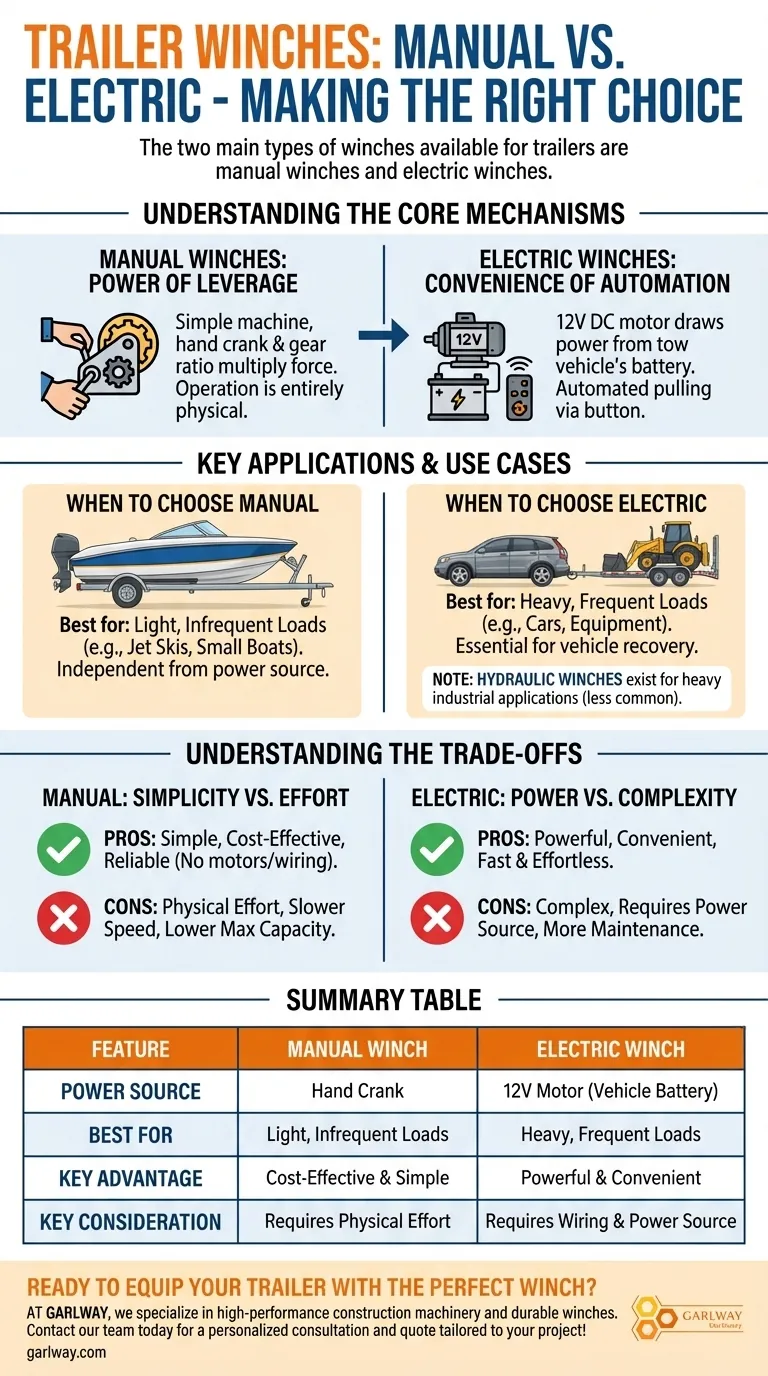
Summary Table:
| Feature | Manual Winch | Electric Winch |
|---|---|---|
| Power Source | Hand Crank | 12V Motor (Vehicle Battery) |
| Best For | Light, Infrequent Loads (e.g., jet skis, small boats) | Heavy, Frequent Loads (e.g., cars, equipment) |
| Key Advantage | Cost-Effective & Simple | Powerful & Convenient |
| Key Consideration | Requires Physical Effort | Requires Wiring & Power Source |
Ready to equip your trailer with the perfect winch?
At GARLWAY, we specialize in high-performance construction machinery, including durable winches, concrete mixers, and batching plants. Whether you're a contractor needing an electric winch for heavy equipment or a company looking for a reliable manual solution, our experts can help you select the right tool for maximum efficiency and safety.
Contact our team today for a personalized consultation and get a quote tailored to your project's requirements!
Visual Guide
Related Products
- Portable Small Trailer Winch
- 12000 lb Electric Boat Trailer Winch with Windlass Anchor Warn
- Warn Winch Windlass Boat Trailer Winch
- Best 18000 Pound Drum Anchor Trailer Winch
- Quick Windlass Portable Winch for Truck and Boat Best Boat Winch
People Also Ask
- What features were incorporated into the upgraded portable winch system? Boost Your Recovery Power & Safety
- What are some uses mentioned for portable winches beyond vehicle recovery? Essential Versatility for Property & Work
- How could the twisting issue with a portable winch be mitigated? Achieve Safe, Centered Pulls with Proper Rigging
- What is the significance of trailer winches in the boating industry? Ensure Safe and Efficient Boat Recovery
- What should be considered when mounting a winch on a trailer? Ensure a Safe, Aligned Installation