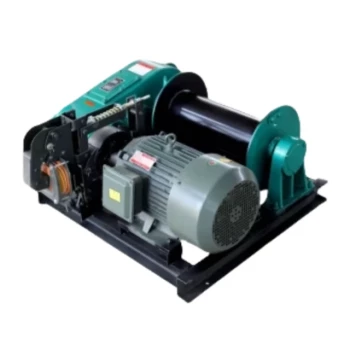
The three primary types of winches are defined by their power source: manual, electric, and hydraulic. Each type is engineered for fundamentally different applications, ranging from simple, portable tasks to demanding industrial operations. Electric winches are by far the most common, offering a strong balance of power and convenience for most users.
The core decision is not about finding the "best" winch, but about matching the winch's power source—and its inherent strengths and weaknesses—to your specific operational needs, vehicle setup, and expected workload.
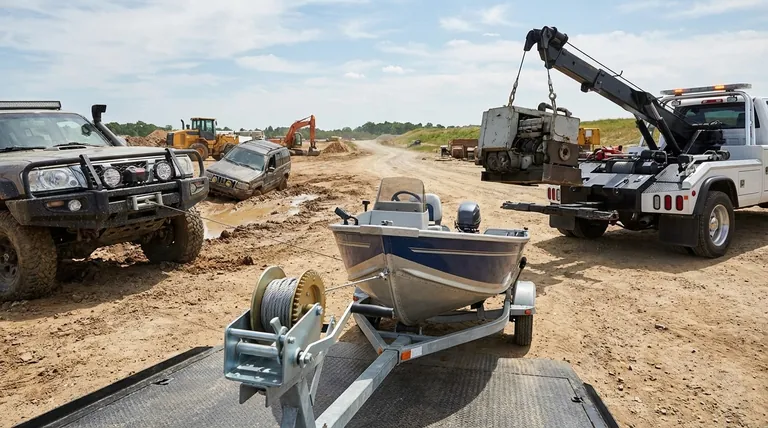
Understanding the Core Winch Types
A winch is a simple machine, but its power source dramatically changes its performance characteristics. Understanding these differences is the first step in selecting the right tool.
Manual Winches: Simplicity and Reliability
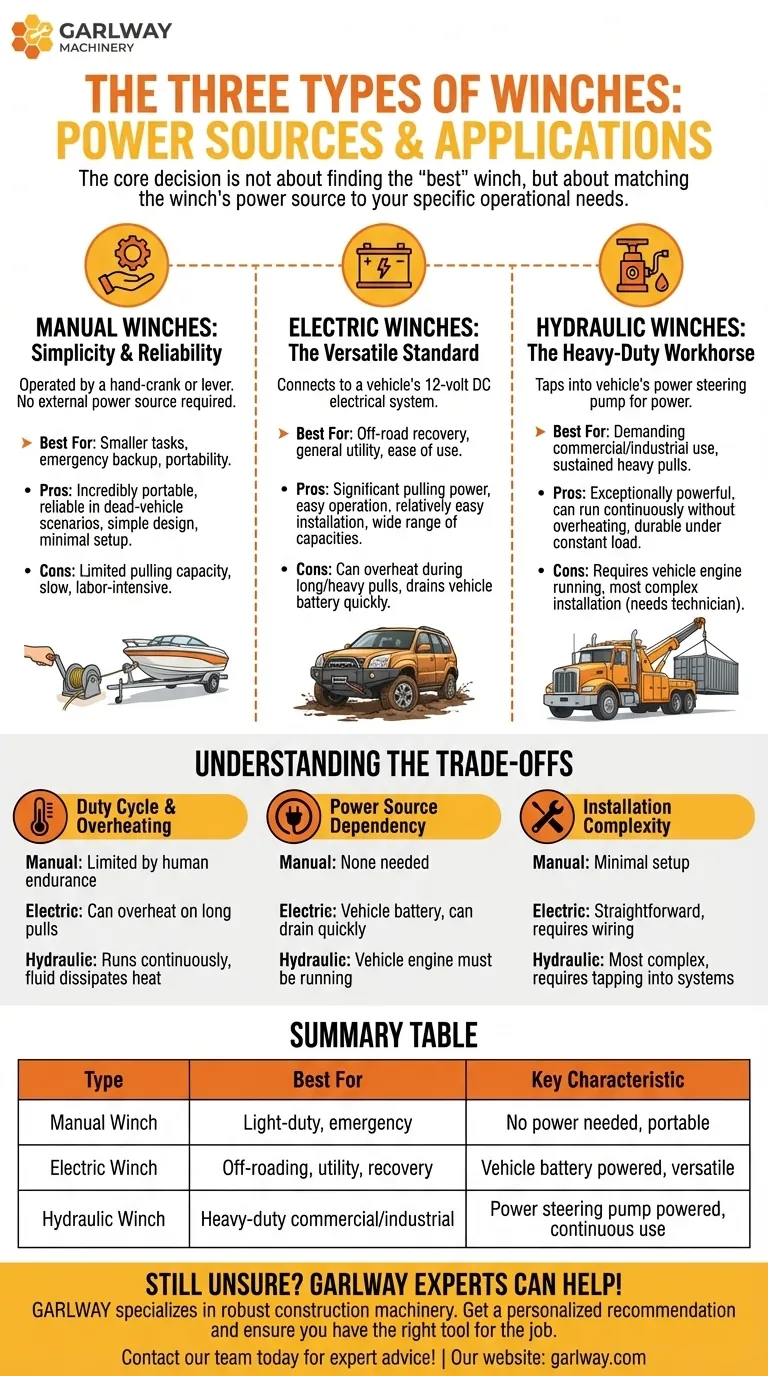
Manual winches are the most basic design, operated by a hand-crank or lever. They require no external power source, relying entirely on physical effort.
This makes them incredibly portable and reliable. They are an excellent choice for smaller tasks like loading a boat onto a trailer or for emergency situations where vehicle power might not be available. However, their pulling capacity is limited, and they are slow and labor-intensive to operate.
Electric Winches: The Versatile Standard
Electric winches are the most popular type for good reason. They connect directly to a vehicle's 12-volt DC electrical system, providing significant pulling power at the flip of a switch.
This combination of power and ease of use makes them ideal for off-road vehicle recovery and general utility work. They are relatively easy to install and offer a wide range of pulling capacities.
Hydraulic Winches: The Heavy-Duty Workhorse
Hydraulic winches tap into a vehicle's power steering pump for their power. This design makes them exceptionally powerful and suitable for the most demanding commercial and industrial applications.
Because they are powered by a hydraulic system, they can run continuously under heavy load without the risk of overheating that can affect electric motors. This makes them the definitive choice for tow trucks, industrial equipment, and applications requiring a long, sustained pull.
Understanding the Trade-offs
Choosing a winch involves balancing power, convenience, and operational demands. Each type comes with critical trade-offs.
Duty Cycle and Overheating
The duty cycle—how long a winch can run before needing to cool down—is a crucial factor.
Electric winches can overheat during long, heavy pulls, potentially damaging the motor. In contrast, hydraulic winches can pull for extended periods without overheating, as the hydraulic fluid helps dissipate heat. Manual winches are limited only by your own endurance.
Power Source Dependency
Your winch is useless without its power source. An electric winch can drain a vehicle's battery quickly, especially if the engine isn't running.
A hydraulic winch requires the vehicle's engine to be running to power the steering pump. A manual winch, of course, needs no power source, making it the most dependable option in a dead-vehicle scenario.
Installation Complexity
Installation difficulty varies significantly. Manual winches require minimal setup. Electric winches require proper wiring to the vehicle's battery, which is a straightforward but critical process.
Hydraulic winches are the most complex, requiring a technician to tap into the vehicle's power steering lines, a job not recommended for most DIY installers.
Making the Right Choice for Your Goal
Select your winch based on its intended primary use, not just its maximum pulling capacity.
- If your primary focus is occasional light-duty work or an emergency backup: A manual winch offers unbeatable reliability and portability.
- If your primary focus is off-roading, general vehicle recovery, or versatile utility: An electric winch provides the best all-around balance of power, convenience, and ease of installation.
- If your primary focus is continuous, heavy-duty commercial or industrial use: A hydraulic winch is the only choice for its sustained power and durability under constant load.
By aligning the winch's fundamental design with your operational demands, you ensure you have the right tool for the job every time.
Summary Table:
| Type | Best For | Key Characteristic |
|---|---|---|
| Manual Winch | Light-duty tasks, emergency backup | No power source needed, highly portable |
| Electric Winch | Off-roading, general utility, vehicle recovery | Powered by vehicle battery, versatile and easy to use |
| Hydraulic Winch | Heavy-duty commercial/industrial use | Taps into power steering pump, can run continuously |
Still Unsure Which Winch is Right for Your Project?
Choosing the correct winch is critical for safety and efficiency. GARLWAY specializes in providing robust construction machinery, including a full range of winches, concrete mixers, and batching plants tailored for construction companies and contractors globally.
Our experts can help you select the perfect winch based on your specific vehicle, application, and workload requirements. Get a personalized recommendation and ensure you have the right tool for the job.
Contact our team today for expert advice and reliable equipment solutions!
Visual Guide
Related Products
- Warn Winch Windlass Boat Trailer Winch
- Electric and Hydraulic Winch for Heavy Duty Applications
- Small Electric Winch 120V and 240V for Compact Applications
- Hydraulic Winding Engine Harbor Freight Winch
- Quick Windlass Portable Winch for Truck and Boat Best Boat Winch
People Also Ask
- What are the main components of a boat trailer winch? A Guide to Safe & Efficient Boat Loading
- What factors should be considered when choosing a boat trailer winch? Ensure Safe and Effortless Boat Loading
- What is the purpose of boat trailer winches? Safely and Efficiently Load Your Boat
- What are the two main types of boat trailer winches? Manual vs. Electric Explained
- How often should a boat trailer winch be replaced? Your Guide to Safety and Longevity