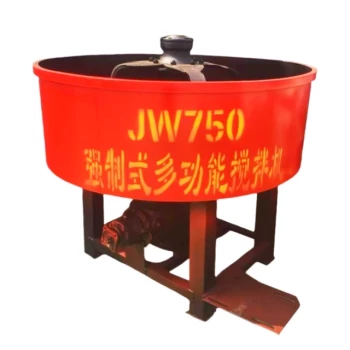
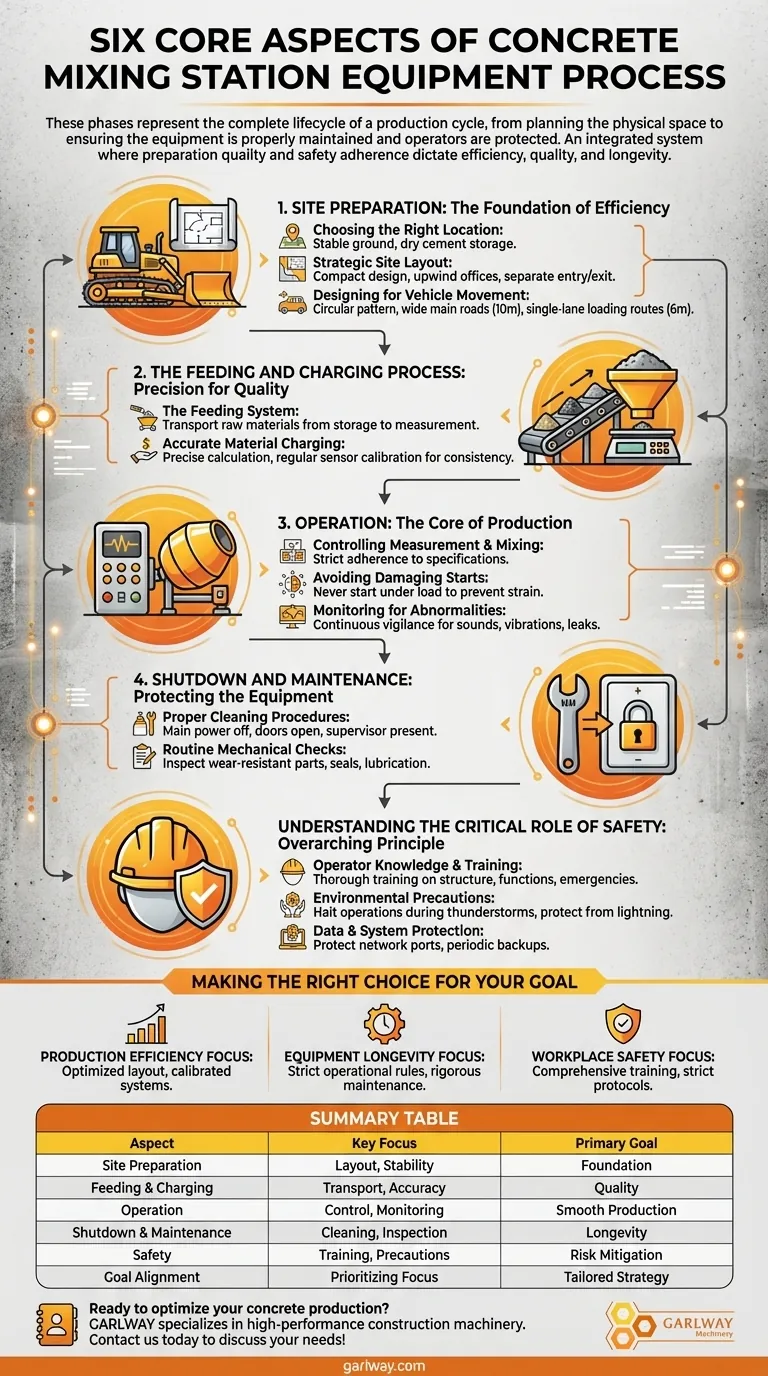
The six core aspects of the concrete mixing station equipment process are site preparation, the feeding system, material charging, operation, shutdown, and safety. These phases represent the complete lifecycle of a production cycle, from planning the physical space to ensuring the equipment is properly maintained and operators are protected.
The process is not a simple checklist but an integrated system. The quality of preparation and adherence to safety protocols directly dictates the efficiency of operation, the quality of the final product, and the longevity of the equipment itself.
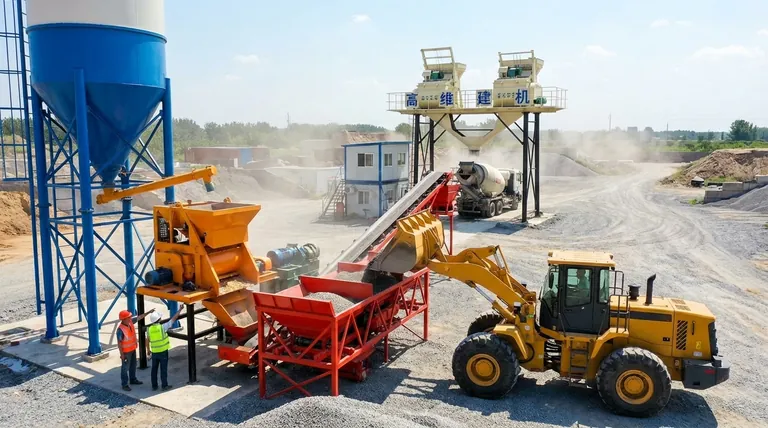
1. Site Preparation: The Foundation of Efficiency
Proper site preparation is the most critical phase for ensuring a smooth, safe, and productive workflow. A well-planned layout prevents bottlenecks and minimizes operational hazards from the start.
Choosing the Right Location
The physical location must be stable and even to support the weight and vibration of the machinery. Additionally, critical materials like cement must be stored in a dry, protected environment to prevent degradation.
Strategic Site Layout
The layout should be compact to maximize the use of space without impeding the production flow. Key design principles include placing offices and personnel areas upwind to avoid dust and establishing separate entrances and exits to improve vehicle traffic flow and prevent collisions.
Designing for Vehicle Movement
Most roads within the site should be designed in a circular pattern to facilitate easy turning for large vehicles. Main roads should be wide enough for two-way traffic (approx. 10m), while specific loading routes can be single lanes (approx. 6m).
2. The Feeding and Charging Process
This phase involves moving raw materials from storage into the mixer. Precision here is non-negotiable, as it directly impacts the concrete's final quality and strength.
The Feeding System
This is the mechanical starting point where aggregates, sand, and other materials are transported from storage bins or piles onto conveyor belts or into hoppers, preparing them for measurement.
Accurate Material Charging
Before operation, material requirements must be calculated precisely. The scales and sensors used for weighing cement, aggregates, and water are critical components that require regular calibration, especially after any sensor replacement, to ensure mix consistency.
3. Operation: The Core of Production
During operation, the focus shifts to control and monitoring. The operator's role is to ensure the equipment runs according to specification while remaining vigilant for any signs of malfunction.
Controlling Measurement and Mixing
The operator must strictly control measurement accuracy and mixing time to meet the specific requirements of the concrete recipe. Any deviation can compromise the structural integrity of the final product.
Avoiding Damaging Starts
A critical operational rule is to never start the mixer or the main conveyor belt while they are under load. This practice can cause severe strain on motors and mechanical parts, leading to premature failure.
Monitoring for Abnormalities
Continuous monitoring is essential. Any unusual sounds, vibrations, or faults, such as leaks at the mixer's discharge outlet, must be addressed immediately. Prompt inspection and repair prevent minor issues from escalating.
4. Shutdown and Maintenance
The shutdown process is more than just turning off the power. It is a crucial time for cleaning, inspection, and preventative maintenance that protects the equipment and prepares it for the next run.
Proper Cleaning Procedures
During cleaning or internal maintenance, the main power must be off. For safety, maintenance doors should be fully open, and a supervisor must be present to ensure the operator's safety inside the mixer.
Routine Mechanical Checks
Shutdown is the ideal time to perform routine maintenance. This includes inspecting wear-resistant parts inside the mixer, checking shaft end seals for leaks, and ensuring all transmission points are properly lubricated.
Understanding the Critical Role of Safety
Safety is not a separate step but an overarching principle that must be integrated into every aspect of the operation. A failure in safety protocols can lead to catastrophic equipment damage and severe injury.
Operator Knowledge and Training
Personnel must be thoroughly trained on the equipment's structure, functions, and emergency procedures. They should be familiar with all controls and consult the manufacturer's technical resources if ever in doubt.
Environmental Precautions
Operations should be halted during thunderstorms. The high-voltage nature of the equipment makes it susceptible to lightning strikes, which can cause severe damage to electrical components that is typically not covered by warranty.
Data and System Protection
If the control system is connected to a network, the ports must be properly protected from electrical surges. It is also wise to perform periodic backups of all production data and system parameters to prevent loss.
Making the Right Choice for Your Goal
Your operational focus will determine which aspects of the process require the most attention.
- If your primary focus is Production Efficiency: Prioritize a strategic site layout with optimized traffic flow and ensure measurement systems are perfectly calibrated to minimize waste and rework.
- If your primary focus is Equipment Longevity: Emphasize strict adherence to operational rules like avoiding load starts and implementing a rigorous shutdown and preventative maintenance schedule.
- If your primary focus is Workplace Safety: Invest heavily in comprehensive operator training, enforce strict maintenance protocols, and ensure all environmental and electrical precautions are followed without exception.
Ultimately, mastering these six aspects ensures you run a concrete mixing station that is not only productive but also safe, reliable, and built to last.
Summary Table:
| Aspect | Key Focus | Primary Goal |
|---|---|---|
| Site Preparation | Layout, Stability, Vehicle Flow | Foundation for Efficiency |
| Feeding & Charging | Material Transport, Measurement Accuracy | Consistent Concrete Quality |
| Operation | Control, Monitoring, Avoiding Load Starts | Smooth Production Cycle |
| Shutdown & Maintenance | Cleaning, Inspection, Lubrication | Equipment Longevity |
| Safety | Training, Environmental Precautions, Data Protection | Risk Mitigation & Compliance |
| Goal Alignment | Prioritizing Efficiency, Longevity, or Safety | Tailored Operational Strategy |
Ready to optimize your concrete production with reliable equipment and expert support?
GARLWAY specializes in providing high-performance construction machinery, including robust concrete batching plants, concrete mixers, and winches, tailored for construction companies and contractors worldwide. We help you enhance productivity, ensure operational safety, and extend equipment life.
Contact us today to discuss your project needs and discover how our solutions can drive your success!
Visual Guide
Related Products
- HZS120 Ready Mix Concrete Batching Plant Commercial Mud Cement Mixer
- HZS35 Small Cement Concrete Mixing Batch Plant
- HZS75 Concrete Batching Plant Cement Mixer Price Concrete Mixer Bunnings Mixing Plant
- HZS180 Ready Mix Concrete Plant for Foundations with Sand and Cement
- Commercial Electric Concrete Mixer Machine HZS 50 Small Batch Plant for Sale
People Also Ask
- What is a ready mix concrete batching plant? The Engine of Modern Construction
- What is the name of the machine used in ready mix? Unpacking the Complete Concrete System
- What is the core component of a concrete batching plant? The Mixer Unit Defines Your Concrete Quality
- What are the types of concrete mixers used in batching plants? Choose the Right Mixer for Your Project
- What are the advantages and disadvantages of concrete batching plants? Maximize Quality & Efficiency