The primary advantages of using a synthetic rope on a winch are its light weight, superior safety characteristics, and ease of handling. Unlike steel cable, it does not develop sharp burrs that can injure hands, and crucially, it stores far less kinetic energy under load, making it significantly safer in the event of a failure.
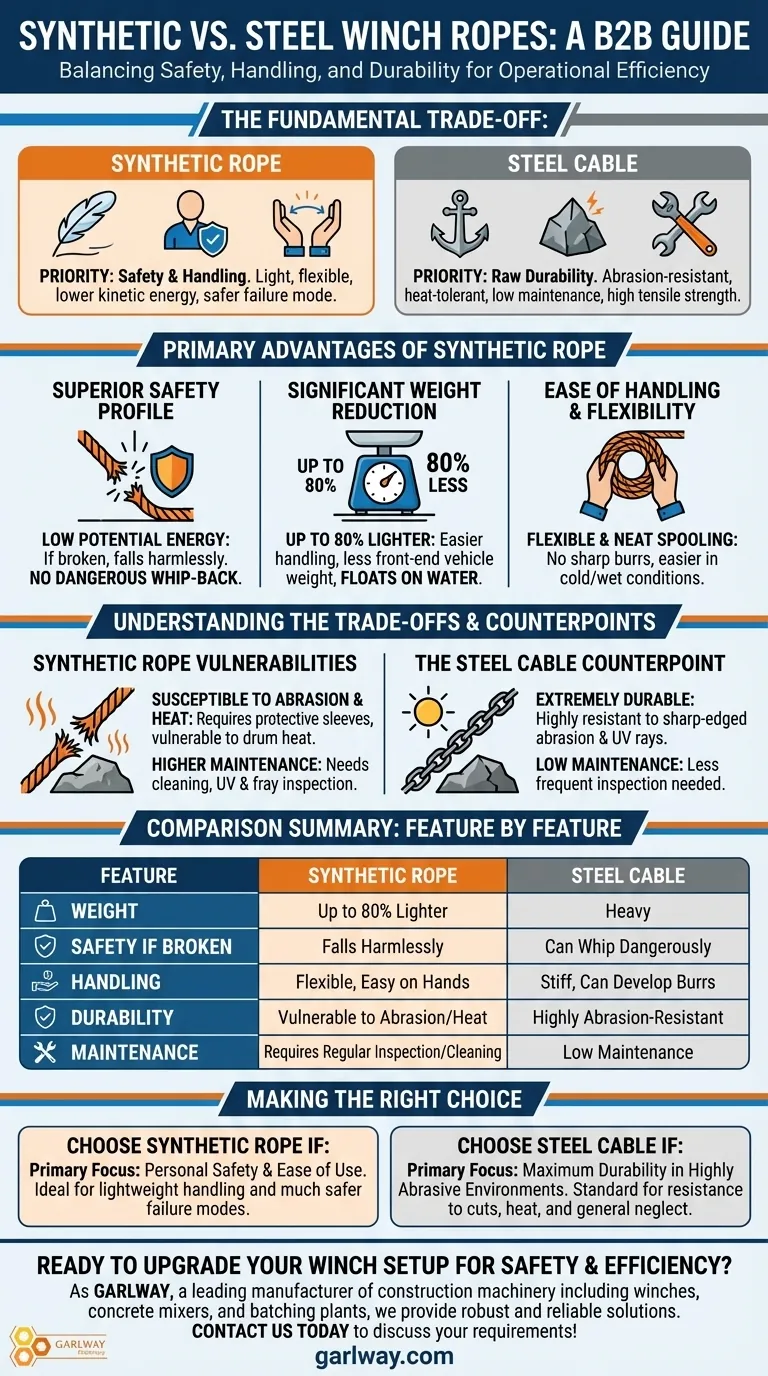
The choice between synthetic rope and traditional steel cable is not about which is universally superior, but about a fundamental trade-off: synthetic rope prioritizes user safety and handling convenience, while steel cable prioritizes raw durability and resistance to abrasion.
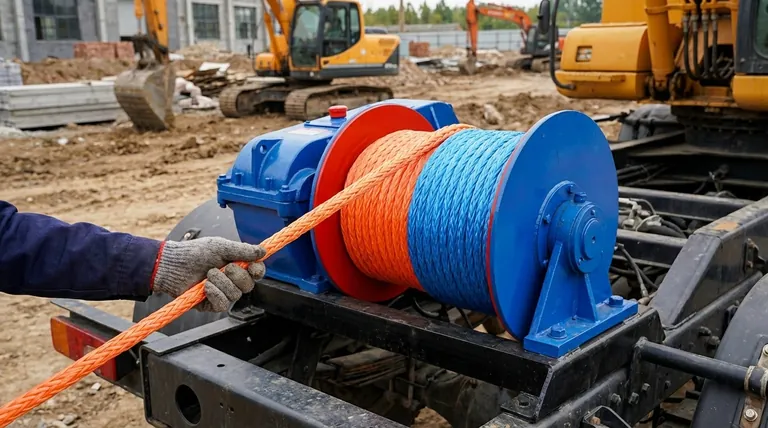
The Primary Advantages of Synthetic Rope
Superior Safety Profile
Synthetic rope is significantly safer than steel cable because it stores very little potential energy when under tension.
If a synthetic line breaks, it tends to fall harmlessly to the ground. A steel cable, in contrast, can whip back with violent and potentially lethal force.
Significant Weight Reduction
Synthetic rope is dramatically lighter than a steel cable of equivalent strength, often by as much as 80%.
This weight difference makes it much easier to carry the line out for a recovery. It also reduces the overall weight on the front of a vehicle, which can positively impact suspension performance and handling. A final benefit is that synthetic ropes float on water.
Ease of Handling and Flexibility
Working with synthetic rope is far easier on the hands and body. It is flexible, spools more neatly onto the winch drum, and does not develop the sharp, painful wire burrs common with aging steel cable.
This flexibility makes it simpler to manage, especially in cold or wet conditions.
Understanding the Trade-offs
Vulnerability to Abrasion and Heat
While durable, synthetic rope is more susceptible to damage from sharp edges like rocks or bumpers than steel is. It is also vulnerable to heat damage from the winch drum during long, heavy pulls.
Proper use often requires protective sleeves or rock guards to prevent cuts and chafing.
Higher Maintenance Requirements
Synthetic rope demands more care than steel cable. It should be regularly inspected for frays and damage from UV exposure or chemicals.
Keeping the rope clean from sand and grit is essential, as these particles can work their way into the fibers and cause internal abrasion over time.
The Steel Cable Counterpoint
It is important to acknowledge that steel cable excels in specific areas. It is extremely durable and highly resistant to the kind of sharp-edged abrasion common in utility work or rocky terrain.
Steel is also largely unaffected by UV rays and requires significantly less maintenance, making it a reliable choice for purely industrial applications.
Making the Right Choice for Your Goal
Selecting the correct winch line means aligning its characteristics with your most common use case and priorities.
- If your primary focus is personal safety and ease of use: Synthetic rope is the definitive choice for its lightweight handling and much safer failure mode.
- If your primary focus is maximum durability in highly abrasive environments: Steel cable remains the standard for its resistance to cuts, heat, and general neglect.
Ultimately, understanding these core differences empowers you to choose the tool that best fits your specific needs.
Summary Table:
| Feature | Synthetic Rope | Steel Cable |
|---|---|---|
| Weight | Up to 80% lighter | Heavy |
| Safety if Broken | Falls harmlessly | Can whip dangerously |
| Handling | Flexible, easy on hands | Stiff, can develop sharp burrs |
| Durability | Vulnerable to abrasion/heat | Highly abrasion-resistant |
| Maintenance | Requires regular inspection/cleaning | Low maintenance |
Ready to upgrade your recovery gear with a safer, lighter winch rope? As GARLWAY, a leading manufacturer of construction machinery including winches, concrete mixers, and batching plants, we provide robust and reliable solutions for construction companies and contractors worldwide. Let our experts help you select the perfect winch setup for your specific needs. Contact us today to discuss your requirements and enhance your operational safety and efficiency!
Visual Guide
Related Products
- Electric Hoist Winch Boat Anchor Windlass for Marine Applications
- Warn Winch Windlass Boat Trailer Winch
- Quick Windlass Portable Winch for Truck and Boat Best Boat Winch
- Small Electric Winch 120V and 240V for Compact Applications
- Heavy Duty Electric Boat Winch Windlass Anchor
People Also Ask
- How does an electric anchor winch work? Power, Safety, and Reliable Operation Explained
- What are the advantages of installing an electric anchor winch on a boat? Boost Safety & Ease for Boaters
- What are the operational differences between electric hoists and winches? A Guide to Safe Lifting vs. Pulling
- What are the main benefits of a boat anchor winch? Boost Safety & Efficiency for Your Vessel
- How does a boat anchor winch work? A Guide to Reliable Anchor Handling