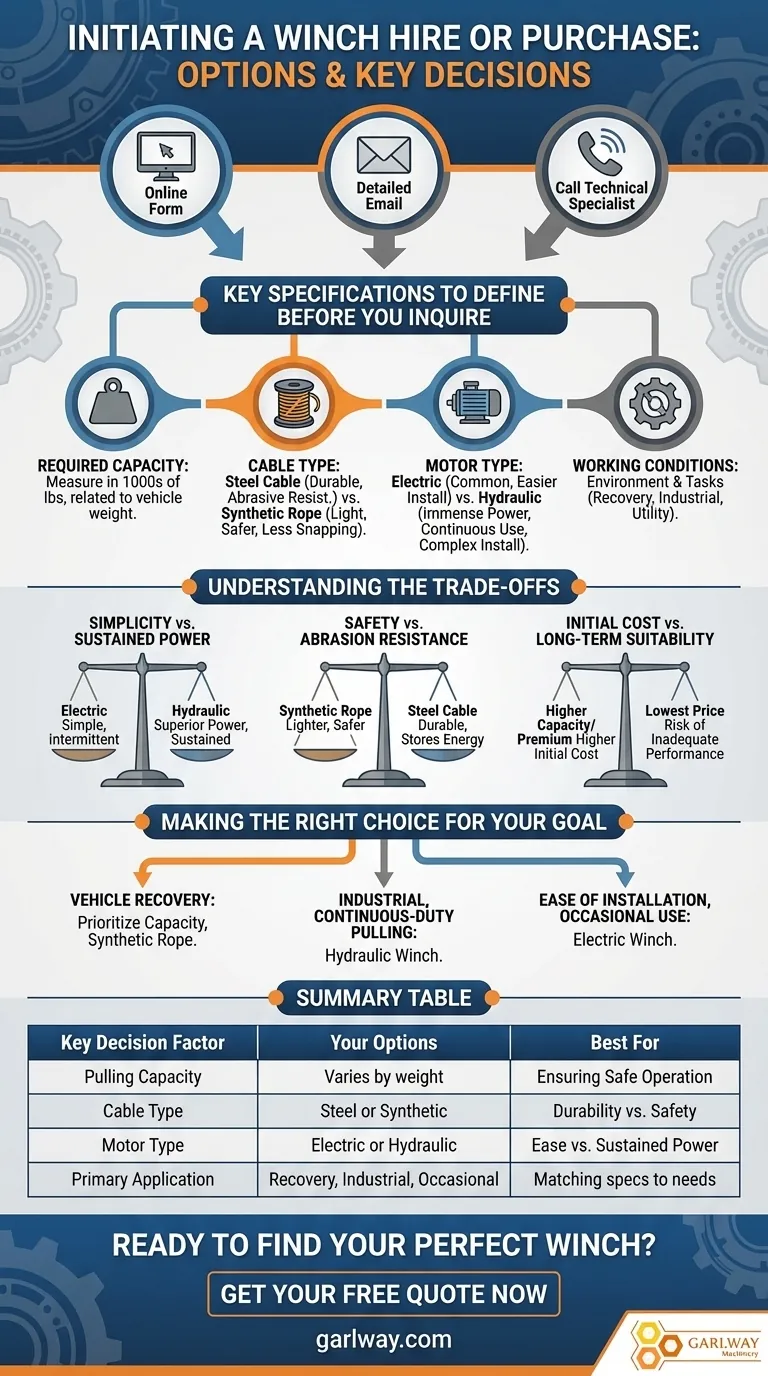
To initiate a winch hire or purchase, you have three direct options. You can complete an online customer enquiry form, send a detailed email, or call the supplier to speak directly with a technical specialist for immediate assistance.
The most effective way to acquire the right winch is not just knowing who to contact, but what to ask. Preparing key technical specifications about your specific needs beforehand will ensure your initial inquiry leads to a successful outcome.
Key Specifications to Define Before You Inquire
Before making contact, gathering a few key data points will streamline the entire process. This preparation transforms a simple query into a productive technical consultation, ensuring you get the right equipment for the job.
Determine Your Required Capacity
The most critical factor is the winch's pulling capacity, measured in thousands of pounds. This figure is directly related to the weight of the vehicle or object you intend to move. A more powerful winch is always recommended for heavier vehicles to ensure a safe and effective margin.
Select the Right Cable Type
You will need to choose between traditional steel cable and modern synthetic rope. Synthetic cables are significantly lighter and are less prone to snapping under load, which enhances safety. Steel is known for its durability against abrasion but requires more careful handling.
Choose the Appropriate Motor
Winches are primarily powered by either electric or hydraulic motors. Electric winches are far more common and are significantly easier to install, making them suitable for most applications. Hydraulic winches offer immense power for continuous, heavy-duty use but require a more complex installation tied into the vehicle's power steering system.
Analyze Your Working Conditions
Finally, consider the actual environment and tasks the winch will perform. The specific application—whether for vehicle recovery, industrial pulling, or utility work—will dictate the ideal specifications and features needed.
Understanding the Trade-offs
Every equipment choice involves balancing competing factors. Understanding these trade-offs is crucial for making an informed decision that aligns with your budget, capabilities, and safety requirements.
Simplicity vs. Sustained Power
The primary trade-off in motor selection is ease of installation versus performance under continuous load. Electric winches offer simplicity and are perfect for intermittent use. Hydraulic winches provide superior power for sustained, demanding jobs but come with installation complexity and space requirements.
Safety vs. Abrasion Resistance
For the winch line, the choice is between the modern safety of synthetic rope and the raw durability of steel cable. Synthetic rope is lighter and safer if it fails, but more susceptible to abrasion. Steel cable excels in abrasive environments but stores more kinetic energy, making a potential failure more hazardous.
Initial Cost vs. Long-Term Suitability
Ultimately, a higher-capacity winch with premium features like a hydraulic motor or synthetic rope will have a higher initial cost for purchase or hire. However, selecting a winch based solely on the lowest price without considering the working conditions can lead to inadequate performance or safety risks.
Making the Right Choice for Your Goal
Your specific objective should guide your final decision. Use these points to clarify which specifications matter most for your application.
- If your primary focus is vehicle recovery: Prioritize a capacity well above your vehicle's weight and consider a synthetic rope for its lighter weight and safety benefits.
- If your primary focus is industrial, continuous-duty pulling: A hydraulic winch is likely the superior choice due to its sustained power, despite the more involved installation.
- If your primary focus is ease of installation and occasional use: An electric winch offers the most straightforward path to having a capable and reliable tool ready when you need it.
Armed with these details, you are now prepared to secure the right equipment for your specific challenge.
Summary Table:
| Key Decision Factor | Your Options | Best For |
|---|---|---|
| Pulling Capacity | Varies by weight requirement | Ensuring safe and effective operation |
| Cable Type | Steel Cable or Synthetic Rope | Durability vs. Safety and Weight |
| Motor Type | Electric or Hydraulic | Ease of Use vs. Sustained Heavy-Duty Power |
| Primary Application | Vehicle Recovery, Industrial Pulling, Occasional Use | Matching specs to your specific job needs |
Ready to Find Your Perfect Winch?
You've defined your needs; now let GARLWAY provide the solution. Contact our technical specialists today for a personalized consultation. We'll help you select the ideal winch, concrete mixer, or batching plant for your project's success.
Visual Guide
Related Products
- Warn Winch Windlass Boat Trailer Winch
- Electric and Hydraulic Winch for Heavy Duty Applications
- Small Electric Winch 120V and 240V for Compact Applications
- 12000 lb Electric Boat Trailer Winch with Windlass Anchor Warn
- Quick Windlass Portable Winch for Truck and Boat Best Boat Winch
People Also Ask
- What are the main components of a boat trailer winch? A Guide to Safe & Efficient Boat Loading
- What factors should be considered when choosing a boat trailer winch? Ensure Safe and Effortless Boat Loading
- What is the purpose of boat trailer winches? Safely and Efficiently Load Your Boat
- What are the two main types of boat trailer winches? Manual vs. Electric Explained
- How often should a boat trailer winch be replaced? Your Guide to Safety and Longevity