
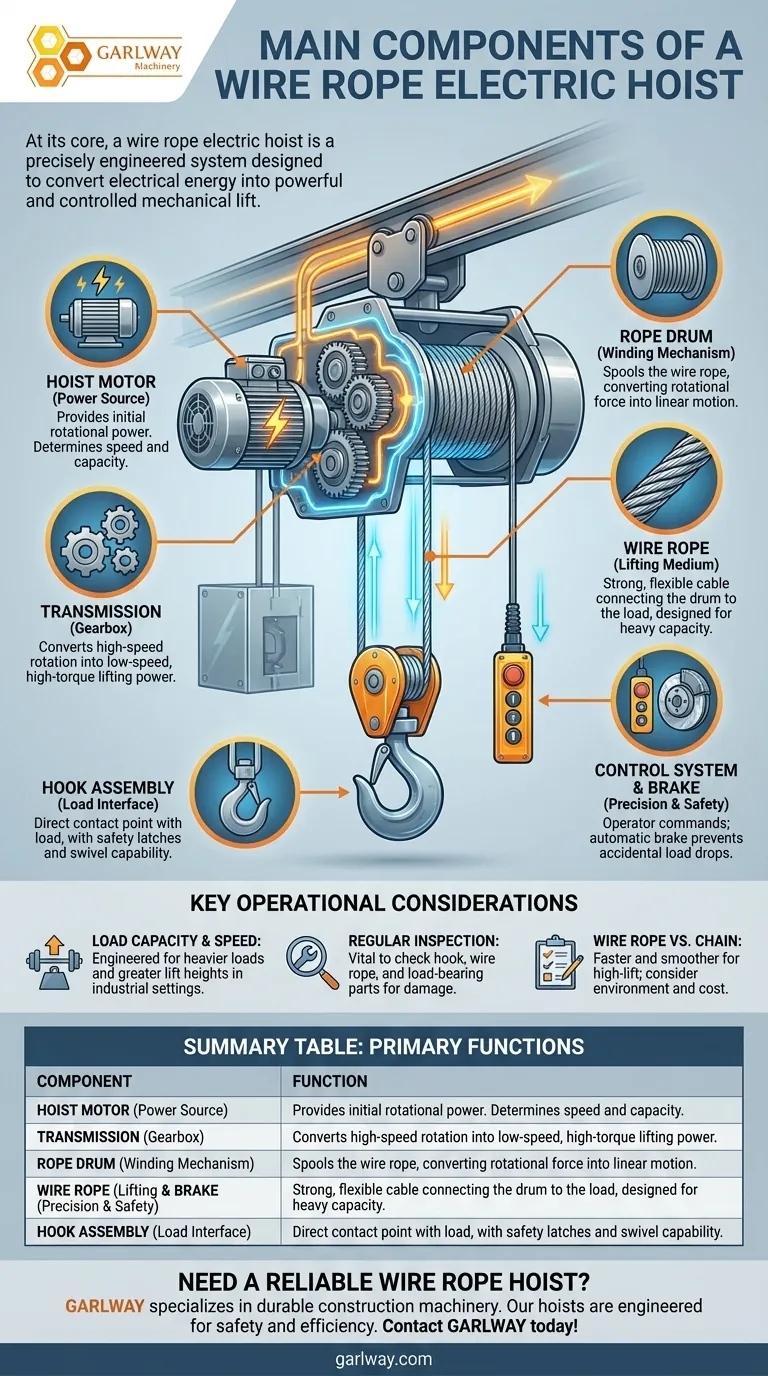
At its core, a wire rope electric hoist is a precisely engineered system of several critical components. The primary parts that work together to lift heavy loads are the electric motor, a transmission or gearbox, a grooved drum, the steel wire rope, and a hook assembly, all governed by a control system.
A wire rope hoist is more than a collection of parts; it is a system designed to convert electrical energy into powerful and controlled mechanical lift. Understanding the function of each component is essential for safe operation, proper maintenance, and selecting the right tool for the job.
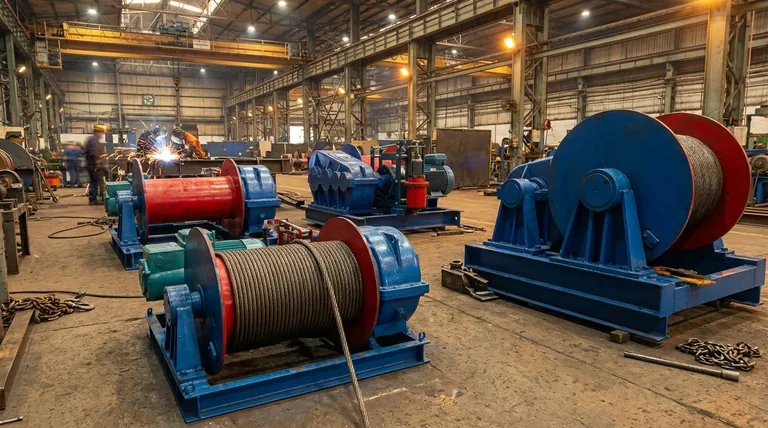
The Anatomy of a Wire Rope Hoist
To grasp how a wire rope hoist operates, we must first understand the specific role each major component plays in the lifting process.
The Hoist Motor: The Power Source
The electric motor is the heart of the hoist. It provides the initial rotational power required to begin the lifting operation. The motor's specifications determine the hoist's overall speed and lifting capacity.
The Transmission (Gearbox): Translating Speed into Torque
The motor spins at a high speed with relatively low torque. The transmission, also known as a gearbox or gear reducer, is a critical mechanism that converts this high-speed rotation into low-speed, high-torque power. This is what gives the hoist the strength to lift heavy objects.
The Rope Drum: The Winding Mechanism
The drum is a cylindrical barrel that the wire rope winds onto. As the drum rotates, powered by the motor and gearbox, it spools the wire rope, converting the rotational force into the linear motion that raises or lowers the load.
The Wire Rope: The Lifting Medium
The wire rope is the flexible steel cable that connects the hoist drum to the load. Its strength and construction are designed to handle the specified load capacity safely and repeatedly.
The Hook Assembly: The Load Interface
The hook is the point of direct contact with the load. It is designed with safety latches and bearings to ensure a secure connection and allow the load to swivel without twisting the wire rope.
The Control System & Brake: Ensuring Precision and Safety
The control system, typically a push-button pendant, allows the operator to command the hoist to lift, lower, or stop. The brake is a crucial safety component that automatically engages when the motor is not running, preventing the load from accidentally falling.
Key Operational Considerations
While the core components define the hoist's function, understanding their operational context is vital for both safety and performance.
Load Capacity and Speed
Wire rope hoists are specifically engineered for heavier loads and greater lift heights than many alternatives. Their design makes them exceptionally well-suited for heavy-duty industrial applications requiring rapid and repeated lifting cycles.
The Importance of Regular Inspection
The integrity of the lifting components is paramount for safety. Staff must regularly inspect the hook, wire rope, and other load-bearing parts for any signs of damage.
Look for scratches, dents, cracks, twists, or any deformation in the hook. The wire rope must be checked for frays or wear and should remain properly lubricated to ensure a long service life.
Wire Rope vs. Chain Hoists
Wire rope hoists are generally faster and offer smoother operation for high-lift applications. However, wire ropes can be less durable than heavy-duty chains in highly abrasive or chemically harsh environments. They also tend to be a larger initial investment compared to chain hoists of similar capacity.
Matching the Hoist to the Task
Your choice and operation of a hoist should be guided by your primary objective.
- If your primary focus is heavy industrial lifting: The power, speed, and high lift capability of a wire rope hoist are ideal for manufacturing, bridge construction, and large-scale assembly.
- If your primary focus is safety and reliability: Prioritize a model with a robust braking system and implement a strict, documented inspection schedule for the wire rope and hook.
- If you are choosing between hoist types: Select a wire rope hoist for applications requiring high speed and long lifts, but consider a chain hoist for lower-clearance areas or extremely harsh environments.
Understanding these core components empowers you to select, operate, and maintain your lifting equipment for maximum safety and efficiency.
Summary Table:
| Component | Primary Function |
|---|---|
| Electric Motor | Provides the initial rotational power for lifting. |
| Transmission/Gearbox | Converts high motor speed into high-torque lifting power. |
| Rope Drum | Spools the wire rope to raise or lower the load. |
| Wire Rope | The strong, flexible steel cable that connects to the load. |
| Hook Assembly | The secure point of contact and interface with the load. |
| Control System & Brake | Allows operator control and ensures safety by preventing accidental drops. |
Need a reliable wire rope hoist for your heavy-duty projects?
GARLWAY specializes in construction machinery, offering durable and high-performance winches, concrete mixers, and concrete batching plants for construction companies and contractors globally. Our wire rope hoists are engineered for maximum safety, efficiency, and longevity in demanding industrial environments.
Contact GARLWAY today to discuss your specific lifting needs and discover how our solutions can enhance your project's productivity and safety.
Visual Guide
Related Products
- Electric Hoist Winch Boat Anchor Windlass for Marine Applications
- Electric and Hydraulic Winch for Heavy Duty Applications
People Also Ask
- How does an electric anchor winch work? Power, Safety, and Reliable Operation Explained
- What are the advantages of installing an electric anchor winch on a boat? Boost Safety & Ease for Boaters
- What are the operational differences between electric hoists and winches? A Guide to Safe Lifting vs. Pulling
- What are the main benefits of a boat anchor winch? Boost Safety & Efficiency for Your Vessel
- How does a boat anchor winch work? A Guide to Reliable Anchor Handling

