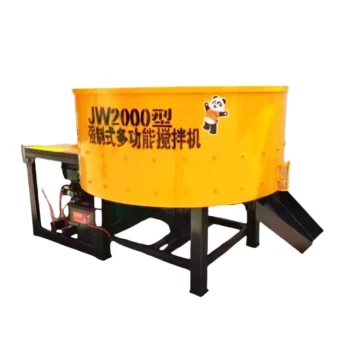
The defining feature of a mortar mixer is its stationary drum combined with rotating internal paddles. This design is engineered specifically to handle thick, sticky materials like mortar, stucco, and grout by forcing the mixture through a high-shear action, ensuring a completely uniform consistency that a tumbling-style concrete mixer cannot achieve.
A mortar mixer isn't just a smaller version of a concrete mixer; its entire mixing mechanism—a fixed barrel with moving paddles—is a deliberate engineering solution designed to master the unique challenge of blending low-slump, adhesive materials.
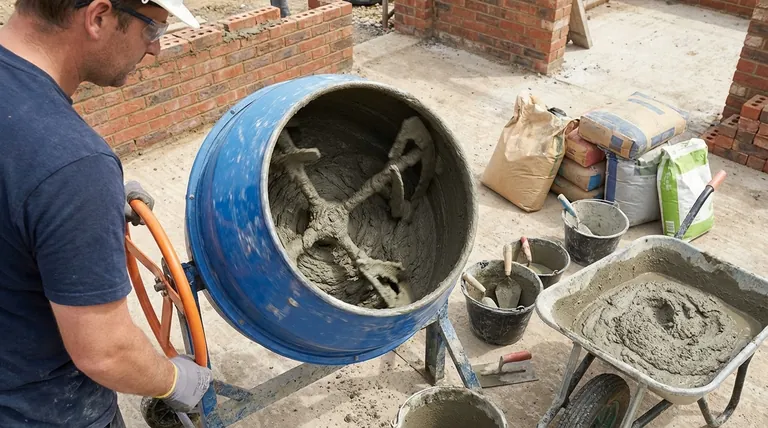
The Core Design: Stationary Drum, Rotating Paddles
A mortar mixer's effectiveness comes directly from its fundamental mechanical setup. Unlike a concrete mixer that tumbles materials, a mortar mixer uses force to blend them.
Why the Drum Stays Still
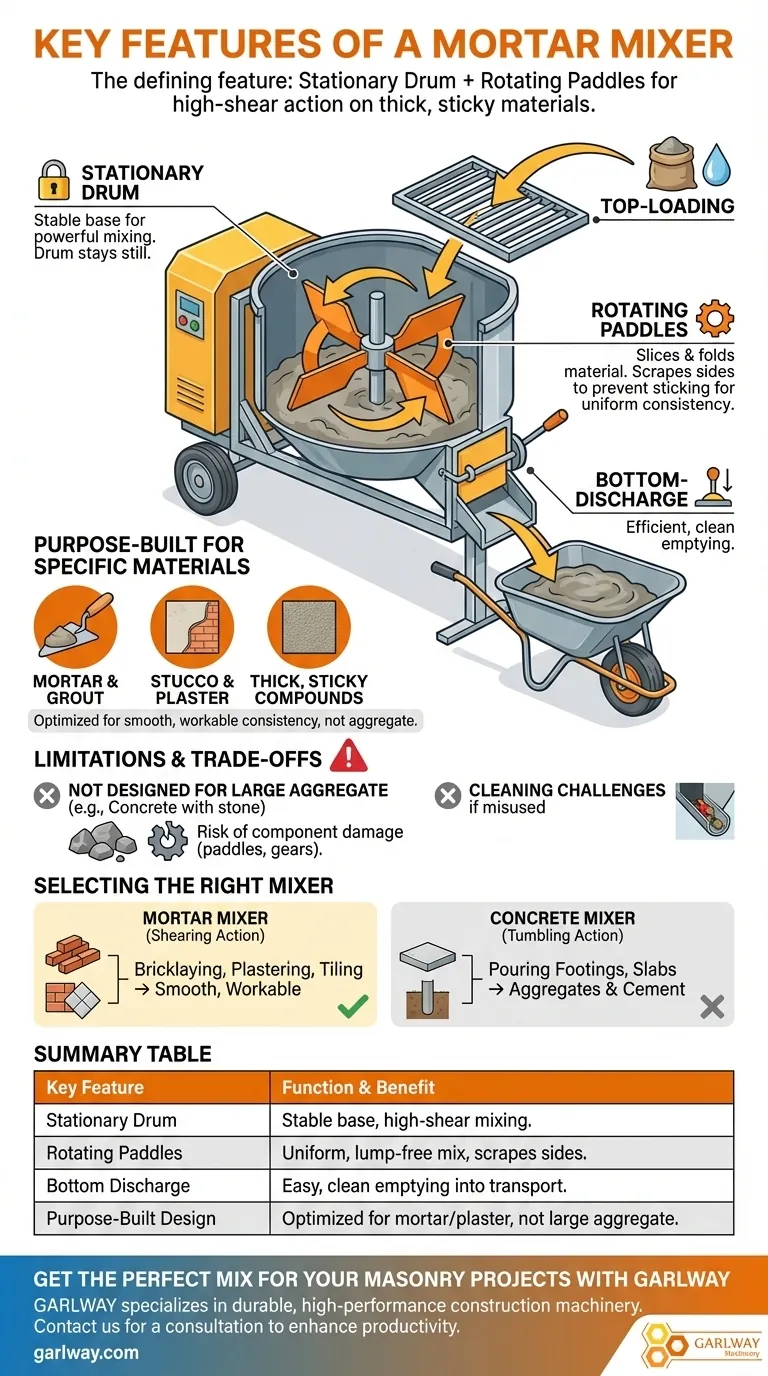
By keeping the drum stationary, the mixer can use powerful, motor-driven paddles to slice through and fold the material. This creates a high-shear action that is essential for thoroughly combining the sand, cement, and lime in mortar without adding excess water.
The Role of Horizontal Paddles
The internal paddles are designed to scrape the sides and bottom of the drum. This continuous scraping action prevents thick material from sticking to the surfaces, guaranteeing that every part of the batch is consistently mixed.
Top-Loading and Bottom-Discharge
The workflow is simple and efficient. The operator adds dry ingredients and water through a safety grate at the top. Once mixed, a lever opens a door at the bottom, allowing the finished mortar to be discharged directly into a wheelbarrow or bucket.
Purpose-Built for Specific Materials
This mixer is a specialized tool, not a general-purpose one. Its design is optimized for materials with a very specific consistency.
Ideal for Thick, Sticky Compounds
Mortar mixers excel with mortar, stucco, plaster, and grout. These materials need to be sticky and smooth, a consistency that the shearing action of the paddles is perfectly suited to create.
Smaller Capacity by Design
Compared to concrete mixers, mortar mixers typically have a smaller drum capacity. This aligns with the nature of masonry and finishing work, where smaller, fresher batches are required for tasks like bricklaying, tiling, or plastering.
Understanding the Limitations and Trade-offs
Using a mortar mixer for the wrong application can lead to poor results and damage the equipment. It is not a substitute for a concrete mixer.
Not Designed for Aggregate
While some models can handle very small pea gravel, a mortar mixer is not built to mix concrete containing larger stones or aggregate. The paddles are not designed to lift and tumble heavy rock.
Risk of Component Damage
Attempting to mix materials with larger aggregate can strain the motor and, more critically, damage the pinion gears that drive the paddles. This can lead to costly and time-consuming repairs.
Cleaning and Maintenance Challenges
Using a mortar mixer for materials it isn't designed for, like concrete, makes it significantly more difficult to clean. The cement and aggregate can become packed around the paddles and in the discharge chute, compromising future batches.
Selecting the Right Mixer for Your Project
Choosing the correct mixer is about matching its mechanical action to the properties of the material you are working with.
- If your primary focus is bricklaying, plastering, or tiling: The mortar mixer is the correct tool, as its shearing action is essential for achieving a smooth, workable consistency.
- If your primary focus is pouring footings, slabs, or post holes: You must use a concrete mixer, which is designed to tumble and properly combine sand, cement, and larger aggregates.
- If you need maximum job site flexibility: Evaluate features like wheel quality, handle design, and whether an electric or gas-powered engine best suits your environment.
Understanding that the mixer's design dictates its function ensures you get the right consistency for your material every time.
Summary Table:
| Key Feature | Function & Benefit |
|---|---|
| Stationary Drum | Provides a stable base for powerful, high-shear mixing action. |
| Rotating Paddles | Slices through and folds materials, ensuring a uniform, lump-free mix. |
| Bottom Discharge | Allows for easy, clean emptying directly into a wheelbarrow or bucket. |
| Purpose-Built Design | Optimized for thick materials like mortar and plaster, not concrete with large aggregate. |
Get the Perfect Mix for Your Masonry Projects
Are you a contractor or construction company working with mortar, stucco, or plaster? The right equipment is critical for efficiency and quality. GARLWAY specializes in durable, high-performance construction machinery, including mortar mixers designed to deliver a perfectly consistent mix batch after batch.
Let us help you enhance your productivity. Our experts can recommend the ideal mixer for your specific job requirements.
Contact GARLWAY today for a consultation and discover how our reliable machinery can be a valuable asset on your worksite!
Visual Guide
Related Products
- JDY350 Electric Hydraulic Mortar Mud Concrete Mixer
- JDC350 Small Cement Concrete Mortar Mixer
- Mini Cement Mortar Mixer Truck for Construction
- Belle Mixer Drum Self Loading Mortar Mixers JS3000
- JS1000 Volumetric Concrete Mortar Mixer for Sale Skid Steer Cement Mixer
People Also Ask
- When are electric mortar mixers typically used? Find the Perfect Tool for Small to Medium-Sized Jobs
- What are hydraulic concrete mixers used for? Powering Large-Scale Construction Projects
- How are mortar mixers utilized in concrete and grout projects? Maximize Your Mixing Efficiency
- What are the benefits of electric concrete mixers? Quiet, Clean, and Low-Maintenance Mixing
- What is a mortar mixer and what is its primary use? Master Masonry with the Right Equipment