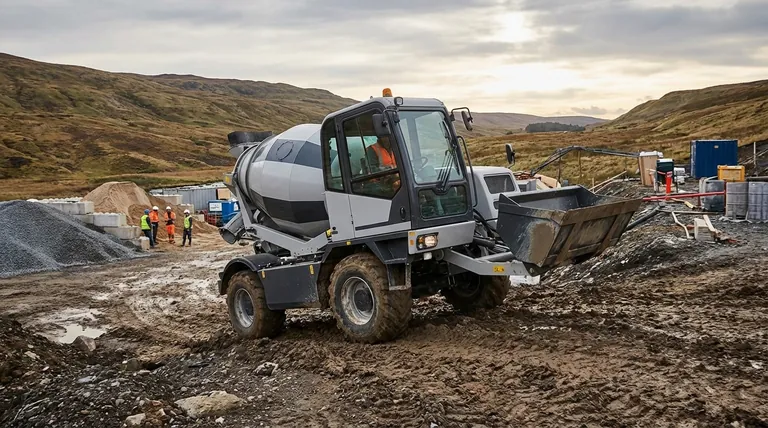
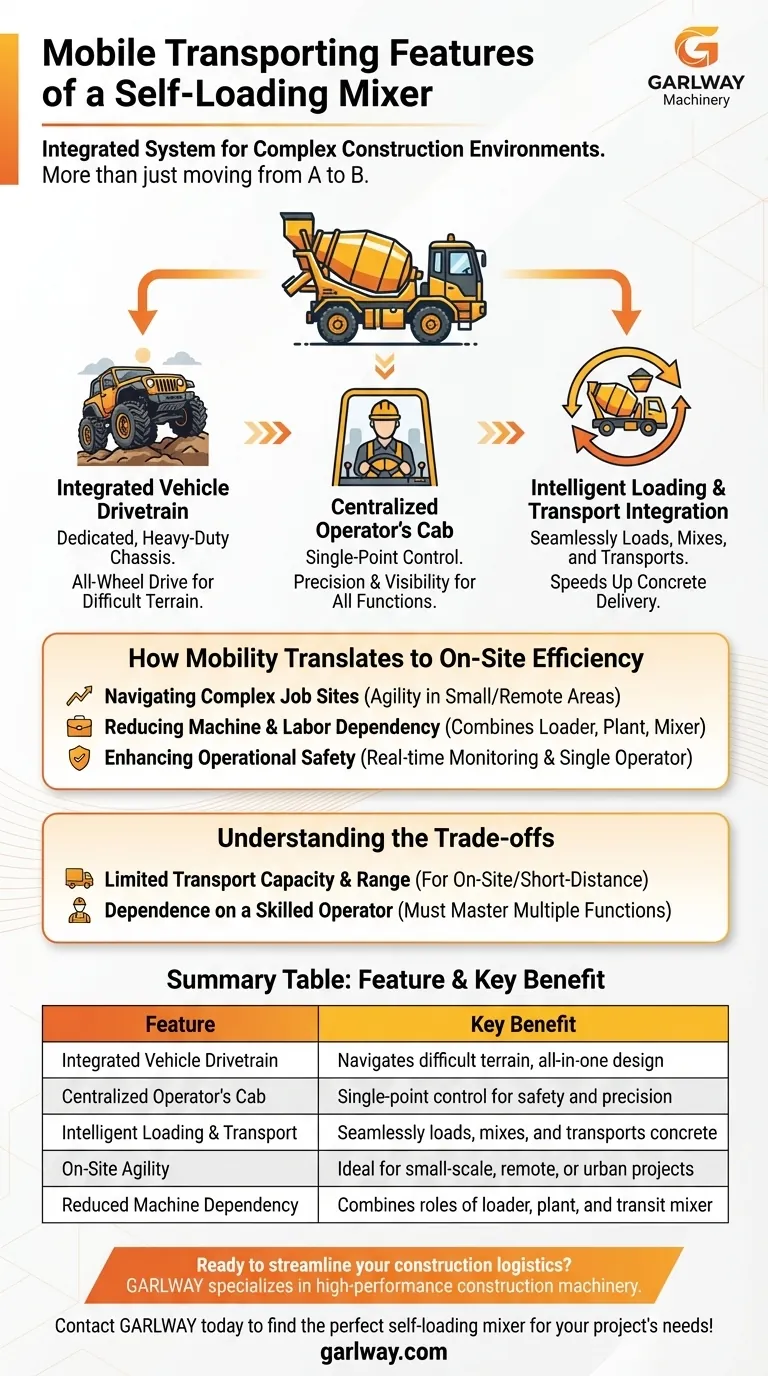
At its core, the mobile transporting function of a self-loading mixer is defined by a combination of a robust, integrated vehicle chassis, a centralized operator control system, and intelligent automation. These features allow it to load raw materials, mix concrete, and transport it across a job site as a single, self-sufficient unit.
The key takeaway is that a self-loading mixer's transport capability is not just about moving from A to B. It's an integrated system designed to replace multiple machines and solve the logistical challenges of remote, confined, or complex construction environments.
The Core Components of Mobile Transporting
A self-loading mixer's ability to transport material effectively is built upon a few key design principles. Each component serves a specific purpose in ensuring the machine is both mobile and operationally efficient.
Integrated Vehicle Drivetrain
The foundation of its mobility is an all-in-one design that merges the mixer with the vehicle. Unlike traditional systems that require separate loaders and trucks, this machine is built on a dedicated, heavy-duty chassis, often featuring all-wheel drive for navigating difficult terrain.
This design gives it the flexibility to operate in environments where larger, less maneuverable equipment would struggle, such as on unpaved roads, steep grades, or muddy construction sites.
The Centralized Operator's Cab
All transport functions are managed from a single operator's cab. From this vantage point, the operator uses a steering wheel and a dedicated maneuvering seat to drive, position, and operate the machine.
This centralized control is critical for both safety and precision. It provides the operator with clear visibility for navigating tight spaces and for accurately positioning the mixer for loading materials or discharging concrete.
Intelligent Loading and Transport Integration
The system features an "intelligent loading mechanism" that is directly linked to its transport function. The machine can load its own aggregates and cement, mix the concrete while stationary or in transit, and then immediately drive to the point of discharge.
This seamless integration dramatically speeds up the concrete production and delivery cycle on-site, eliminating the waiting time associated with coordinating separate loading and transport vehicles.
How Mobility Translates to On-Site Efficiency
The features of a self-loading mixer directly address common bottlenecks in construction logistics. Understanding how its mobility adds value is key to understanding the machine itself.
Navigating Complex Job Sites
The primary advantage is its agility. Self-loading mixers excel in small-scale, remote, or urban projects where space is at a premium. Their ability to maneuver like a single vehicle is invaluable for this work.
Reducing Machine and Labor Dependency
By combining a wheel loader, a batching plant, and a transit mixer into one piece of equipment, it significantly reduces the number of machines and operators needed on a site. This consolidation simplifies logistics and lowers operational overhead.
Enhancing Operational Safety
Modern systems monitor the surrounding environment in real-time. This allows the machine to adjust operating parameters automatically, enhancing safety during movement and loading. Having a single operator in control of the entire process also reduces the risk of miscommunication between different equipment operators.
Understanding the Trade-offs
While highly effective, the mobile transporting capabilities of a self-loading mixer are not without limitations. Objectivity requires acknowledging where it may not be the optimal solution.
Limited Transport Capacity and Range
Self-loading mixers are designed for on-site or short-distance transport. Their mixing drum capacity is significantly smaller than that of a standard transit mixer truck. They are not efficient for long-haul concrete delivery from a central plant.
Dependence on a Skilled Operator
The all-in-one nature of the machine means the operator must be skilled in driving heavy machinery, operating the loading shovel, and managing the concrete mixing process. The effectiveness of the entire operation rests heavily on the competency of one individual.
Making the Right Choice for Your Project
To determine if a self-loading mixer's transport features fit your needs, consider your primary operational goal.
- If your primary focus is work on remote or difficult-to-access sites: The all-in-one mobility and off-road capability make it an ideal solution.
- If your primary focus is reducing on-site equipment clutter and labor costs: This machine's ability to consolidate the roles of three machines offers unmatched efficiency.
- If your primary focus is high-volume, long-distance concrete delivery: A traditional batching plant and dedicated transit mixer fleet remains the superior choice.
Ultimately, understanding these mobile transport features empowers you to select the right tool for the specific logistical demands of your job.
Summary Table:
| Feature | Key Benefit |
|---|---|
| Integrated Vehicle Drivetrain | Navigates difficult terrain, all-in-one design |
| Centralized Operator's Cab | Single-point control for safety and precision |
| Intelligent Loading & Transport | Seamlessly loads, mixes, and transports concrete |
| On-Site Agility | Ideal for small-scale, remote, or urban projects |
| Reduced Machine Dependency | Combines roles of loader, plant, and transit mixer |
Ready to streamline your construction logistics?
GARLWAY specializes in high-performance construction machinery, including self-loading mixers designed for contractors and construction companies worldwide. Our machines are engineered to tackle the challenges of remote, confined, or complex job sites, helping you reduce equipment costs and boost on-site efficiency.
Contact GARLWAY today to find the perfect self-loading mixer for your project's needs!
Visual Guide
Related Products
- Belle Mixer Drum Self Loading Mortar Mixers JS3000
- Skid Steer Self Loading Concrete Mixers for Construction
- Portable Cement Mixer with Lift Concrete Machine
- Portable Concrete Mixer Machine Equipment for Mixing Concrete
- Portable Ready Mix Concrete Mixer Equipment
People Also Ask
- Why is timely cleaning important for a self loading mixer? Prevent Costly Downtime and Mix Failure
- How is discharging accomplished in a self loading mixer? Master Precise Concrete Placement
- What is the purpose of keeping the drum rotating during transportation in a self loading concrete mixer? Ensure Quality & Consistency
- What components are involved in the loading process of a self loading concrete mixer? A Guide to the Key Systems
- How does the weighing process work in a self loading concrete mixer? Achieve Precise, On-Site Concrete Batching