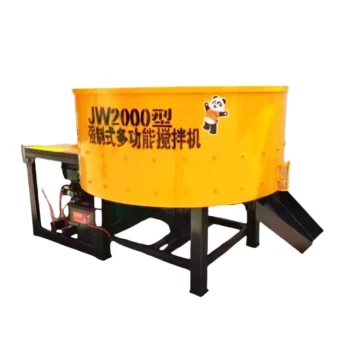
The fundamental efficiency advantage of a mortar mixer is its ability to produce a perfectly consistent and homogenous mix with minimal physical effort. This automated process is not only significantly faster than manual methods but also guarantees a level of quality and precision that is difficult to replicate by hand, directly impacting the integrity of the final construction.
A mortar mixer's true value lies in transforming a labor-intensive, variable task into a fast, repeatable, and precise process. This shift enhances not just speed, but the quality of the finished product, the well-being of your crew, and the overall productivity of your job site.
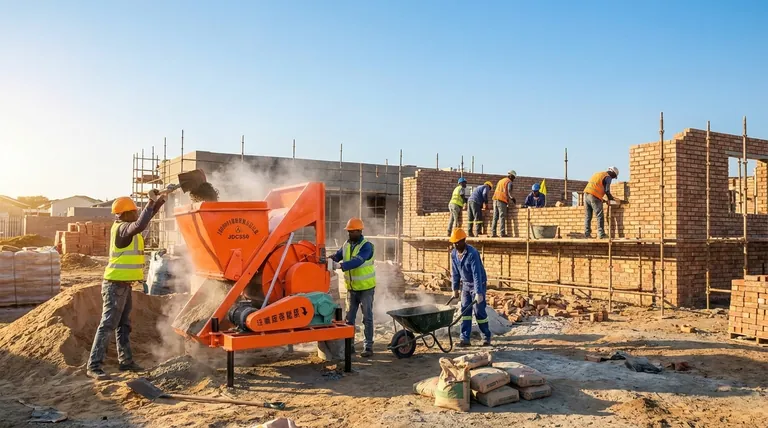
How a Mixer Guarantees a Superior Mix
The core function of a mixer is to eliminate the variables and inconsistencies inherent in manual mixing. This directly translates to a higher-quality material and a more reliable final structure.
The Core Mixing Mechanism
Modern mortar mixers use a highly effective design, often featuring a tank with star-shaped blades attached to the bottom. This configuration ensures that the entire batch—cement, sand, and water—is continuously and thoroughly blended.
Achieving Homogenous Consistency
The automated action of the blades creates a homogenous mix, meaning every portion of the mortar has the same consistency and ratio of ingredients. This eliminates weak spots or inconsistencies that can compromise bond strength and durability.
Precision and Quality Control
A mixer provides precise control over the mixture's quality. You can confidently create the exact same mix batch after batch, which is critical for projects requiring uniform color, texture, and structural integrity.
Redefining Workflow Efficiency
Beyond the quality of the mix itself, these machines introduce significant operational advantages that streamline the entire construction process.
A Drastic Reduction in Physical Strain
Manual mixing is physically demanding work. A mortar mixer automates this process, dramatically reducing the physical strain and fatigue on your crew, allowing them to focus their energy on skilled application.
Faster Project Turnaround
The speed of a machine is unmatched. What might take a significant amount of time to mix by hand can be ready in minutes, allowing for a continuous workflow and faster completion of the overall project.
Minimal Training Required
These machines are designed for straightforward operation. This minimal training requirement means almost any member of the crew can be tasked with producing a perfect mix, increasing team flexibility and efficiency.
Understanding the Trade-offs
While highly advantageous, it's important to consider the practical implications of integrating a mortar mixer into your workflow.
Initial Investment and Maintenance
A mixer represents an upfront capital cost compared to a wheelbarrow and hoe. It also requires routine cleaning and maintenance to ensure longevity and optimal performance, including managing fuel for gas-powered models.
Power Source Logistics
Your choice of mixer is tied to your site's resources. Gas-powered mixers offer incredible versatility but require fuel and proper ventilation. Electric models are quieter but depend on access to a reliable power source.
Portability and Scale
The size of the mixer must match the job. While portable models with sturdy wheels and ergonomic handles are excellent for most sites, they can be cumbersome in tight spaces. Conversely, using a small mixer for a large job creates a bottleneck.
Making the Right Choice for Your Goal
Selecting the appropriate mixer hinges entirely on the scale and nature of your work.
- If your primary focus is consistent, mid-sized professional projects: A portable mixer with a gas engine is your most versatile tool for ensuring quality and reducing labor costs on varied job sites.
- If your primary focus is large-scale commercial construction: A high-capacity, towable mortar mixer is a non-negotiable asset for maximizing productivity and meeting demanding schedules.
- If your primary focus is simplifying cleanup and maintenance: Look for models with a lamination or scraping feature, which helps clean the tank by removing residue after use.
Ultimately, investing in the right mortar mixer empowers you to deliver higher-quality work more efficiently and reliably.
Summary Table:
| Advantage | Key Benefit |
|---|---|
| Consistent Mix Quality | Guarantees a homogenous blend, eliminating weak spots and ensuring structural integrity. |
| Increased Speed | Drastically reduces mixing time compared to manual methods, accelerating project timelines. |
| Reduced Labor Strain | Automates a physically demanding task, allowing crews to focus on skilled application. |
| Operational Simplicity | Requires minimal training, enabling any crew member to produce a perfect mix. |
Ready to enhance your construction efficiency and project quality?
GARLWAY specializes in providing robust and reliable construction machinery, including mortar mixers, concrete mixers, and concrete batching plants. Our equipment is designed to help construction companies and contractors globally achieve faster project turnaround, superior mix consistency, and reduced labor costs.
Contact GARLWAY today to find the perfect mortar mixer solution for your specific project needs and experience the GARLWAY advantage in performance and durability.
Visual Guide

Related Products
- JDY350 Electric Hydraulic Mortar Mud Concrete Mixer
- JDC350 Small Cement Concrete Mortar Mixer
- Mini Cement Mortar Mixer Truck for Construction
- Belle Mixer Drum Self Loading Mortar Mixers JS3000
- JS1000 Volumetric Concrete Mortar Mixer for Sale Skid Steer Cement Mixer
People Also Ask
- When are electric mortar mixers typically used? Find the Perfect Tool for Small to Medium-Sized Jobs
- What are hydraulic concrete mixers used for? Powering Large-Scale Construction Projects
- How are mortar mixers utilized in concrete and grout projects? Maximize Your Mixing Efficiency
- What are the benefits of electric concrete mixers? Quiet, Clean, and Low-Maintenance Mixing
- What is a mortar mixer and what is its primary use? Master Masonry with the Right Equipment