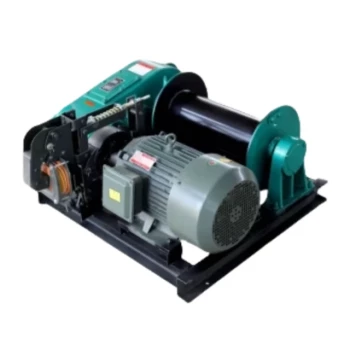
At its core, a winch's classification by drum count is a direct reflection of its operational complexity. Winches are primarily categorized into two types based on this feature: single-drum winches and double-drum winches. While other classifications exist based on power source or speed, the number of drums dictates the fundamental application of the machine.
The choice between a single-drum and a double-drum winch is not about lifting power but about the nature of the task. Single-drum winches are built for simple, direct pulls, while double-drum winches are designed for more complex operations involving coordinated, reciprocal motion.
The Role of the Drum
The Heart of the Winch
The drum is the cylindrical component that the wire rope or cable winds onto. Its function is to store the line and provide the mechanical advantage needed to pull a load.
Dictating Functionality
The number of drums on a single winch frame fundamentally changes its capabilities, moving it from a simple pulling tool to a more complex piece of positioning machinery.
The Primary Classifications: Single vs. Double Drum
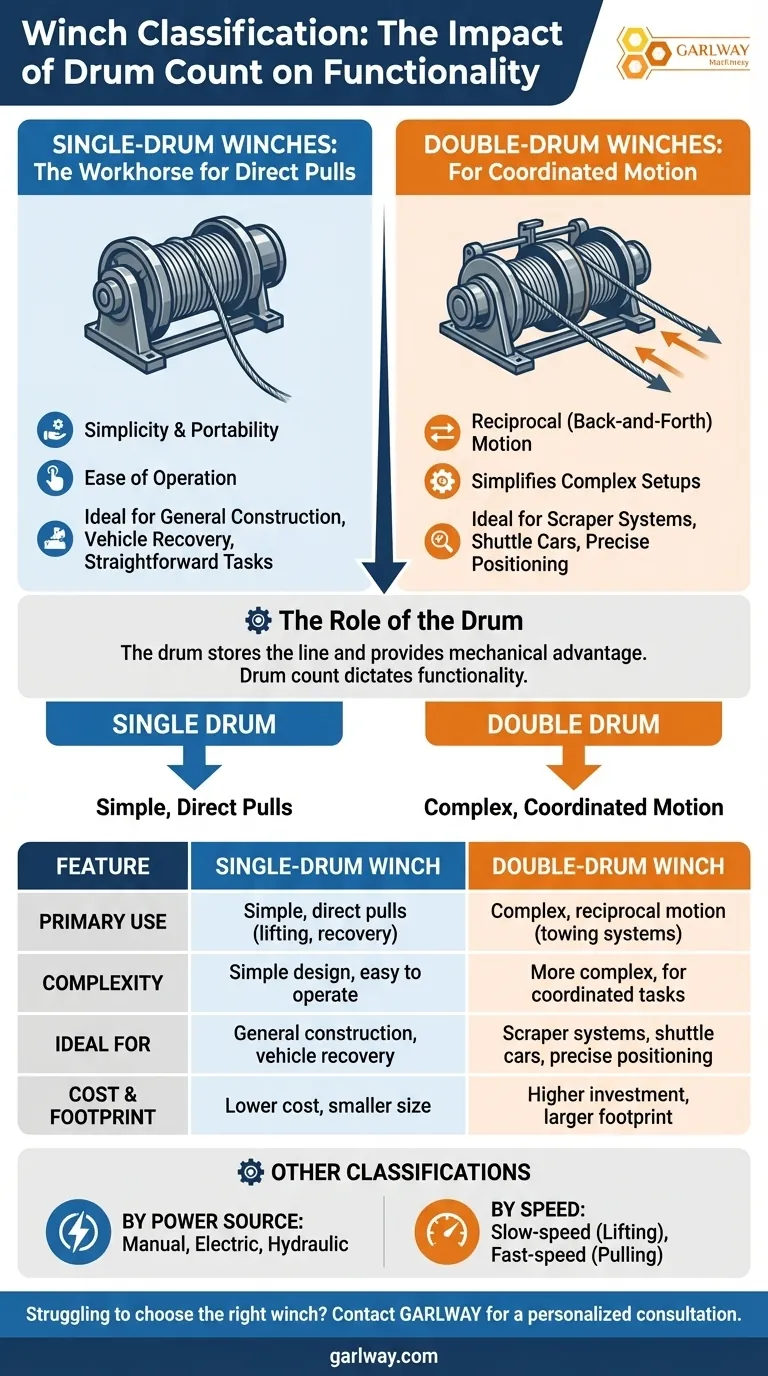
Single-Drum Winches: The Workhorse for Direct Pulls
A single-drum winch is the most common configuration. It features one drum that spools a single line.
Its design is valued for its simplicity, ease of operation, and portability. This makes it the standard choice for general construction, vehicle recovery, and most straightforward lifting and pulling tasks.
Double-Drum Winches: For Coordinated Motion
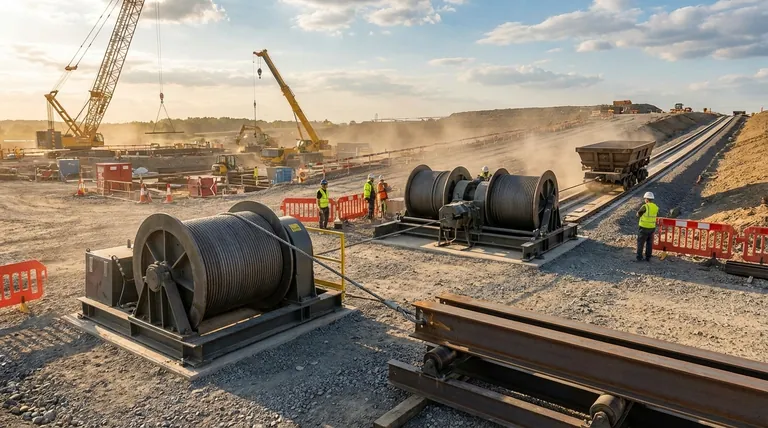
A double-drum winch has two drums mounted on a common frame. These drums can often be operated together or independently.
This configuration is essential for tasks that require reciprocal (back-and-forth) motion. A classic example is towing a cart on a dual-track system, where one drum pulls the cart forward while the other pays out its line, and vice-versa for the return trip.
This design simplifies complex setups, often reduces the number of operators needed, and significantly increases productivity in specialized applications.
Understanding the Trade-offs
Simplicity vs. Versatility
The single-drum winch is the definition of a simple, robust tool. It has fewer moving parts, is easier to maintain, and is more intuitive to operate.
The double-drum winch trades some of that simplicity for immense operational versatility. It can perform tasks a single-drum winch simply cannot, such as precise positioning between two points or managing a pull-pull system.
Cost and Footprint
Predictably, a single-drum winch is generally less expensive and has a smaller physical footprint than a double-drum model of similar capacity.
The double-drum winch represents a greater investment and requires more space, making it a specialized purchase for specific, recurring operational needs.
Context: Other Ways to Classify Winches
By Power Source
Winches are also classified by how they are powered. The main types include manual, electric, and hydraulic winches, with electric being extremely common for industrial lifting operations.
By Speed
Another key classification is rotation speed. Slow-speed winches are typically used for lifting, where control and safety are paramount. Fast-speed winches are used for pulling applications where cycle time is more critical than precise vertical placement.
Making the Right Choice for Your Application
Choosing the correct configuration requires a clear understanding of your primary task.
- If your primary focus is general lifting, pulling, or recovery: A single-drum winch offers the ideal blend of simplicity, reliability, and cost-effectiveness.
- If your primary focus is operating a system with reciprocal motion, like a scraper or shuttle car: A double-drum winch is the essential tool for achieving the required control and efficiency.
Ultimately, selecting a winch based on its drum configuration ensures you have a tool precisely matched to the complexity of your operational needs.
Summary Table:
| Feature | Single-Drum Winch | Double-Drum Winch |
|---|---|---|
| Primary Use | Simple, direct pulls (lifting, recovery) | Complex, reciprocal motion (towing systems) |
| Complexity | Simple design, easy to operate | More complex, for coordinated tasks |
| Ideal For | General construction, vehicle recovery | Scraper systems, shuttle cars, precise positioning |
| Cost & Footprint | Lower cost, smaller size | Higher investment, larger footprint |
Struggling to choose the right winch for your project's complexity?
At GARLWAY, we specialize in engineering robust construction machinery, including a full range of single-drum and double-drum winches. Our experts can help you select the perfect configuration to enhance efficiency and safety for your construction company or contracting business.
Contact our team today for a personalized consultation and discover the GARLWAY advantage in power and reliability.
Visual Guide
Related Products
- Warn Winch Windlass Boat Trailer Winch
- Electric and Hydraulic Winch for Heavy Duty Applications
- Hydraulic Winding Engine Harbor Freight Winch
- Small Electric Winch 120V and 240V for Compact Applications
- Quick Windlass Portable Winch for Truck and Boat Best Boat Winch
People Also Ask
- What are the main components of a boat trailer winch? A Guide to Safe & Efficient Boat Loading
- What factors should be considered when choosing a boat trailer winch? Ensure Safe and Effortless Boat Loading
- What is the purpose of boat trailer winches? Safely and Efficiently Load Your Boat
- What are the two main types of boat trailer winches? Manual vs. Electric Explained
- How often should a boat trailer winch be replaced? Your Guide to Safety and Longevity