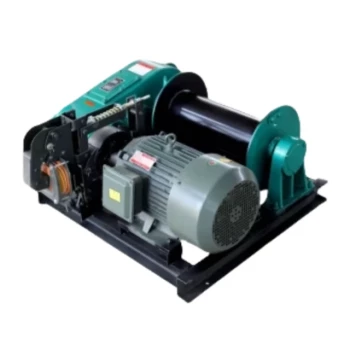
The cost of a winch system varies dramatically based on its type and power source. A simple, basic capstan winch might cost only a few hundred dollars, whereas a high-capacity reel winch or a specialized marine windlass can easily run into several thousand dollars before factoring in the significant costs of installation and supporting infrastructure.
The purchase price of the winch unit is only the starting point. A true cost analysis must account for the power source, installation complexity, and required structural modifications, which can often meet or exceed the cost of the winch itself.
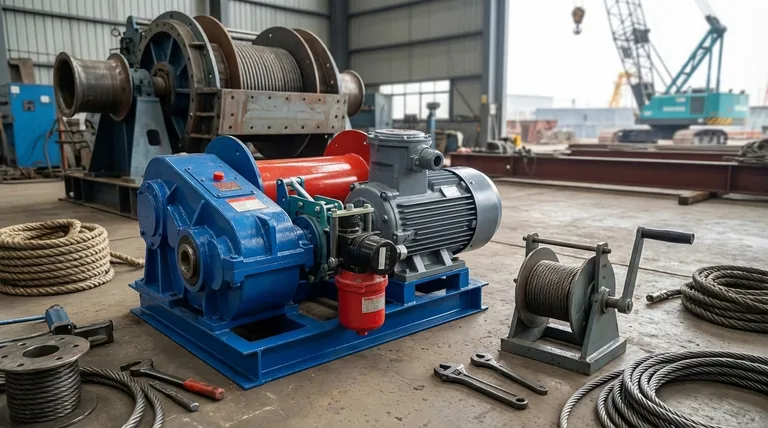
Deconstructing the Total Cost of a Winch System
To understand the true financial commitment, you must look beyond the sticker price and evaluate the system as a whole. The final cost is a sum of three distinct parts: the winch unit, the power system, and the installation.
The Winch Unit: A Spectrum of Price Points
The winch mechanism itself is the first cost component. Different designs serve different purposes and come with vastly different price tags.
A capstan winch is the most basic design, using a vertical drum to pull a line. Because it doesn't store the line, its mechanics are simpler, placing it at the lowest end of the cost spectrum, often starting at a few hundred dollars.
Reel winches are more common for vehicles and many marine applications. They store the line or cable on a drum, which adds complexity and cost. Prices can range from several hundred to many thousands of dollars depending on size, load capacity, and brand.
A windlass is a specialized winch for managing an anchor chain, often featuring a "gypsy" wheel designed to grip the chain links. These are robust, purpose-built systems that typically cost several thousand dollars.
The Power Source: A Major Cost Driver
How the winch is powered is arguably the most significant factor in its total system cost.
An electric system is a popular middle-ground. However, the cost includes more than the winch motor. It requires heavy-gauge wiring, high-amperage fuses or circuit breakers, and potentially a battery upgrade or a more powerful alternator to handle the load.
A hydraulic system represents the high end in both power and cost. The winch unit is only one part. You must also budget for a hydraulic pump, a fluid reservoir, high-pressure lines, and control valves, which can easily double the total investment.
Understanding the Trade-offs: Cost vs. Capability
Choosing a winch system involves balancing your budget against your performance needs. The lowest upfront cost is not always the most effective or economical solution in the long run.
The Pitfall of Undersizing
Purchasing a winch that is too small for its intended task is a common and costly mistake. An underpowered winch will strain its motor, leading to premature failure and the need for a complete replacement, negating any initial savings.
Electric System Limitations
While convenient, electric winches have duty-cycle limitations. They generate significant heat under load and can overheat if used continuously, requiring cool-down periods. For applications requiring sustained pulling power, this can be a critical operational constraint.
The Complexity of Hydraulic Systems
Hydraulic systems offer immense, continuous power but come with the highest initial cost and complexity. Installation is more involved, and the system introduces more potential points of failure, such as fluid leaks from hoses or fittings, which can be costly to repair.
Making the Right Choice for Your Goal
To select the most cost-effective system, first define your primary operational need.
- If your primary focus is occasional, light-duty pulling: A basic electric or capstan winch offers the lowest entry cost and simplest installation.
- If your primary focus is regular, heavy-duty use like vehicle recovery: A robust electric reel winch is a balanced choice, but you must budget for significant electrical system upgrades.
- If your primary focus is continuous, high-load industrial or marine applications: The high initial cost of a hydraulic system or a specialized windlass is justified by its superior power, durability, and reliability.
By evaluating the total system cost—the unit, its power source, and installation—you can invest in a solution that delivers the performance you need without expensive surprises.
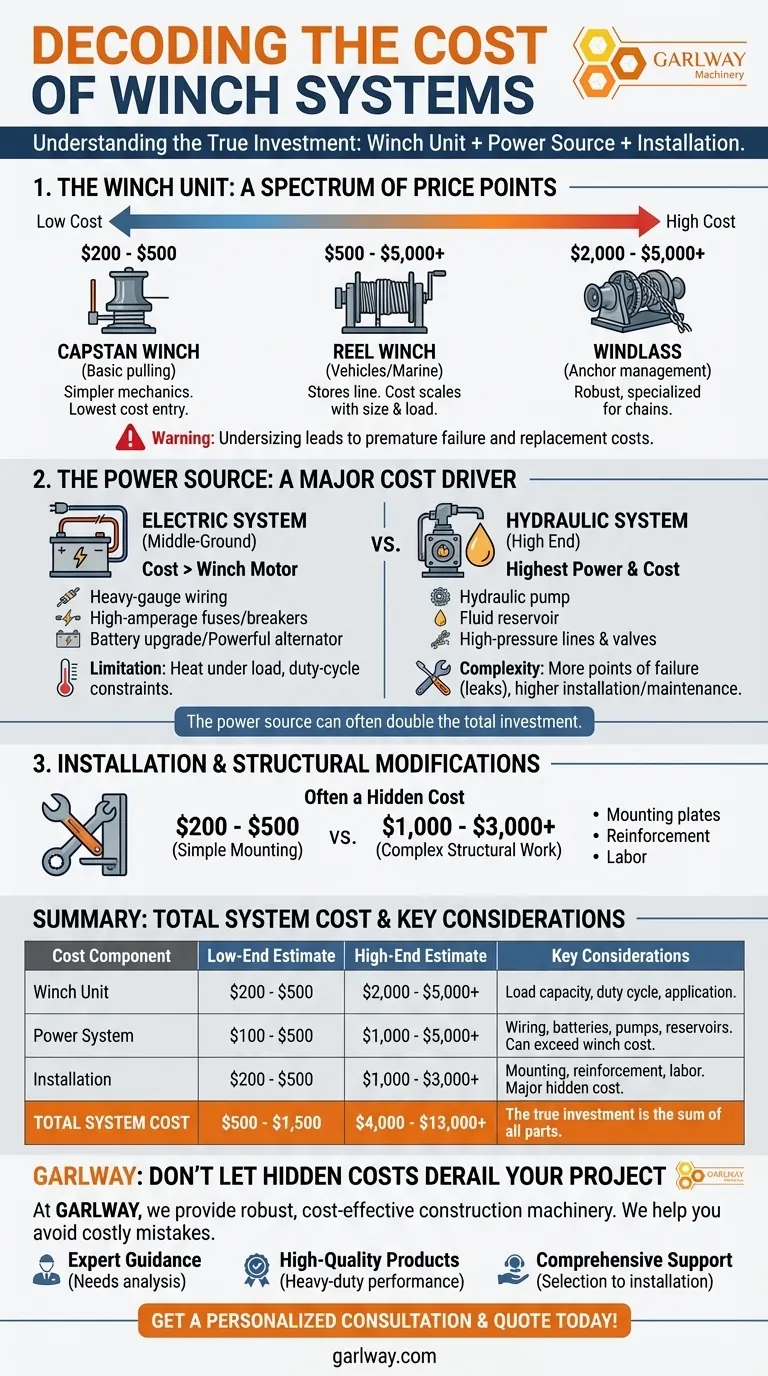
Summary Table:
| Cost Component | Low-End Estimate | High-End Estimate | Key Considerations |
|---|---|---|---|
| Winch Unit | $200 - $500 (Basic Capstan) | $2,000 - $5,000+ (Reel/Windlass) | Load capacity, duty cycle, and application-specific design. |
| Power System | $100 - $500 (Electrical Upgrades) | $1,000 - $5,000+ (Hydraulic System) | Wiring, batteries, pumps, and fluid reservoirs. Can exceed winch cost. |
| Installation | $200 - $500 (Simple Mounting) | $1,000 - $3,000+ (Complex Structural Work) | Mounting plates, reinforcement, and labor. Often a major hidden cost. |
| Total System Cost | $500 - $1,500 | $4,000 - $13,000+ | The true investment is the sum of all parts, not just the unit price. |
Don't Let Hidden Costs Derail Your Project
Choosing the right winch system is a critical investment. At GARLWAY, we specialize in providing robust and cost-effective construction machinery, including a full range of winches, concrete mixers, and batching plants for construction companies and contractors worldwide.
We help you avoid costly mistakes by providing:
- Expert Guidance: Our specialists will analyze your specific needs to recommend the most efficient and durable winch system for your application.
- High-Quality Products: GARLWAY winches are engineered for heavy-duty performance and long-term reliability, ensuring you get the best return on your investment.
- Comprehensive Support: From selection to installation planning, we are with you every step of the way.
Get a personalized consultation and a competitive quote today! Contact our GARLWAY experts now to find the perfect winch solution for your business.
Visual Guide
Related Products
- Electric and Hydraulic Winch for Heavy Duty Applications
- Small Electric Winch 120V and 240V for Compact Applications
- Electric 120V Boat Winch by Badlands
- Heavy Duty Electric Boat Winch Windlass Anchor
- Hydraulic Winding Engine Harbor Freight Winch
People Also Ask
- What are the differences between electric and hydraulic winches? Choose the Right Winch for Your Job
- What are some common uses for a heavy-duty winch? Power Your Construction & Industrial Projects
- What are electro-hydraulic winches and their applications? The Integrated Power Solution for Heavy-Duty Operations
- How do winches assist in bridge launching? Accelerate Bridge Placement with Controlled Pulling Power
- What are the benefits of using heavy-duty winches for large projects? Boost Efficiency & Safety