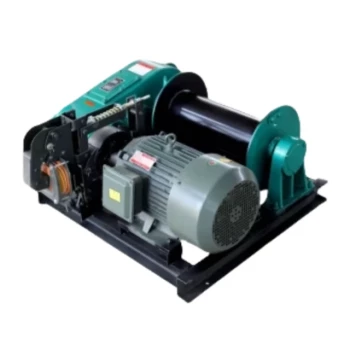
Beyond the standard models, a wide array of specialized winches exists, each engineered with unique features to meet specific operational demands. These include configurations like double-drum winches for handling multiple lines, variable frequency winches for precise speed control, and explosion-proof winches designed for hazardous environments. These specialized designs are not different technologies but rather advanced modifications of core winch principles.
The key takeaway is that "special" winches are defined by the specific components added to a standard design—like a second drum, a variable frequency drive, or specialized brakes—to solve distinct challenges related to capacity, control, or safety.
Foundational Winch Types: A Quick Primer
Before exploring specialized models, it's essential to understand the three core categories they are built upon. Nearly every winch is a variation of one of these fundamental designs.
H3: Manual Winches
Manual winches are the simplest form, operated by hand-cranking a lever or wheel. They are independent of any power source, making them reliable but limited in pulling capacity and speed.
H3: Electric Winches
This is the most common type, especially in vehicle recovery and general industrial use. They are typically powered by a vehicle's 12-volt DC electrical system or an AC power source for stationary applications, offering a strong balance of power and convenience.
H3: Hydraulic Winches
Hydraulic winches are powered by a hydraulic system, often driven by a vehicle's power steering pump or a dedicated pump. They are known for their ability to pull heavy loads for long durations without overheating, making them ideal for severe industrial and commercial use.
Specialized Winches for Enhanced Control and Precision
When a task requires more than just raw pulling power, winches can be equipped with components that offer granular control over speed, position, and engagement.
H3: Variable Frequency (VFD) Winches
A Variable Frequency Drive (VFD) allows the operator to precisely adjust the speed of the winch motor. This is critical in applications where loads must be moved slowly, positioned accurately, or smoothly accelerated and decelerated.
H3: Winches with Limiters
Limiters are safety devices that automatically stop the winch when the load reaches a preset upper or lower boundary. This prevents damage from over-travel, such as the hook block hitting the drum.
H3: Electric Hand Brake & Clutch Winches
These designs incorporate manual override systems. A hand brake provides an additional mechanical braking force for security, while a clutch allows the drum to be disengaged from the motor for free-spooling or manual adjustment.
Configurations for Increased Capacity and Redundancy
For the most demanding jobs involving extreme loads or critical safety requirements, the winch's mechanical structure is often enhanced.
H3: Double-Drum Winches
As the name implies, these winches feature two separate drums on a single unit. This allows an operator to control two different lines simultaneously, which is useful in complex lifting, marine, or positioning applications.
H3: Double-Brake Systems
In critical lifting scenarios, redundancy is key. A double-brake system provides a secondary, independent braking mechanism that engages if the primary brake fails, offering an essential layer of safety for heavy or valuable loads.
H3: Large External Gear & Hydraulic Winches
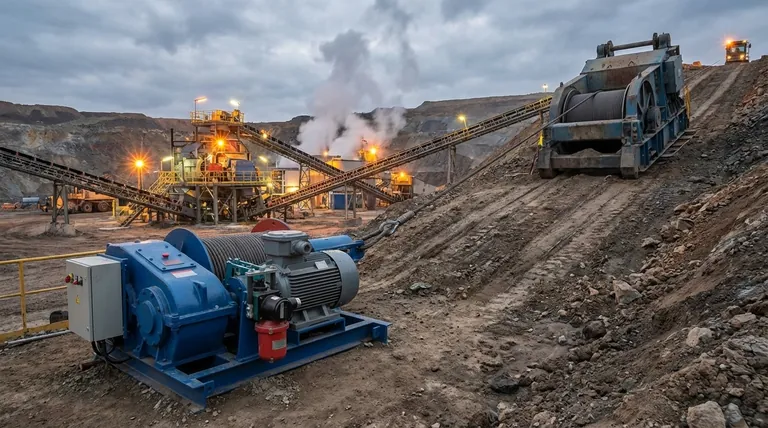
Built for massive scale, these industrial winches use large, external gearing and powerful hydraulic systems to generate immense pulling force. They are common in mining, marine, and heavy construction where standard winches are insufficient.
Winches for Specialized Environments and Applications
Sometimes, the winch's design is dictated by its operating environment or how it is mounted.
H3: Explosion-Proof Electric Winches
These are engineered for use in hazardous locations where flammable gases, dust, or vapors are present. The motor and electrical components are sealed in enclosures that prevent any internal spark from igniting the external atmosphere.
H3: Vehicle Mounting Systems
In the world of vehicle recovery, the mounting method is a form of specialization. Bumper-mounted winches are common for off-road use, while hitch-mounted winches offer the flexibility to be moved between the front and rear of a vehicle.
Understanding the Trade-offs of Specialization
While specialized features provide enhanced capabilities, they also introduce important considerations.
H3: Increased Complexity
Each special component, from a VFD to a double-drum gearbox, adds mechanical and electrical complexity. This can lead to more demanding maintenance schedules and a higher number of potential failure points.
H3: Higher Initial Cost
Specialized components and engineering for safety or high performance come at a significant price premium. An explosion-proof or large hydraulic winch costs substantially more than a standard electric model with similar pulling power.
H3: Potentially Reduced Versatility
A winch highly optimized for one task may be less efficient for others. A VFD winch designed for slow, precise movement may not be ideal for the rapid line speed needed in a competitive vehicle recovery situation.
Making the Right Choice for Your Application
Selecting the correct winch requires matching its features to the specific demands of your task.
- If your primary focus is safety and precision: A variable frequency (VFD) winch with limiters and a robust braking system is the correct choice.
- If your primary focus is heavy industrial lifting or redundancy: A double-drum or large hydraulic winch with a double-brake system is likely required.
- If your primary focus is operating in hazardous environments: An explosion-proof winch is non-negotiable for safety and compliance.
- If your primary focus is standard off-road vehicle recovery: A reliable electric winch with the appropriate bumper or hitch mounting system is the most practical solution.
Ultimately, choosing the right winch means looking past the basic power rating and focusing on the specific features that will guarantee safety, control, and efficiency for your unique challenge.
Summary Table:
| Specialization | Key Feature | Primary Use Case |
|---|---|---|
| Control & Precision | Variable Frequency Drive (VFD), Limiters | Precise load positioning, smooth acceleration/deceleration |
| Capacity & Redundancy | Double-Drum, Double-Brake Systems | Heavy industrial lifting, critical safety applications |
| Hazardous Environments | Explosion-Proof Enclosures | Operations with flammable gases, dust, or vapors |
| Vehicle Recovery | Bumper or Hitch Mounting | Off-road vehicle recovery, flexible deployment |
Need a winch that matches your unique challenge?
GARLWAY specializes in engineering construction machinery, including a full range of standard and specialized winches, concrete mixers, and batching plants. We help construction companies and contractors globally solve their toughest lifting and pulling challenges with reliable, safe, and efficient equipment.
Let us help you select the perfect winch for your application's specific demands for safety, control, and capacity.
Contact our experts today for a personalized consultation
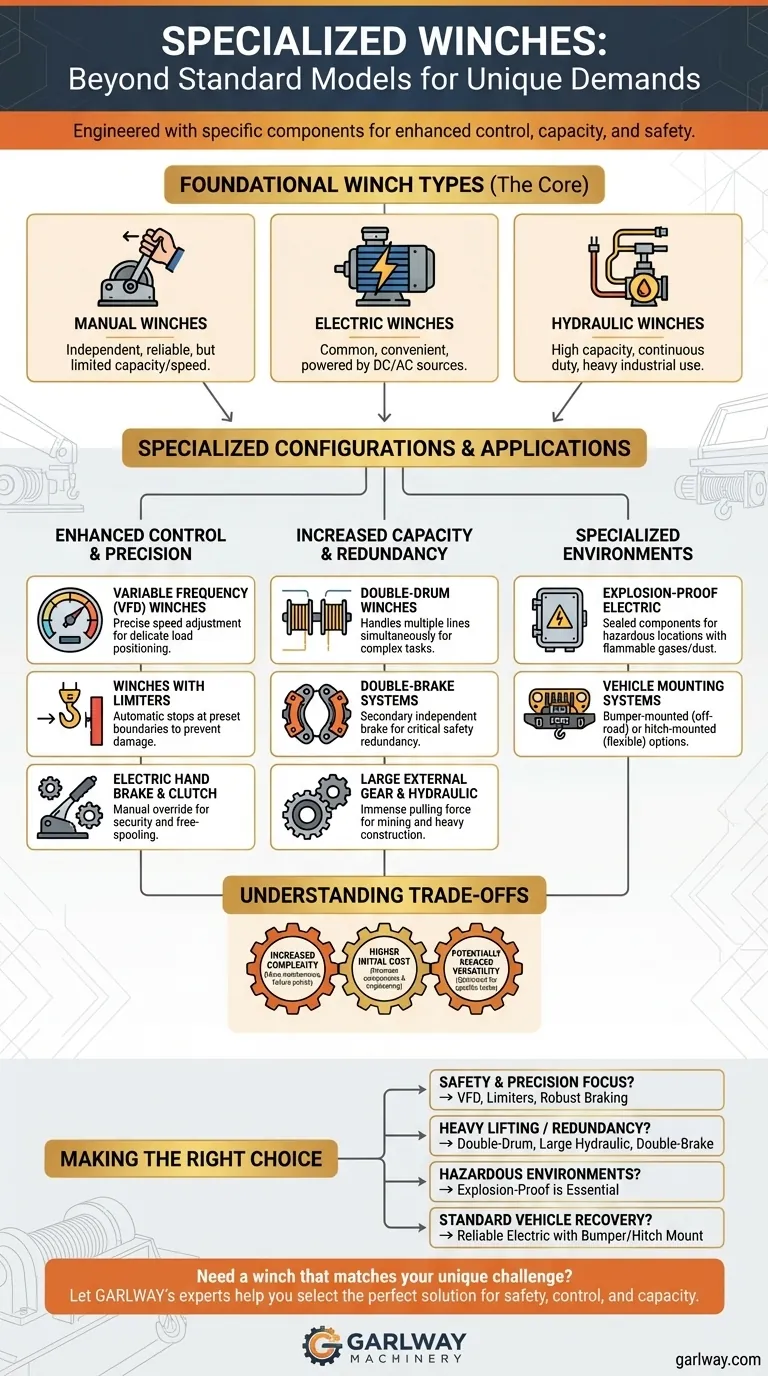
Visual Guide
Related Products
- Warn Winch Windlass Boat Trailer Winch
- Electric and Hydraulic Winch for Heavy Duty Applications
- Small Electric Winch 120V and 240V for Compact Applications
- Quick Windlass Portable Winch for Truck and Boat Best Boat Winch
- Hydraulic Winding Engine Harbor Freight Winch
People Also Ask
- What are the main components of a boat trailer winch? A Guide to Safe & Efficient Boat Loading
- What factors should be considered when choosing a boat trailer winch? Ensure Safe and Effortless Boat Loading
- What is the purpose of boat trailer winches? Safely and Efficiently Load Your Boat
- What are the two main types of boat trailer winches? Manual vs. Electric Explained
- How often should a boat trailer winch be replaced? Your Guide to Safety and Longevity