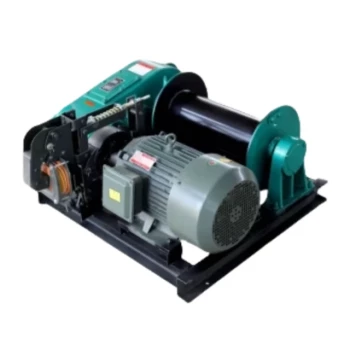
The two primary finishes for electric winch housings are multi-layer industrial paint coatings and full stainless steel construction. Each is designed to provide a specific level of protection against environmental corrosion, particularly in harsh conditions involving elements like salt water.
The choice between a painted or stainless steel winch housing is a critical decision balancing upfront cost against long-term durability. The right finish depends entirely on the corrosiveness of your operating environment.
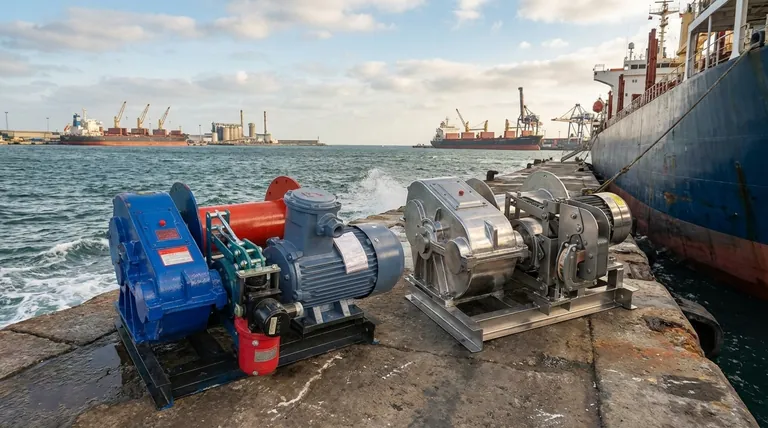
Coated Finishes: The Protective Barrier
Industrial paint systems are the most common method for protecting winch housings. They act as a physical barrier between the underlying metal and corrosive elements. These are not simple spray paints but complex, multi-layer systems engineered for durability.
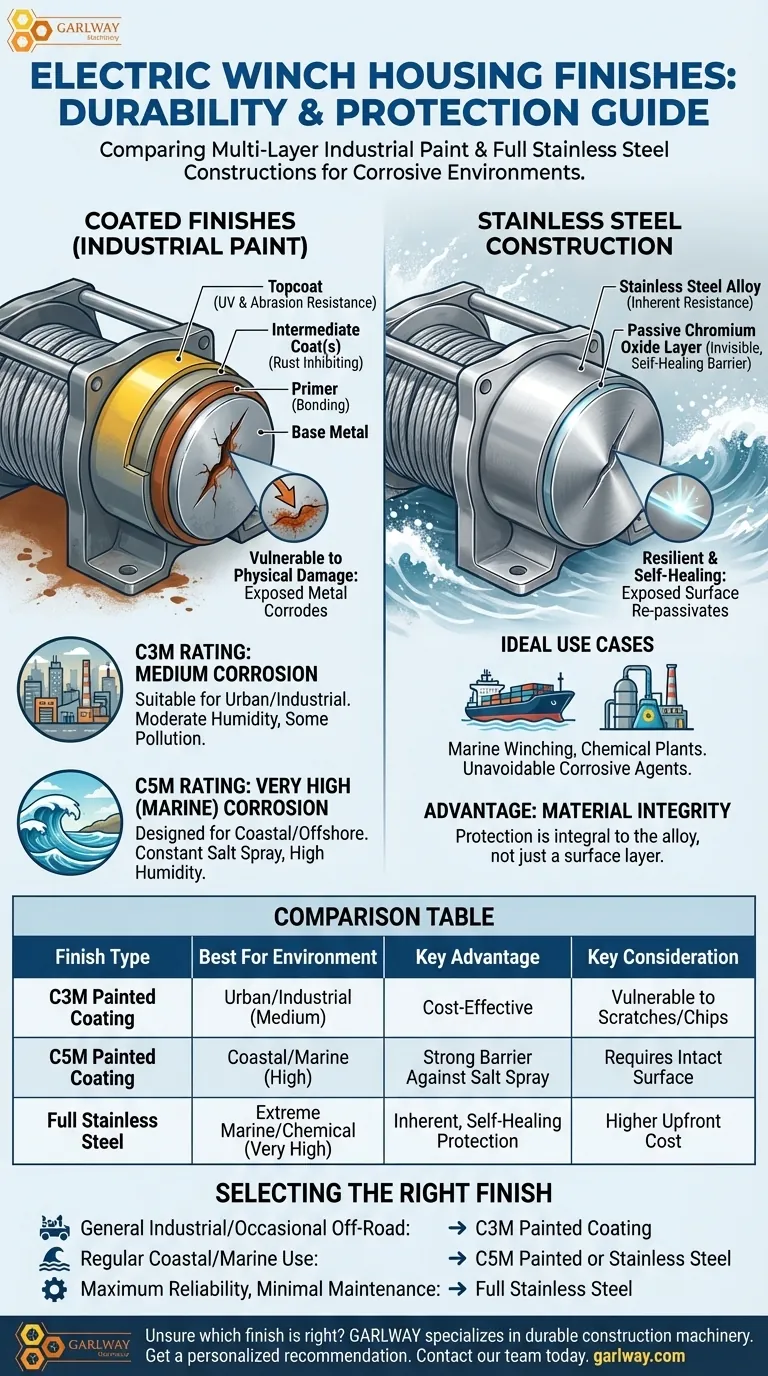
Understanding C3M and C5M Ratings
The terms C3M and C5M refer to corrosion protection standards, typically from the ISO 12944 international standard. They classify a coating's ability to withstand specific environments.
A C3M rating signifies protection for a "medium" corrosive environment. This is suitable for urban and industrial areas with moderate humidity and some air pollution.
A C5M rating is for a "very high (marine)" corrosive environment. This finish is specifically designed to withstand coastal and offshore areas with constant exposure to high humidity and aggressive salt spray.
How Multi-Layer Paint Works
These systems typically involve a primer, one or more intermediate coats, and a durable topcoat. Each layer serves a purpose, from bonding to the metal and inhibiting rust to resisting UV rays and physical abrasion. The effectiveness of the system depends on the quality of these layers and the application process.
Stainless Steel: Inherent Corrosion Resistance
Instead of relying on a surface coating, some high-end winches feature housings made entirely of stainless steel. This approach offers a fundamentally different type of protection.
The Advantage of Material Integrity
The corrosion resistance of stainless steel is an inherent property of the metal alloy itself. It contains chromium, which forms a passive, invisible layer of chromium oxide on the surface that prevents rust from forming.
Because the protection is integral to the material, it cannot be compromised by scratches, chips, or dings in the same way a paint coating can.
Ideal Use Cases for Stainless Steel
Full stainless steel housings are the premium choice for the most demanding applications. They are exceptionally well-suited for marine winching, chemical plants, and any environment where constant exposure to corrosive agents is unavoidable.
Understanding the Trade-offs
Choosing a finish requires you to balance cost, performance, and maintenance requirements. There is no single "best" option for every user.
Cost vs. Longevity
Winches with C3M or even C5M paint systems are generally more affordable than their full stainless steel counterparts. However, a stainless steel housing often provides a longer service life with less worry about coating failure, potentially offering better value over the winch's lifetime.
Maintenance and Durability
A significant drawback of any painted finish is its vulnerability to physical damage. A deep scratch or chip that exposes the base metal becomes an immediate point of failure where rust can begin and spread under the coating.
Stainless steel is far more resilient. While it can be scratched, the newly exposed surface will simply re-passivate, continuing to protect itself from corrosion without user intervention.
Selecting the Right Finish for Your Environment
Your decision should be guided by a realistic assessment of your winch's working conditions.
- If your primary focus is general industrial or occasional off-road use: A winch with a C3M-rated coating provides a durable and cost-effective solution.
- If your primary focus is regular use in coastal, marine, or chemically harsh areas: You should strongly consider a C5M-rated paint system or invest in a full stainless steel housing.
- If your primary focus is maximum reliability and minimal maintenance in any environment: A full stainless steel housing is the superior long-term investment.
Ultimately, matching the housing's protective finish to the severity of your environment is key to ensuring your winch's longevity and performance.
Summary Table:
| Finish Type | Best For Environment | Key Advantage | Key Consideration |
|---|---|---|---|
| C3M Painted Coating | Urban/Industrial (Medium Corrosion) | Cost-Effective | Vulnerable to scratches/chips |
| C5M Painted Coating | Coastal/Marine (High Corrosion) | Strong Barrier Against Salt Spray | Requires intact coating surface |
| Full Stainless Steel | Extreme Marine/Chemical (Very High Corrosion) | Inherent, Self-Healing Protection | Higher Upfront Cost |
Unsure which winch housing finish is right for your specific project?
At GARLWAY, we specialize in durable construction machinery, including electric winches built to withstand the toughest environments. Our experts can help you select the perfect winch with the right housing finish—be it a robust C5M coating for marine applications or a premium stainless steel model for ultimate longevity.
Get a personalized recommendation to protect your investment and ensure reliable performance.
Contact our team today for expert advice
Visual Guide
Related Products
- Electric Hoist Winch Boat Anchor Windlass for Marine Applications
- Small Electric Winch 120V and 240V for Compact Applications
- Electric 120V Boat Winch by Badlands
- Electric and Hydraulic Winch for Heavy Duty Applications
- 12000 lb Electric Boat Trailer Winch with Windlass Anchor Warn
People Also Ask
- How does an electric anchor winch work? Power, Safety, and Reliable Operation Explained
- What are the advantages of installing an electric anchor winch on a boat? Boost Safety & Ease for Boaters
- What are the operational differences between electric hoists and winches? A Guide to Safe Lifting vs. Pulling
- What are the main benefits of a boat anchor winch? Boost Safety & Efficiency for Your Vessel
- How does a boat anchor winch work? A Guide to Reliable Anchor Handling