
At its core, a concrete batching plant is not a single machine but an integrated system of components designed for one purpose: to precisely combine raw materials into high-quality concrete. The main components are organized into systems for material storage, weighing, conveying, mixing, and control, supported by essential ancillary equipment.
A concrete batching plant functions like a highly precise industrial kitchen. It meticulously stores, measures (batches), moves, and mixes ingredients—aggregates, cement, water, and admixtures—according to a specific recipe managed by a central control system.
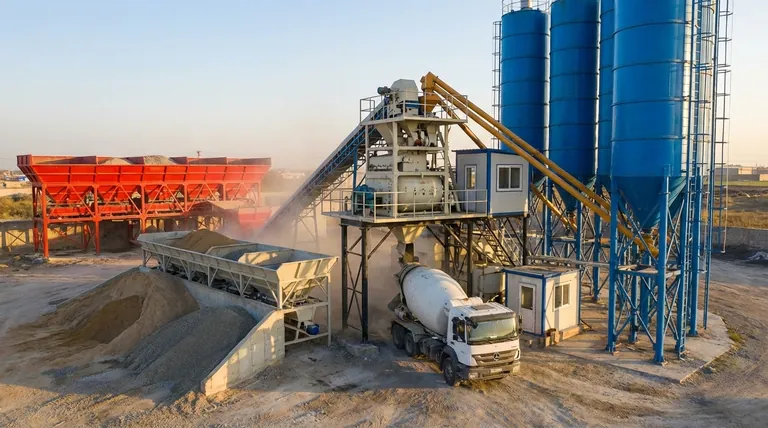
The Core Systems of a Concrete Batching Plant
To understand a batching plant, it's best to think of it in terms of its functional systems. Each system performs a distinct role in the production process, and its components are optimized for that task.
Material Storage: The Foundation
This is where the raw ingredients are held before processing. Proper storage is crucial for protecting materials from contamination and moisture.
Key components include aggregate bunkers or hoppers for sand and gravel, and cement silos for storing powdered cementitious materials. The plant also has a water tank and dedicated containers for chemical admixtures.
Material Conveying: The Movement
This system is responsible for moving materials from storage to the weighing and mixing stages. The efficiency of this system directly impacts the plant's output capacity.
Materials are transported via conveyor belts (for aggregates) and enclosed screw conveyors (for cement to prevent dust). Water and admixtures are moved through a system of pipes and pumps.
Material Weighing: The Precision
This is the most critical system for ensuring concrete quality and consistency. Each ingredient must be measured to exact specifications.
This is achieved using a series of separate weighing hoppers or scales, often called batchers. There is an aggregate weigh hopper, a cement weigh hopper, a water weigh system, and a separate, highly precise scale for admixtures.
The Mixing Unit: The Heart of the Operation
All weighed ingredients are discharged into the mixer, the central component where the actual concrete is produced.
The concrete mixer is the heart of the plant. Its job is to blend the materials into a completely homogeneous mixture. The most common type is a powerful twin-shaft mixer, known for its speed and efficiency.
The Control System: The Brains
This system automates and manages the entire batching process, ensuring accuracy, speed, and repeatability.
The plant is operated from a control room equipped with a control panel and software. This system, often managed by a PLC (Programmable Logic Controller), controls the valves, motors, and gates that manage the flow of all materials.
Understanding the Trade-offs and Key Considerations
Selecting the right components is a balance between performance, cost, and operational requirements. A misunderstanding here can lead to inefficiency or unnecessary expense.
Matching Components to Project Scale
The size and capacity of each component must align with your production needs. A large-scale infrastructure project requires larger silos, faster conveyors, and a higher-capacity mixer than a small precast operation.
Avoid choosing oversized components that will sit idle, as this represents wasted capital. Conversely, undersized components will create a bottleneck that cripples production.
Scrutinizing Manufacturer Specifications
When comparing plants from different manufacturers, look beyond the headline price. The quality and manufacturer of sub-components—like motors, valves, and the PLC system—can significantly impact reliability and maintenance costs.
A lower upfront cost might be negated by frequent downtime or the need for premature replacement of lower-quality accessories. Always ask for a detailed configuration list.
Environmental and Safety Systems
Components like dust collectors are not optional add-ons; they are critical for environmental compliance and creating a safe work environment.
These systems capture cement dust from silos and the mixer, preventing air pollution and material waste. Similarly, proper housing and guards on conveyors and mixers are essential for operator safety.
Making the Right Choice for Your Goal
Your final configuration should be driven by your primary operational goal.
- If your primary focus is high-volume, consistent output: Invest in robust, high-capacity storage, high-speed conveyors, and a fully automated control system to maximize throughput.
- If your primary focus is producing diverse, specialized mixes: Prioritize a highly accurate admixture weighing system and a flexible control system that can easily store and recall many different recipes.
- If your primary focus is mobility and rapid setup: Look for a mobile or compact plant design where components are pre-assembled on a single chassis for easy transport and deployment.
Ultimately, the most effective plant is the one that is precisely tailored to the demands of your specific project.
Summary Table:
| System | Key Components | Primary Function |
|---|---|---|
| Material Storage | Aggregate Bunkers, Cement Silos, Water Tank | Holds raw ingredients before processing |
| Material Conveying | Conveyor Belts, Screw Conveyors, Pipes & Pumps | Moves materials to weighing and mixing areas |
| Material Weighing | Aggregate & Cement Weigh Hoppers, Water & Admixture Scales | Precisely measures each ingredient for the mix |
| Mixing Unit | Twin-Shaft Mixer (Common Type) | Blends all materials into homogeneous concrete |
| Control System | Control Room, PLC, Software | Automates and manages the entire batching process |
Ready to Configure Your Ideal Concrete Batching Plant?
Understanding the components is the first step. The next is integrating them into a system perfectly tailored to your project's scale, output goals, and mix requirements.
GARLWAY specializes in building high-performance concrete batching plants for construction companies and contractors globally. We don't just sell equipment; we provide solutions. Our experts will help you select the right components—from robust storage silos and precise weighing systems to efficient mixers and automated controls—to maximize your productivity and profitability.
Let us help you build a more efficient operation.
Contact our specialists today for a free consultation to discuss your specific needs and get a customized plant configuration.
Visual Guide

Related Products
- HZS120 Ready Mix Concrete Batching Plant Commercial Mud Cement Mixer
- HZS35 Small Cement Concrete Mixing Batch Plant
- HZS75 Concrete Batching Plant Cement Mixer Price Concrete Mixer Bunnings Mixing Plant
- HZS180 Ready Mix Concrete Plant for Foundations with Sand and Cement
- Commercial Electric Concrete Mixer Machine HZS 50 Small Batch Plant for Sale
People Also Ask
- What is a ready mix concrete batching plant? The Engine of Modern Construction
- What is the name of the machine used in ready mix? Unpacking the Complete Concrete System
- What is the core component of a concrete batching plant? The Mixer Unit Defines Your Concrete Quality
- What are the types of concrete mixers used in batching plants? Choose the Right Mixer for Your Project
- What are the advantages and disadvantages of concrete batching plants? Maximize Quality & Efficiency





