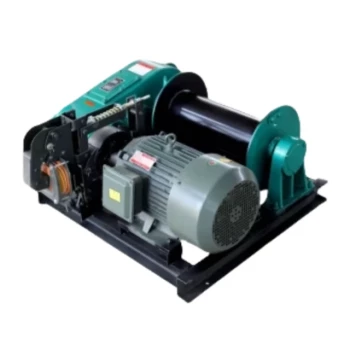
As a general rule, you should service your winch every 6 to 12 months. The exact frequency depends heavily on your usage patterns and exposure to harsh elements like water, mud, and salt. A winch that sees frequent, hard use requires more attention than one used sparingly in dry conditions.
The core principle of winch maintenance isn't about a rigid calendar schedule, but about proactive inspection. Your goal is to catch water ingress, corrosion, and mechanical wear before they can cause a failure under load.
Why Regular Servicing is Non-Negotiable
A winch is a critical safety and recovery tool. Assuming it will work without verification is a significant risk. Regular service moves your winch from a potential liability to a reliable asset.
Preventing Corrosion and Water Ingress
The primary enemies of any winch are water and grit. Over time, seals can degrade, allowing moisture to seep into the gearbox and motor housings. This leads to internal corrosion, which can seize gears and destroy electrical components.
Ensuring Mechanical Integrity
Inside your winch is a planetary gearbox that operates under immense strain. The grease in this gearbox can break down, become contaminated with water, or simply get displaced from critical contact points. A proper service involves cleaning and re-greasing these components to ensure smooth, reliable operation and prevent catastrophic gear failure.
Maintaining Electrical Reliability
Your winch motor draws a massive electrical current. All connections, from the battery to the winch terminals and the solenoid, must be clean and tight. Corrosion at these points creates resistance, reducing power and generating heat, which can lead to connection failure or even a fire.
Key Areas of a Winch Service
A thorough service goes beyond a simple visual check. It involves a partial disassembly to inspect the components that are hidden from view.
The Gearbox and Lubrication
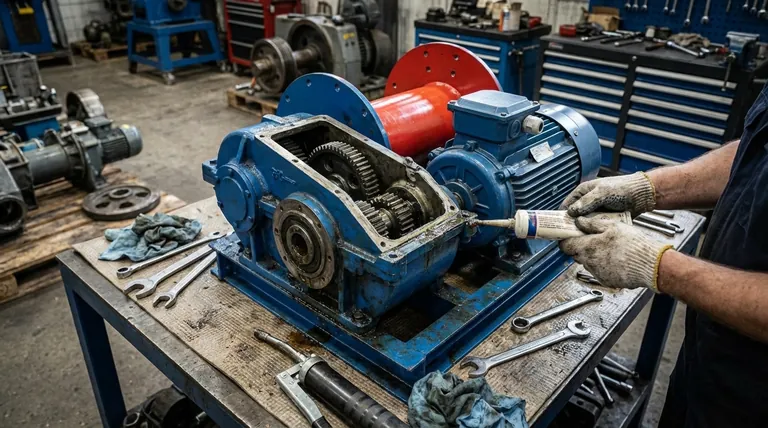
This is the heart of the service. You will need to open the gearbox housing, clean out all the old grease, and inspect the gears for any signs of chipping or excessive wear. The housing is then repacked with a high-quality, specified grease.
The Motor and Electrical Connections
Inspect the motor housing for signs of water entry. More importantly, check all electrical terminals for tightness and corrosion. Clean any corroded terminals with a wire brush and apply a dielectric grease or protective coating to prevent future issues.
The Drum and Rope/Cable
Inspect your winch line meticulously. For steel cable, look for kinks, broken strands, and flat spots. For synthetic rope, check for abrasions, cuts, and signs of UV degradation. Ensure the line is spooled tightly and evenly on the drum.
Seals and Gaskets
During reassembly, carefully inspect all O-rings, gaskets, and seals. If any appear cracked, pinched, or brittle, they must be replaced. These are the winch's primary defense against the elements.
Common Pitfalls to Avoid
Neglecting your winch doesn't save you time or money; it simply defers the cost and magnifies the consequences.
The Myth of the "Sealed" Unit
Many winches are marketed as "sealed" or "waterproof." While they offer good resistance when new, these ratings are not permanent. High-pressure washing, trail impacts, and simple aging can compromise seals, making regular inspection essential.
The Hidden Cost of a Seized Winch
If a winch seizes due to internal corrosion, the repair cost can often approach the price of a new unit. What was a simple re-greasing job becomes a full replacement of expensive internal components.
On-Trail Failure
The most significant cost of neglect is failure when you need it most. A non-functional winch can leave you stranded in a dangerous situation, turning a manageable recovery into a serious emergency.
Establishing Your Service Schedule
Your usage is the best guide. Use the following as a starting point and adjust based on your specific circumstances.
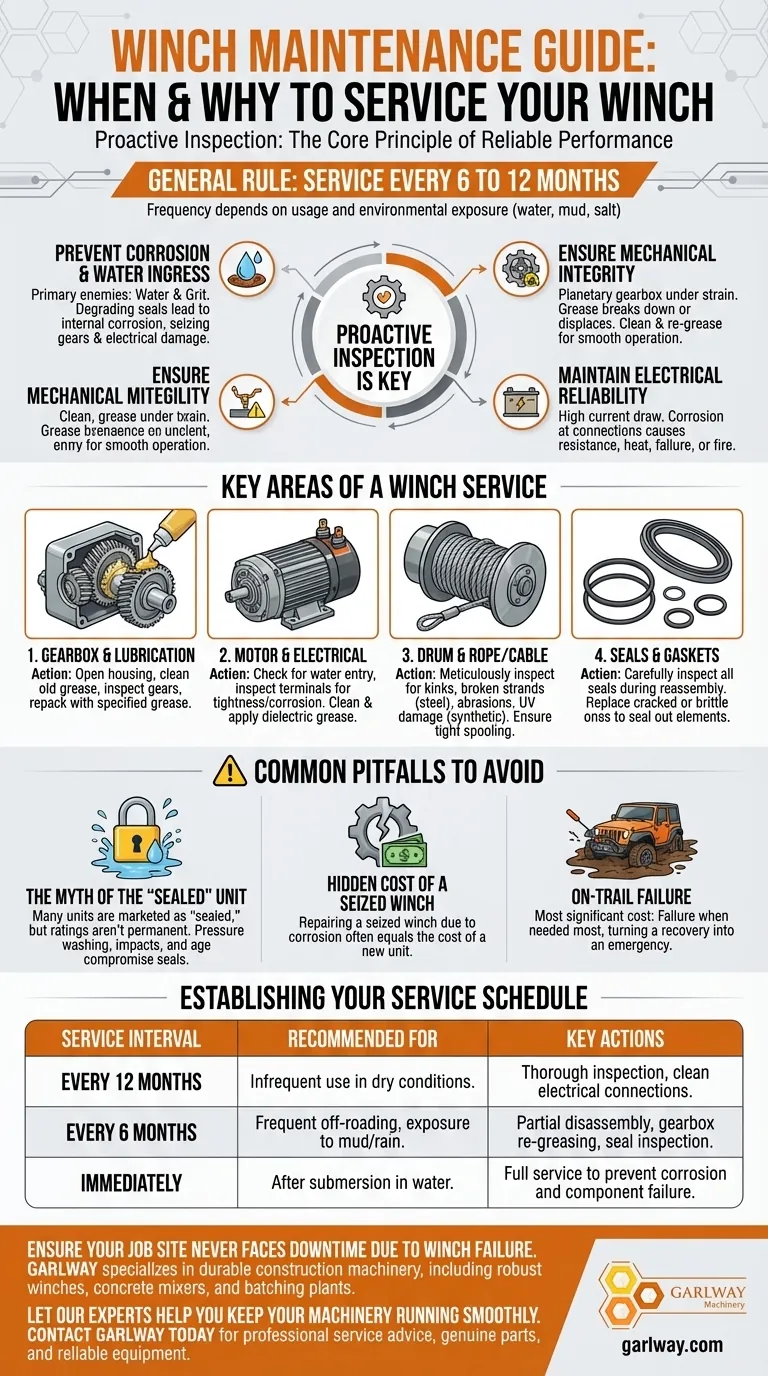
- If your winch is used infrequently in dry conditions: A thorough inspection and service every 12 months is a sufficient baseline.
- If you are a frequent off-roader or your winch is exposed to mud and rain: Shorten your service interval to every 6 months.
- If your winch has been submerged in water: It should be serviced as soon as possible, regardless of when it was last checked. Water inside a winch will quickly destroy it.
This proactive approach ensures your winch is always ready to perform.
Summary Table:
| Service Interval | Recommended For | Key Actions |
|---|---|---|
| Every 12 Months | Infrequent use in dry conditions | Thorough inspection, clean electrical connections |
| Every 6 Months | Frequent off-roading, exposure to mud/rain | Partial disassembly, gearbox re-greasing, seal inspection |
| Immediately | After submersion in water | Full service to prevent corrosion and component failure |
Ensure your job site never faces downtime due to winch failure. GARLWAY specializes in durable construction machinery, including robust winches, concrete mixers, and batching plants designed for the demanding needs of construction companies and contractors globally. Our equipment is built for reliability, but proper maintenance is key to maximizing its lifespan.
Let our experts help you keep your machinery running smoothly. Contact GARLWAY today for professional service advice, genuine parts, and reliable equipment tailored to your projects.
Visual Guide
Related Products
- Warn Winch Windlass Boat Trailer Winch
- Electric and Hydraulic Winch for Heavy Duty Applications
- Small Electric Winch 120V and 240V for Compact Applications
- Hydraulic Winding Engine Harbor Freight Winch
- Quick Windlass Portable Winch for Truck and Boat Best Boat Winch
People Also Ask
- What are the main components of a boat trailer winch? A Guide to Safe & Efficient Boat Loading
- What factors should be considered when choosing a boat trailer winch? Ensure Safe and Effortless Boat Loading
- What is the purpose of boat trailer winches? Safely and Efficiently Load Your Boat
- What are the two main types of boat trailer winches? Manual vs. Electric Explained
- How often should a boat trailer winch be replaced? Your Guide to Safety and Longevity