
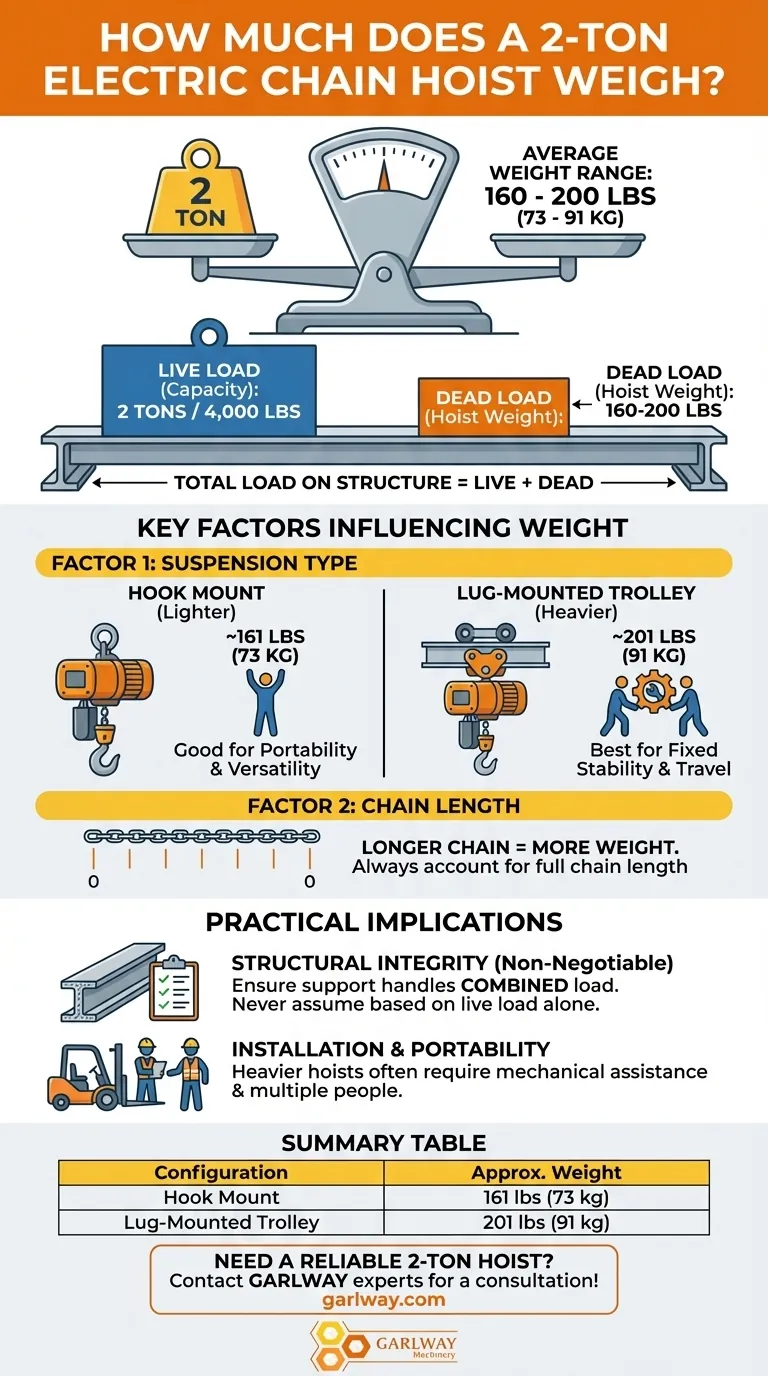
On average, a typical 2-ton electric chain hoist weighs between 160 and 200 pounds (approximately 73 to 91 kg). This weight can vary based on specific configurations, such as the type of suspension used for mounting. The provided reference indicates a weight range of 161 lbs for a hook mount and up to 201 lbs for a lug-mounted trolley configuration.
The specific weight of a 2-ton hoist is not a fixed number; it's a variable determined by its configuration. Understanding these variables is critical for ensuring the structural integrity and safety of your entire lifting system.
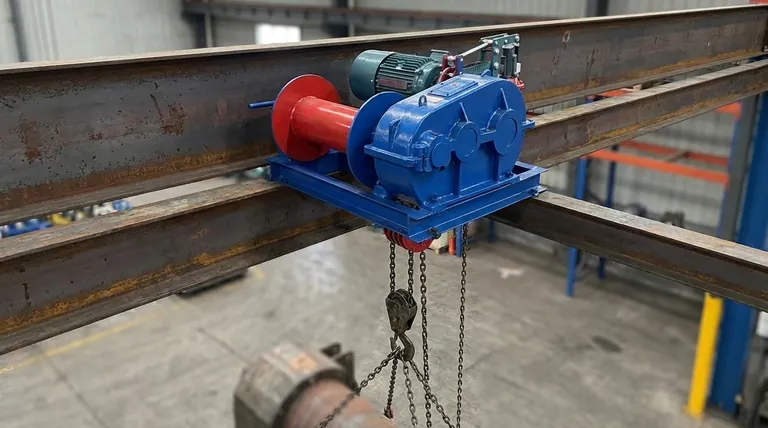
Why Hoist Weight Is More Than Just a Number
The self-weight of the hoist is a crucial factor in your overall load calculations. It's a "dead load" that your support structure must bear in addition to the 2-ton (4,000 lb) live load you intend to lift. Ignoring this detail can lead to unsafe operating conditions.
Factor 1: Suspension and Mounting
The primary driver of weight variation in a standard hoist is how it attaches to its anchor point.
The reference points to two common types:
- Hook Mount: This is the lighter configuration, where the hoist simply hangs from a fixed anchor or a separate trolley. It offers flexibility but requires manual repositioning.
- Lug Mount (for Trolleys): This involves a more integrated, rigid connection directly to a beam trolley. This setup allows the hoist to travel along a beam but adds significant weight due to the extra mounting hardware, as seen in the 201 lb figure.
Factor 2: Chain Length and Lift Height
The amount of lift chain is a direct contributor to the overall weight. A hoist configured for a 20-foot lift will weigh more than one with a standard 10-foot lift because the steel chain itself is heavy.
Always account for the weight of the full length of the load chain when calculating your structural requirements.
The Practical Implications of Hoist Weight
Understanding the hoist's weight is not an academic exercise; it has direct consequences for safety, installation, and usability.
Structural Integrity is Non-Negotiable
Your support beam or structure must safely handle the combined load. This includes the maximum rated capacity of the hoist (4,000 lbs) plus the self-weight of the hoist and trolley (e.g., 201 lbs).
Never assume a beam rated for 2 tons is sufficient without first factoring in the weight of the equipment itself.
Installation and Portability
A hoist weighing over 150 lbs is not a one-person lift. The weight directly impacts the complexity, manpower, and equipment required for safe installation and maintenance.
Heavier, trolley-mounted hoists are typically considered permanent or semi-permanent installations, whereas lighter hook-mounted versions may offer more portability between workstations.
Making the Right Choice for Your Application
Use the hoist's weight as a key decision factor based on your primary operational need.
- If your primary focus is fixed overhead lifting: A heavier, integrated lug-mount and trolley system is often the superior choice for stability and smooth travel along a beam.
- If your primary focus is versatility or temporary setups: A standard hook-mounted hoist will be lighter and easier to move and install in different locations.
Ultimately, you must always confirm the exact weight from the manufacturer's specification sheet before finalizing any structural or installation plans.
Summary Table:
| Configuration | Approximate Weight |
|---|---|
| Hook Mount | 161 lbs (73 kg) |
| Lug-Mounted Trolley | 201 lbs (91 kg) |
Need a reliable 2-ton hoist for your project?
Choosing the right hoist is crucial for safety and efficiency. GARLWAY specializes in construction machinery, offering durable and high-performance electric chain hoists, winches, concrete mixers, and batching plants for construction companies and contractors globally.
Let us help you select the perfect hoist for your structural and operational needs. Contact our experts today for a consultation!
Visual Guide
Related Products
- Electric and Hydraulic Winch for Heavy Duty Applications
- Electric Hoist Winch Boat Anchor Windlass for Marine Applications
- 12000 lb Electric Boat Trailer Winch with Windlass Anchor Warn
People Also Ask
- What are the differences between electric and hydraulic winches? Choose the Right Winch for Your Job
- What are some common uses for a heavy-duty winch? Power Your Construction & Industrial Projects
- What are electro-hydraulic winches and their applications? The Integrated Power Solution for Heavy-Duty Operations
- How do winches assist in bridge launching? Accelerate Bridge Placement with Controlled Pulling Power
- What are the benefits of using heavy-duty winches for large projects? Boost Efficiency & Safety


