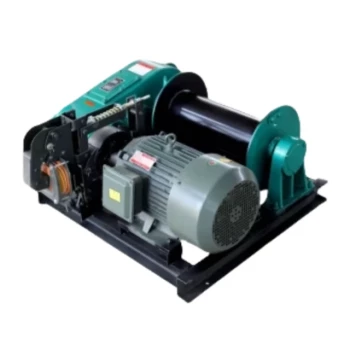
As a general rule, the overall size of a winch directly dictates the diameter of its drum. Larger, more powerful winches are consistently built with larger diameter drums, while more compact winches feature smaller ones. This is a fundamental design principle driven by the physics of load management and mechanical performance.
The relationship between winch size and drum diameter is not merely about physical proportion; it's a critical engineering trade-off that balances load-bearing capacity against winding speed.
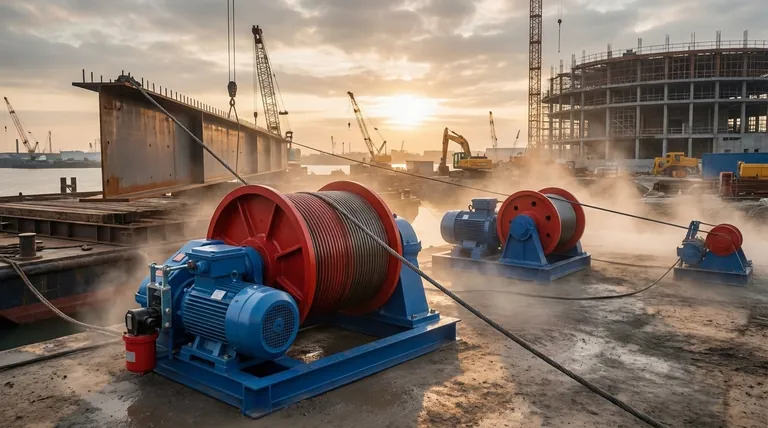
The Core Principle: Why Size and Diameter are Linked
The connection between a winch's size and its drum diameter is rooted in the need for structural strength and the ability to handle significant forces. Several factors work together to establish this direct correlation.
The Demand for Load-Bearing Capacity
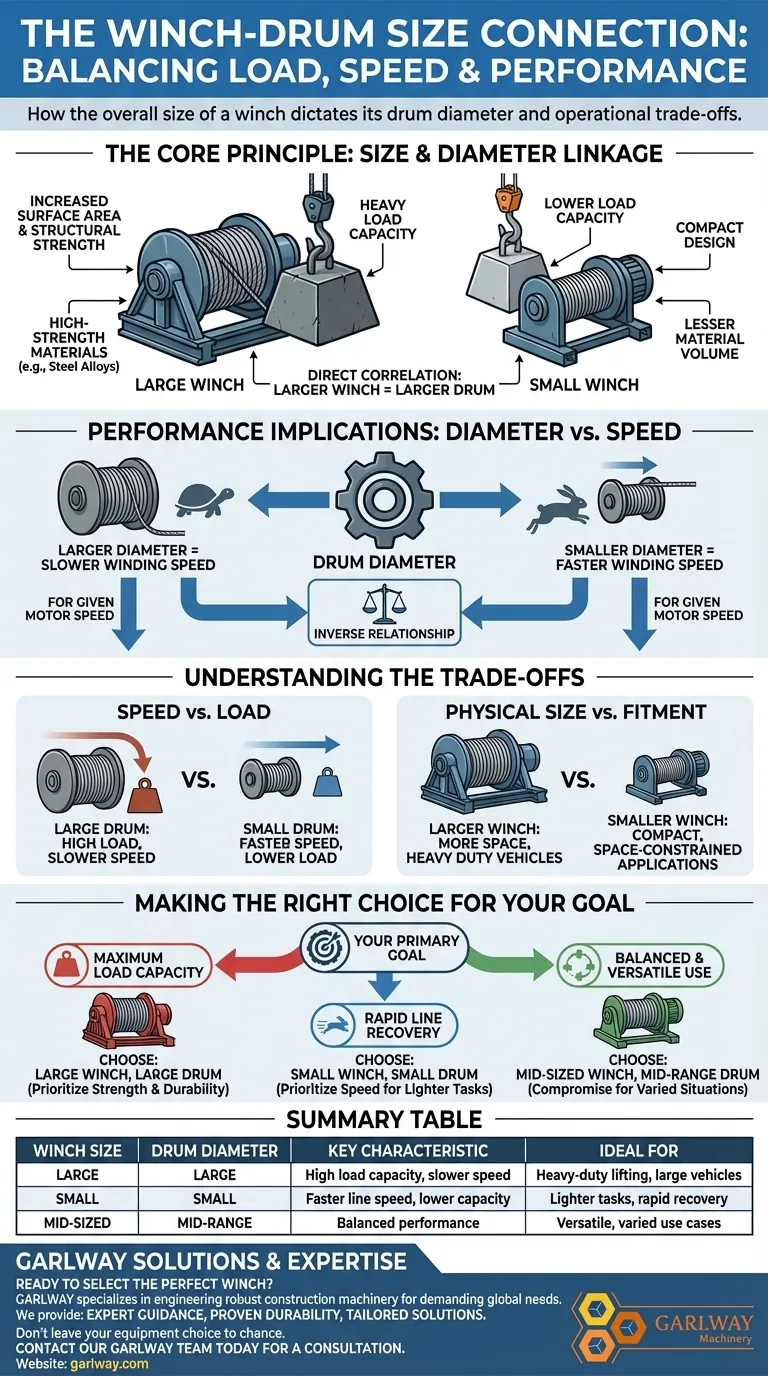
A primary reason for a larger winch is to handle a heavier load. A drum with a larger diameter provides a greater surface area and a more robust structure, which directly increases its capacity to support weight without failing.
The Role of Construction Material
The material used to build the winch is a critical factor. More robust materials, such as high-strength steel alloys, possess the durability to be formed into larger diameter drums that can withstand immense stress, a requirement for heavy-duty winches.
Performance Implications of Drum Diameter
The diameter of the winch drum has a direct and significant impact on how the winch operates in the real world. Understanding these implications is key to appreciating why winch design varies so widely.
The Inverse Impact on Winding Speed
There is an inverse relationship between drum diameter and winding speed. For a given motor speed, a larger diameter drum will wind the cable more slowly.
Conversely, a smaller diameter drum allows for a significantly faster winding speed. This is a crucial performance characteristic to consider based on the intended application.
Understanding the Trade-offs
Choosing a winch isn't as simple as picking the biggest one. The design of the drum creates a set of trade-offs that every user must consider based on their specific needs.
Speed vs. Load
This is the central compromise in winch design. A large-diameter drum provides the high load capacity needed for heavy vehicles but results in slower line recovery. A small-diameter drum offers speed but cannot safely manage the same heavy loads.
Physical Size and Fitment
A larger winch with a substantial drum naturally occupies more space. This can be a limiting factor for smaller vehicles or applications where mounting space is at a premium. The overall size must match the vehicle it's intended for.
Making the Right Choice for Your Goal
Your intended use case should determine which side of the design trade-off is more important. By focusing on your primary goal, you can identify the right type of winch configuration.
- If your primary focus is maximum load capacity: You need a larger winch, which will have a larger diameter drum designed for strength and durability at the expense of speed.
- If your primary focus is rapid line recovery for lighter tasks: A smaller winch with a smaller diameter drum will provide the faster winding speed you require.
- If your primary focus is a balance for varied use: A mid-sized winch offers a compromise in drum diameter, providing versatile performance for a wide range of situations.
Understanding these interconnected design principles empowers you to select a winch based on its engineering, not just its rating.
Summary Table:
| Winch Size | Drum Diameter | Key Characteristic | Ideal For |
|---|---|---|---|
| Large | Large | High load capacity, slower speed | Heavy-duty lifting, large vehicles |
| Small | Small | Faster line speed, lower capacity | Lighter tasks, rapid recovery |
| Mid-Sized | Mid-Range | Balanced performance | Versatile, varied use cases |
Ready to Select the Perfect Winch for Your Project?
Understanding the critical balance between winch size, drum diameter, and performance is key to maximizing efficiency and safety on your job site. GARLWAY specializes in engineering robust construction machinery, including a full range of winches designed for the demanding needs of construction companies and contractors globally.
We provide:
- Expert Guidance: Our specialists will help you choose the right winch configuration based on your specific load and speed requirements.
- Proven Durability: Our winches are built with high-strength materials to ensure reliable performance under heavy loads.
- Tailored Solutions: From compact models for agile recovery to heavy-duty winches for maximum capacity, we have the right equipment for your project.
Don't leave your equipment choice to chance. Contact our GARLWAY team today for a consultation and get the reliable performance your work demands!
Visual Guide
Related Products
- Warn Winch Windlass Boat Trailer Winch
- Electric and Hydraulic Winch for Heavy Duty Applications
- Small Electric Winch 120V and 240V for Compact Applications
- 12000 lb Electric Boat Trailer Winch with Windlass Anchor Warn
- Quick Windlass Portable Winch for Truck and Boat Best Boat Winch
People Also Ask
- What are the main components of a boat trailer winch? A Guide to Safe & Efficient Boat Loading
- What factors should be considered when choosing a boat trailer winch? Ensure Safe and Effortless Boat Loading
- What is the purpose of boat trailer winches? Safely and Efficiently Load Your Boat
- What are the two main types of boat trailer winches? Manual vs. Electric Explained
- How often should a boat trailer winch be replaced? Your Guide to Safety and Longevity