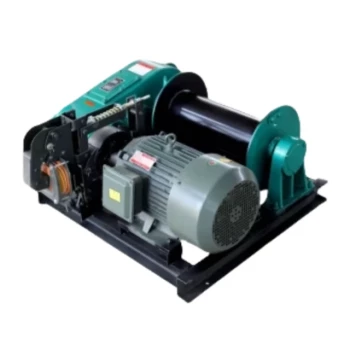
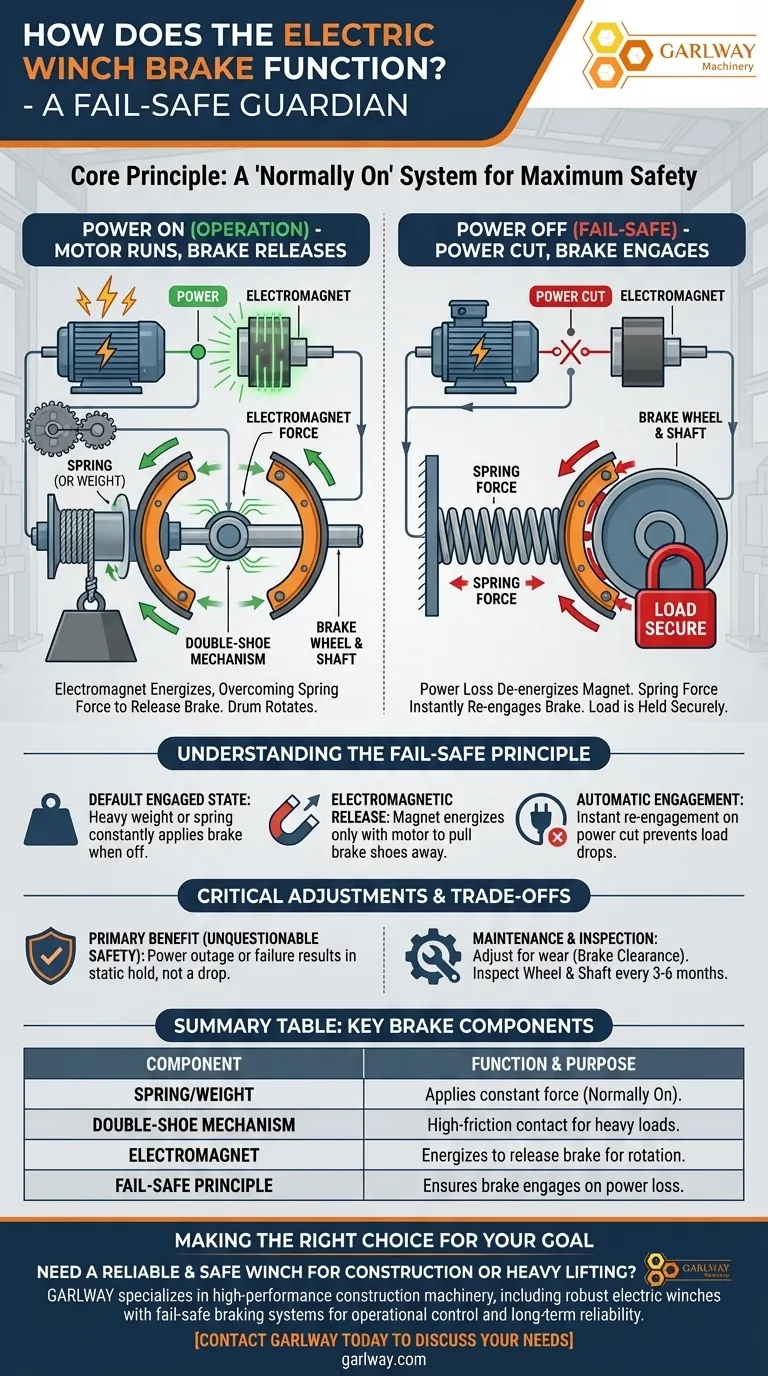
At its core, an electric winch brake is a fail-safe safety system. It is designed to be "normally on," meaning the brake is automatically engaged by a weight or spring when no power is supplied. When you operate the winch, an electromagnet is energized at the same time as the motor, creating a force that pulls the brake shoes away from the drum, allowing it to turn.
The critical takeaway is that the winch's braking system is not an active process you control separately; it's an automatic, passive safety feature. The system is engineered to hold a load securely by default and only releases when the motor is intentionally powered, ensuring that any power failure results in a safe, static hold rather than a catastrophic drop.
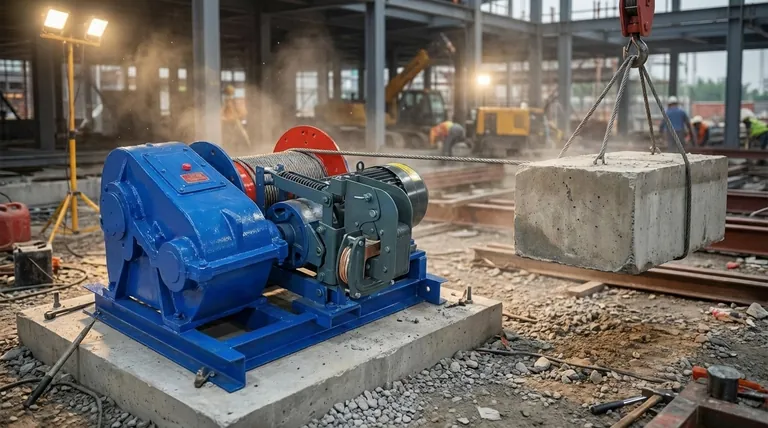
The "Fail-Safe" Principle: An Automatic Guardian
The entire braking system is built around a single, crucial objective: to prevent the load from moving unless the motor is actively and intentionally driving it. This is achieved through a "normally engaged" design.
Default State: Engaged by Weight or Spring
When the winch is off, a physical force—typically from a heavy weight or a powerful spring—is constantly applying the brake. This ensures the drum is locked and cannot rotate, securely holding any load.
The Double-Shoe Mechanism
This system commonly uses a double-shoe brake. Two curved brake shoes press against a brake wheel or drum that is connected to the motor's shaft. This design is highly effective at handling the large rotational forces (torque) required in lifting and pulling heavy objects.
The Role of the Electromagnet
When the operator presses the "wind" or "unwind" button, electricity flows to both the winch motor and an integrated electromagnet. This magnet is the key to releasing the brake.
Releasing the Brake for Operation
As the electromagnet energizes, it generates a powerful magnetic field. This force overcomes the default pressure from the weight or spring, pulling the brake shoes away from the brake wheel. This release of friction is what allows the motor to rotate the drum.
Re-Engaging Upon Power Cut
The moment you release the button or if power is lost, the electromagnet instantly de-energizes. Without the magnetic force holding them back, the weight or spring immediately slams the brake shoes back onto the brake wheel, stopping its rotation and locking the load securely in place.
Understanding the Trade-offs and Critical Adjustments
While this design is exceptionally reliable, its effectiveness depends on proper maintenance and understanding its mechanical nature. It is not a purely electronic system.
The Primary Benefit: Unquestionable Safety
The fail-safe design is the system's greatest strength. A power outage, a disconnected control, or a motor failure will not cause the load to fall. The brake will simply engage and hold everything in its current position.
Adjusting for Mechanical Wear
Over time, the friction surfaces on the brake shoes will wear down. To compensate, the system includes adjustment mechanisms. A screw is used to set the precise brake clearance (the gap between the shoe and the wheel when released), and a connecting rod can be adjusted to ensure both shoes apply even pressure.
The Importance of Regular Inspection
Mechanical components can fail. The references stress that the brake wheel and shaft must be inspected every 3 to 6 months. This is to ensure they remain securely fixed, as a detachment would render the entire braking system useless.
Making the Right Choice for Your Goal
Understanding this mechanism helps you operate the winch safely and maintain it for long-term reliability.
- If your primary focus is safety: Trust the fail-safe design. It ensures that any loss of power or control signal results in the load being securely held, not dropped.
- If your primary focus is operational control: Recognize that the brake and motor work in perfect synchronization. There is no lag; the brake releases the instant the motor is commanded to turn and engages the instant it stops.
- If your primary focus is long-term reliability: Prioritize periodic mechanical inspections. Ensuring the brake clearance is correctly adjusted and all components are secure is essential for consistent and safe performance.
Ultimately, the electric winch brake is an elegant fusion of simple mechanical force and precise electromagnetic control, engineered to prioritize safety above all else.
Summary Table:
| Brake Component | Function & Purpose |
|---|---|
| Spring/Weight | Applies constant force to engage the brake when power is off ("Normally On"). |
| Double-Shoe Mechanism | Provides high-friction contact with the brake wheel to handle heavy loads and torque. |
| Electromagnet | Energizes with the motor to release the brake, allowing drum rotation. |
| Fail-Safe Principle | Ensures brake automatically engages upon power loss, preventing catastrophic load drops. |
Need a reliable and safe winch for your construction or heavy-lifting project? GARLWAY specializes in high-performance construction machinery, including robust electric winches with fail-safe braking systems designed for contractors and construction companies globally. Our equipment ensures operational control and long-term reliability. Contact GARLWAY today to discuss your specific needs and discover the right solution for you.
Visual Guide
Related Products
- Electric 120V Boat Winch by Badlands
- Electric and Hydraulic Winch for Heavy Duty Applications
- 12000 lb Electric Boat Trailer Winch with Windlass Anchor Warn
- Heavy Duty Electric Boat Winch Windlass Anchor
- Electric Hoist Winch Boat Anchor Windlass for Marine Applications
People Also Ask
- How do electric boat winches work? Unlock Effortless Launching & Retrieval
- How much current does an electric boat winch draw? Plan Your Electrical System for Peak Performance
- Can I run a winch straight from a battery? Essential Power Setup for Safe Operation
- What are the types of electric winches available? Choose the Right Winch for Your Job
- What are the uses of electric winches in mining and tunneling? Enhance Safety and Efficiency Underground