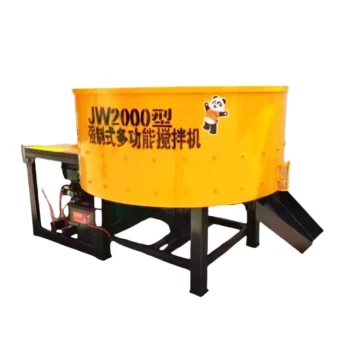
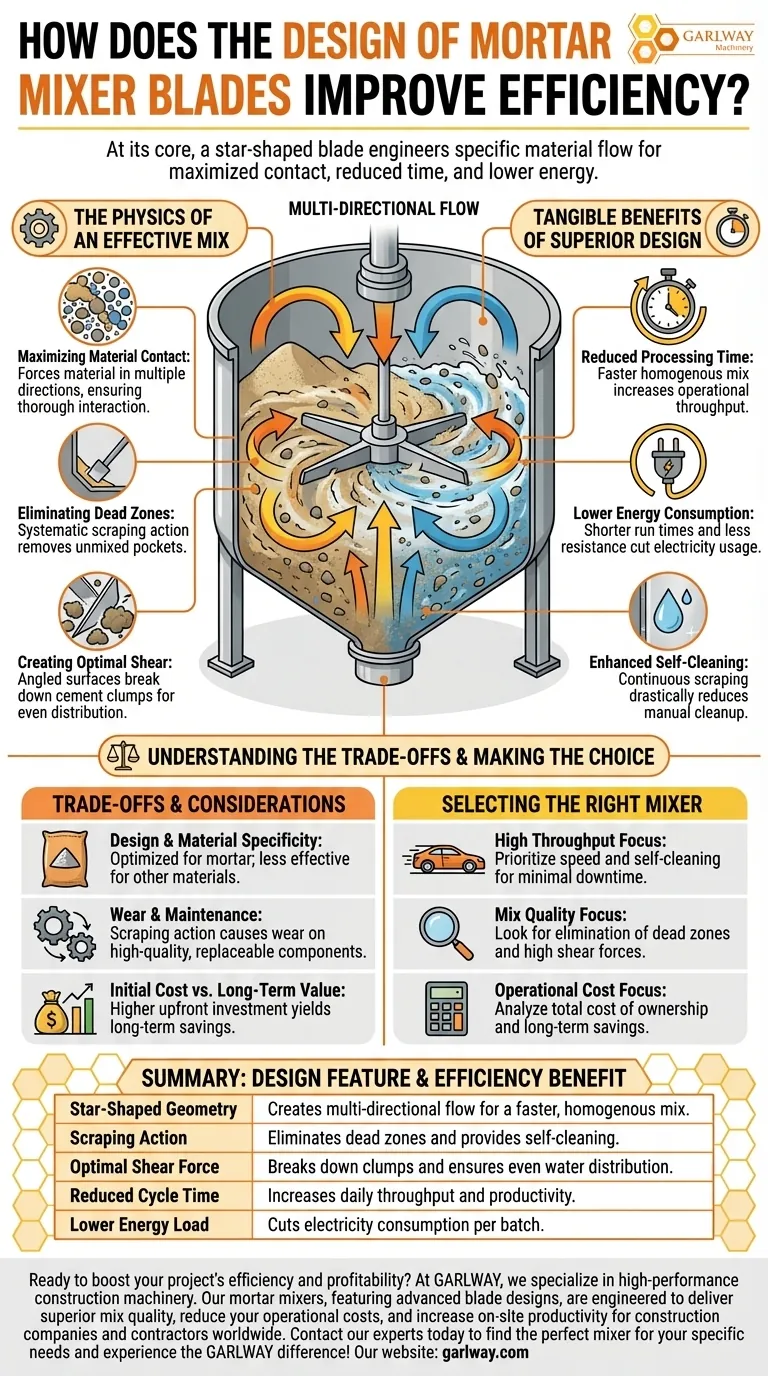
At its core, the design of a mortar mixer blade, particularly a star-shaped blade, improves efficiency by engineering a specific material flow within the tank. This design isn't just for stirring; it's a multi-functional tool that maximizes material contact, reduces processing time, and lowers energy consumption by working smarter, not harder.
The key takeaway is that an advanced blade design transforms a simple mixing action into a comprehensive material processing system, simultaneously ensuring mix quality, reducing operational costs, and simplifying maintenance.
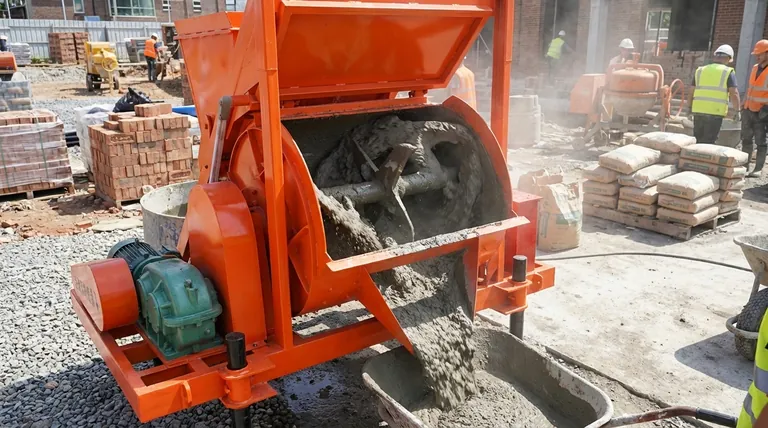
The Physics of an Effective Mix
To understand efficiency, we must first look at what a blade is trying to accomplish. The goal is a homogenous mixture, achieved as quickly and with as little energy as possible. A well-designed blade achieves this through several principles.
Maximizing Material Contact
The unique geometry of a star-shaped blade forces material to move in multiple directions at once. It creates both a circular flow around the tank and a vertical flow, pulling material from the bottom up and pushing it from the top down. This ensures all particles—sand, cement, and water—interact thoroughly.
Eliminating Dead Zones
Inefficient mixers often leave unmixed pockets of material stuck to the tank walls or settled in the corners. A star-shaped blade is designed to conform closely to the tank's shape. This systematic scraping action eliminates these "dead zones," ensuring every bit of material is incorporated into the mix.
Creating Optimal Shear
Effective mixing requires shear, which is the force that causes layers of the material to slide against each other. The angled surfaces of the blades create this shearing force, which is critical for breaking down clumps of cement powder and ensuring water is distributed evenly.
The Tangible Benefits of Superior Blade Design
The physical principles of a superior blade design translate directly into measurable improvements in operational efficiency and cost-effectiveness.
Reduced Processing Time
Because the material is forced into a more complex and efficient flow pattern, a homogenous mix is achieved much faster. This directly increases the throughput of your operation, allowing for more batches to be completed in a given workday.
Lower Energy Consumption
A faster mixing cycle means the motor runs for a shorter duration, directly cutting down on electricity usage per batch. Furthermore, an efficient design that moves material with less resistance reduces the overall load on the motor, leading to lower energy consumption.
Enhanced Self-Cleaning
The scraping action is a critical secondary function. By continuously clearing the tank walls, the blades perform a self-cleaning role. This drastically reduces the manual labor required for cleanup, minimizes material waste, and prevents contamination between different batches.
Understanding the Trade-offs
While advanced blade designs offer significant advantages, it's important to recognize the associated considerations. No single design is perfect for every application.
Design and Material Specificity
A star-shaped blade is optimized for the specific consistency and particle size of mortar. Using it for materials that are significantly different, such as high-viscosity epoxies or delicate aggregates, may result in a less effective mix or even damage to the material.
Wear and Maintenance
The same scraping action that provides self-cleaning also creates a point of wear on both the blade edges and the tank liner. These components must be made from high-quality, abrasion-resistant materials, which can increase their replacement cost.
Initial Cost vs. Long-Term Value
Mixers equipped with advanced, multi-functional blades typically have a higher upfront purchase price than those with simple paddles. The trade-off is between this initial investment and the long-term savings generated through reduced labor, lower energy bills, and increased productivity.
Making the Right Choice for Your Goal
Selecting the right mixer depends entirely on your operational priorities. Understanding the function of the blades allows you to make a more informed choice.
- If your primary focus is high throughput: Prioritize blade designs that emphasize speed and effective self-cleaning to minimize downtime between batches.
- If your primary focus is mix quality and consistency: Look for blades that guarantee the elimination of dead zones and create high shear for perfectly homogenous results.
- If your primary focus is operational cost: Analyze the total cost of ownership, weighing the initial purchase price against long-term savings from reduced energy and labor.
Ultimately, recognizing that blade design is a key performance feature empowers you to choose a tool that actively enhances your entire workflow.
Summary Table:
| Design Feature | Efficiency Benefit |
|---|---|
| Star-Shaped Geometry | Creates multi-directional flow for a faster, homogenous mix. |
| Scraping Action | Eliminates dead zones and provides self-cleaning. |
| Optimal Shear Force | Breaks down clumps and ensures even water distribution. |
| Reduced Cycle Time | Increases daily throughput and productivity. |
| Lower Energy Load | Cuts electricity consumption per batch. |
Ready to boost your project's efficiency and profitability?
At GARLWAY, we specialize in high-performance construction machinery. Our mortar mixers, featuring advanced blade designs, are engineered to deliver superior mix quality, reduce your operational costs, and increase on-site productivity for construction companies and contractors worldwide.
Contact our experts today to find the perfect mixer for your specific needs and experience the GARLWAY difference!
Visual Guide
Related Products
- JDC350 Small Cement Concrete Mortar Mixer
- JDY350 Electric Hydraulic Mortar Mud Concrete Mixer
- Mini Cement Mortar Mixer Truck for Construction
- Belle Mixer Drum Self Loading Mortar Mixers JS3000
- HZS25 Best Cement Mixer for Quick Mix Concrete at Bunnings
People Also Ask
- What are the primary uses of a small cement mixer? Boost Efficiency for Small to Medium Construction Jobs
- What are the physical benefits of using a small cement mixer? Reduce Strain and Prevent Injury
- What are the cost benefits of using a small cement mixer? Save on Labor, Materials & Time
- What makes small cement mixers easy and convenient to use? Boost Productivity on Any Job Site
- What factors should be considered before purchasing a small cement mixer? Find the Perfect Match for Your Project