From an efficiency standpoint, a Concrete Batch Plant is unequivocally superior to manual mixing. A batch plant dramatically reduces production time, optimizes labor, and can produce up to three times more concrete per hour. This advantage stems from its automated systems that ensure speed, precision, and consistency—metrics that manual methods simply cannot match at scale.
The choice between a batch plant and manual mixing is not merely about speed; it's a fundamental decision about project scale, quality assurance, and resource optimization. While manual mixing has its place for minor tasks, batch plants enable modern construction through reliable, high-volume production.
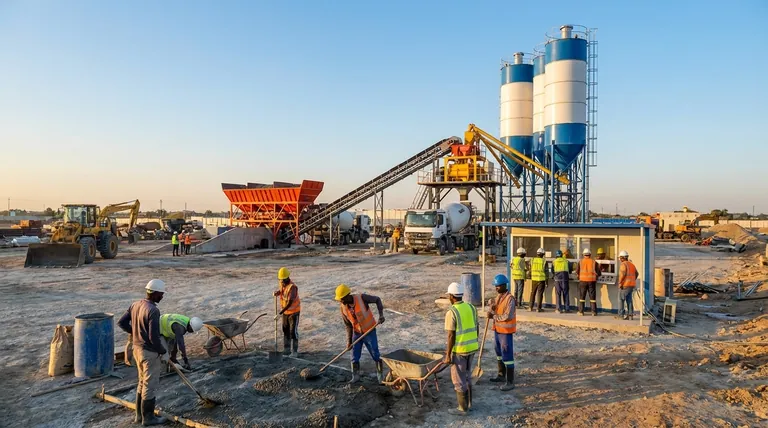
The Core Pillars of Batch Plant Efficiency
The overwhelming efficiency of a concrete batch plant is not due to a single factor, but rather a combination of automated processes that outperform manual labor in every key area of production.
Production Volume and Speed
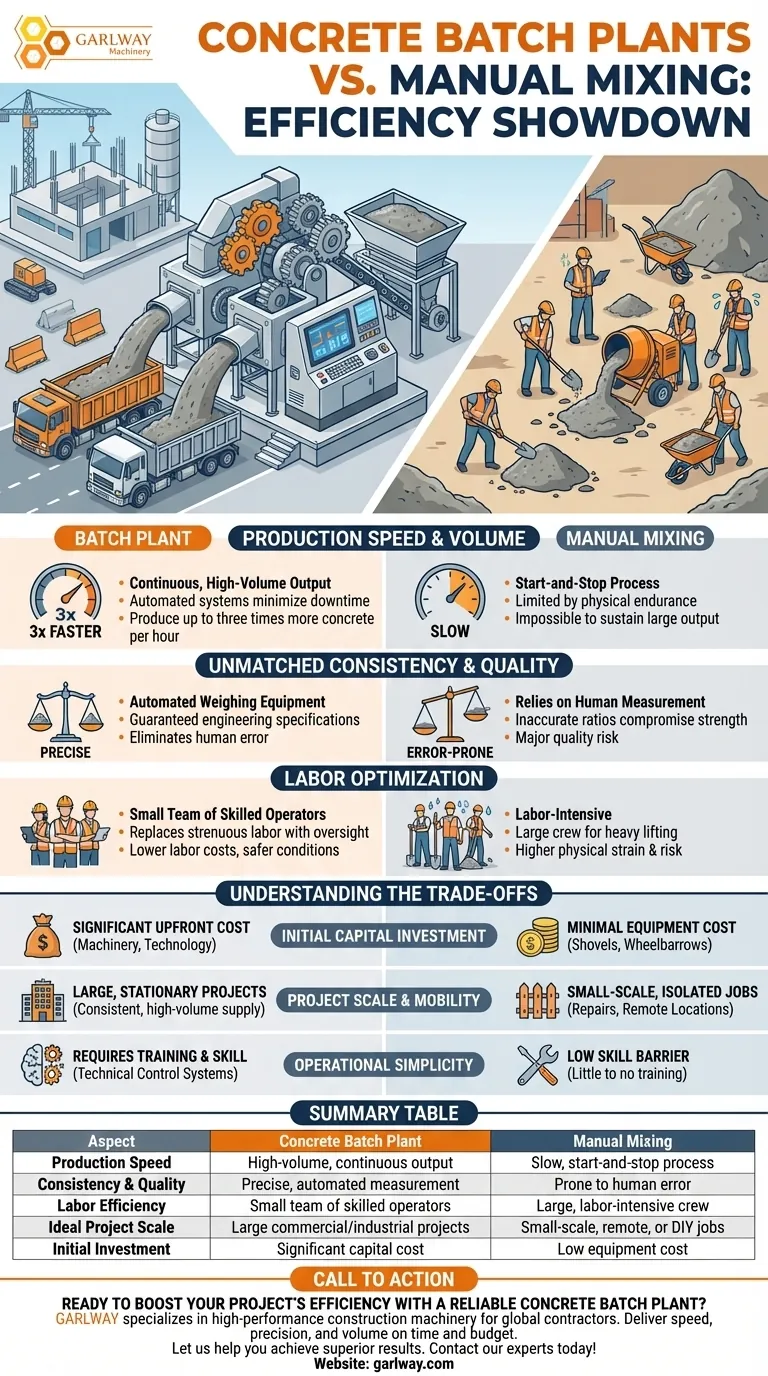
A batch plant is engineered for continuous, high-volume output. Its automated systems for measuring, mixing, and dispensing concrete operate seamlessly, minimizing downtime between batches.
In contrast, manual mixing is an inherently start-and-stop process. It is limited by the physical endurance of the labor force and the size of the individual mixer, making it impossible to sustain the output required for large projects.
Unmatched Consistency and Quality
This is perhaps the most critical advantage. Batch plants use automated weighing equipment to measure aggregates, cement, and water with high precision. This guarantees that every batch meets exact engineering specifications.
Manual mixing relies on human measurement, which is prone to error. Inaccurate ratios of materials can significantly compromise the strength and durability of the finished concrete, introducing a major quality risk into a project.
Labor Optimization
A batch plant allows a small team of skilled operators to produce vast quantities of concrete. It replaces strenuous, repetitive manual labor with system oversight.
Manual mixing is labor-intensive, requiring a large crew for heavy lifting and mixing. This not only increases labor costs but also exposes workers to harsher conditions and a higher risk of physical strain.
Understanding the Trade-offs
While less efficient, manual mixing remains a viable option when its inherent limitations align with the project's scope. The choice is about using the right tool for the job.
Initial Capital Investment
The primary barrier to a batch plant is its significant upfront cost. The machinery, technology, and installation represent a major capital investment.
Manual mixing requires minimal equipment—often just shovels, wheelbarrows, and perhaps a small portable mixer—making it accessible for almost any budget.
Project Scale and Mobility
Batch plants are designed for large, stationary projects where a consistent, high-volume supply of concrete is needed on-site or nearby.
Manual mixing is perfectly suited for small-scale, isolated jobs like setting a fence post, patching a driveway, or working in a remote location where transporting ready-mix concrete is impractical.
Operational Simplicity
Operating a batch plant requires training and technical skill to manage the control systems, perform maintenance, and coordinate logistics for raw materials.
The skill barrier for manual mixing is extremely low, requiring little to no specialized training.
Making the Right Choice for Your Project
Selecting the appropriate mixing method requires a clear understanding of your project's primary goal.
- If your primary focus is large-scale commercial or industrial construction: A concrete batch plant is the only choice to meet demands for volume, speed, and quality control.
- If your primary focus is small-scale repairs, remote work, or DIY projects: Manual mixing provides the necessary flexibility and cost-effectiveness without the need for major investment.
- If your primary focus is meeting strict engineering specifications and ensuring structural integrity: The precision of a batch plant's automated systems is essential to eliminate the risk of human error.
Ultimately, choosing the right method is about aligning your production capabilities with the demands and quality requirements of your project.
Summary Table:
| Aspect | Concrete Batch Plant | Manual Mixing |
|---|---|---|
| Production Speed | High-volume, continuous output | Slow, start-and-stop process |
| Consistency & Quality | Precise, automated measurement | Prone to human error |
| Labor Efficiency | Small team of skilled operators | Large, labor-intensive crew |
| Ideal Project Scale | Large commercial/industrial projects | Small-scale, remote, or DIY jobs |
| Initial Investment | Significant capital cost | Low equipment cost |
Ready to Boost Your Project's Efficiency with a Reliable Concrete Batch Plant?
GARLWAY specializes in providing high-performance construction machinery, including robust concrete batching plants, for construction companies and contractors globally. Our solutions are engineered to deliver the speed, precision, and volume you need to complete large-scale projects on time and within budget.
Let us help you achieve superior results. Contact our experts today to discuss your specific requirements and find the perfect batching plant for your operation!
Visual Guide
Related Products
- HZS120 Ready Mix Concrete Batching Plant Commercial Mud Cement Mixer
- HZS35 Small Cement Concrete Mixing Batch Plant
- HZS75 Concrete Batching Plant Cement Mixer Price Concrete Mixer Bunnings Mixing Plant
- Commercial Electric Concrete Mixer Machine HZS 50 Small Batch Plant for Sale
- HZS180 Ready Mix Concrete Plant for Foundations with Sand and Cement
People Also Ask
- What is a ready mix concrete batching plant? The Engine of Modern Construction
- What is the name of the machine used in ready mix? Unpacking the Complete Concrete System
- What is the core component of a concrete batching plant? The Mixer Unit Defines Your Concrete Quality
- What are the types of concrete mixers used in batching plants? Choose the Right Mixer for Your Project
- What are the advantages and disadvantages of concrete batching plants? Maximize Quality & Efficiency