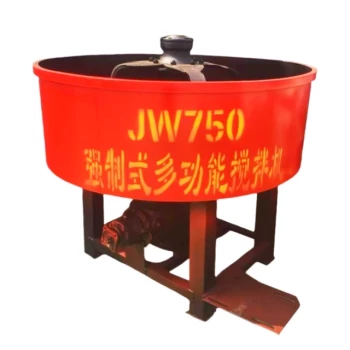
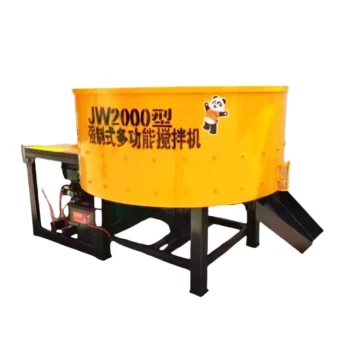
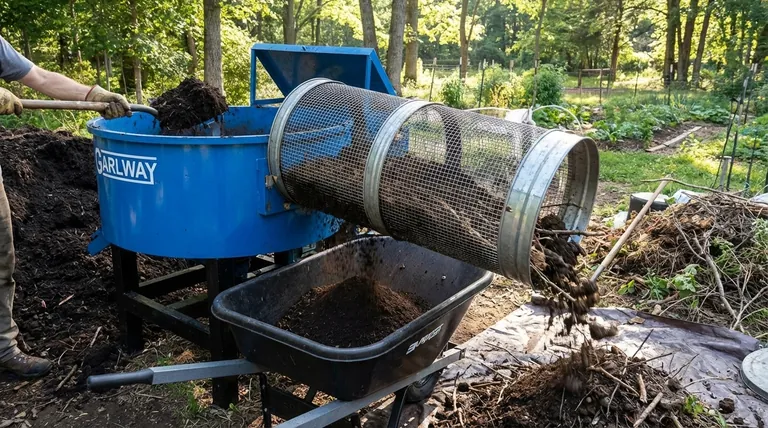
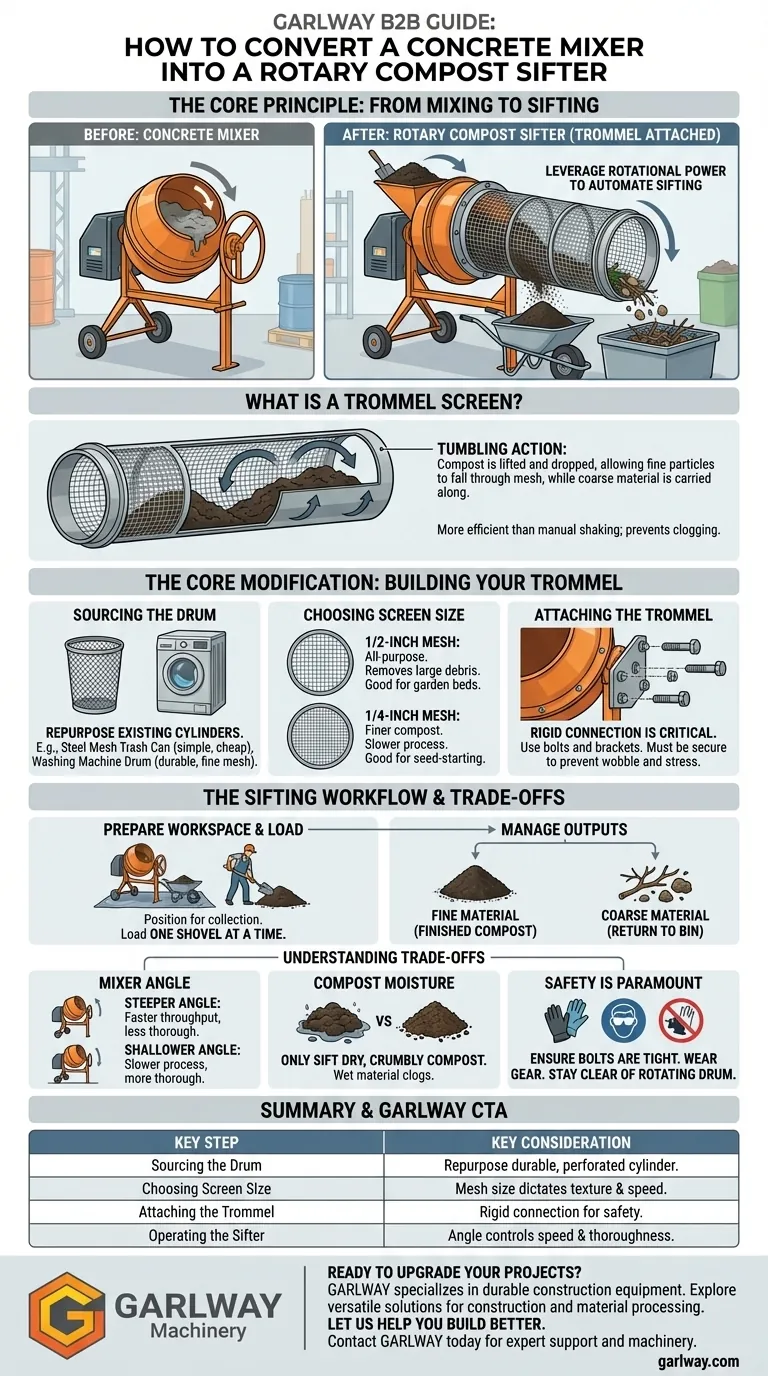
To convert a concrete mixer into a rotary compost sifter, you must construct and attach a cylindrical screen, known as a trommel, to the opening of the mixer's drum. As the mixer rotates, finished compost is loaded into the screen; fine material falls through the mesh into a collection bin below, while larger, unfinished material is retained inside the trommel for later removal.
The core principle is simple: leverage the mixer's rotational power to automate the sifting process. The mixer itself doesn't sift; it merely turns a screen you attach to it, separating fine compost from coarse debris with minimal manual labor.
The Principle: From Mixing to Sifting
What is a Trommel Screen?
A trommel is a rotating cylindrical screen. In an industrial setting, these are massive machines used for sorting rock, gravel, and waste. For compost, the principle is the same: gravity and motion do the work.
As the trommel turns, the compost inside is continuously lifted and dropped. This tumbling action allows fine particles to find their way to the screen and fall through, while larger pieces are carried along the length of the cylinder.
Why It's More Efficient
This method is far superior to manually shaking a flat screen. The constant rotation ensures the compost is always being agitated, preventing the screen from clogging and processing a much larger volume in less time.
The Core Modification: Building Your Trommel
H3: Sourcing the Sifting Drum
The easiest path is to repurpose an existing metal cylinder.
- Steel Mesh Trash Can: This is often the simplest and cheapest option. It's already the right shape and provides a robust screen.
- Washing Machine Drum: A stainless steel drum from a defunct washing machine is incredibly durable and already perforated. The holes may be smaller, creating a very fine finished product.
H3: Choosing the Right Screen Size
The size of the holes in your mesh dictates the texture of your final compost.
- 1/2-inch Mesh: This is a perfect all-purpose size. It removes large sticks, rocks, and unfinished scraps while allowing plenty of organic matter through. It's ideal for amending garden beds.
- 1/4-inch Mesh: This produces a much finer compost, suitable for seed-starting mixes or top-dressing lawns. Be aware that it will process more slowly and may clog with damp compost.
H3: Attaching the Trommel to the Mixer
Securely fastening the trommel so it rotates with the mixer drum is the most critical step. You will likely need to drill holes and use bolts, screws, and metal brackets to create a solid connection between the mixer's drum lip and the base of your screen cylinder.
The connection must be rigid. Any wobble or misalignment will put stress on the mixer's motor and create a safety hazard.
The Sifting Workflow
H3: Prepare Your Workspace
Position the mixer so you can easily place a large tarp or a wheelbarrow directly underneath the trommel. This will catch the sifted, ready-to-use compost.
H3: Load One Shovel at a Time
Turn the mixer on and begin adding your unfinished compost into the open end of the trommel. Do not overload it. A single shovel-full at a time allows the material to tumble freely and sift effectively.
H3: Manage the Outputs
The fine material that falls through is your finished compost. The coarser material that remains in the trommel—twigs, clumps, avocado pits—should be emptied and returned to your main compost bin to continue breaking down.
Understanding the Trade-offs
H3: Mixer Angle is Key
The tilt angle of your concrete mixer's drum is now a critical control.
- A steeper angle will move material through the trommel faster, increasing throughput but potentially reducing sifting thoroughness.
- A shallower angle keeps the compost in the trommel longer, resulting in a more thoroughly sifted final product but a slower overall process.
H3: Compost Moisture Matters
Attempting to sift wet, clumpy compost is inefficient and frustrating. The material will stick together and clog the screen. For best results, only sift compost that is relatively dry and crumbly.
H3: Safety is Paramount
You are operating a powerful machine with a custom-built attachment. Ensure all bolts are tight, the trommel is balanced, and you wear gloves and eye protection. Never put your hands near the rotating drum or screen while it is in motion.
Making the Right Choice for Your Goal
Before you build, consider the final product you need.
- If your primary focus is general garden improvement: Use a 1/2-inch mesh for a fast workflow that produces a nutrient-rich soil amendment.
- If your primary focus is creating a fine seed-starting mix: Use a 1/4-inch mesh, ensure your compost is dry, and be prepared for a slower process.
- If your primary focus is processing large volumes quickly: Opt for a larger mesh and set your mixer at a slightly steeper angle to keep the material moving.
By adapting a common tool, you can build a highly effective device that saves your back and produces superior compost for your garden.
Summary Table:
| Key Step | Core Task | Key Consideration |
|---|---|---|
| Sourcing the Drum | Repurpose a steel mesh trash can or washing machine drum. | Choose a durable, pre-perforated cylinder for ease. |
| Choosing Screen Size | Select 1/2-inch for general use or 1/4-inch for fine compost. | Mesh size dictates the texture and speed of the final product. |
| Attaching the Trommel | Securely bolt the screen cylinder to the mixer's drum. | A rigid connection is critical for safety and performance. |
| Operating the Sifter | Load compost slowly and manage the angle of the mixer drum. | Drum angle controls processing speed and sifting thoroughness. |
Ready to Upgrade Your Construction or Gardening Projects?
This DIY project shows how versatile construction machinery can be. GARLWAY specializes in providing durable and reliable construction equipment, including concrete mixers, winches, and batching plants, perfect for contractors and builders who value efficiency and innovation.
Let us help you build better:
- Source reliable machinery for your core projects.
- Explore versatile equipment that can be adapted for unique tasks.
- Get expert support for your construction and material processing needs.
Contact GARLWAY today to find the perfect machinery solution for your business!
Visual Guide
Related Products
- Portable Concrete Mixer Machine Equipment for Mixing Concrete
- Construction Products Concrete Plant Machine Mixing Concrete Mixer
- Portable Electric Concrete Mixer Machine for Cement Mixing
- JZC400 Mobile Small Concrete Mixer Cement Mixer Machine
- Hydraulic Concrete Mixer Machine Cement Mixing Equipment for Mixture Concrete
People Also Ask
- Why is it necessary to use a portable concrete mixer? Gain Total Control & Efficiency
- How much concrete can you pour with a portable mixer? Find the Perfect Fit for Your Project
- What types of projects are portable concrete mixers suitable for? Ideal for DIY & Small-Scale Construction
- How much does a portable concrete mixer hold? A Guide to Choosing the Right Capacity
- What types of portable concrete mixers exist? Find the Perfect Mixer for Your Project