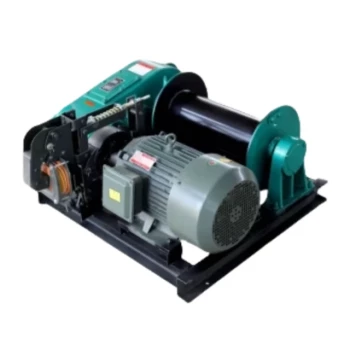
At their core, winches serve as the mechanical muscle in a large ship's mooring system. They are the essential devices used at each mooring point—typically 4, 6, or 8 points for a large vessel—to wind heavy mooring lines onto a drum, creating the immense, steady tension required to hold the ship securely against a dock or pier. This control is absolutely critical for maintaining stability during loading and unloading operations.
The fundamental challenge of mooring a large ship is managing the immense environmental forces of wind and current. A winch is not merely a pulling device; it is a precision tension-control system that provides the necessary mechanical power to counteract these forces, ensuring the vessel remains stable for safe and efficient port operations.
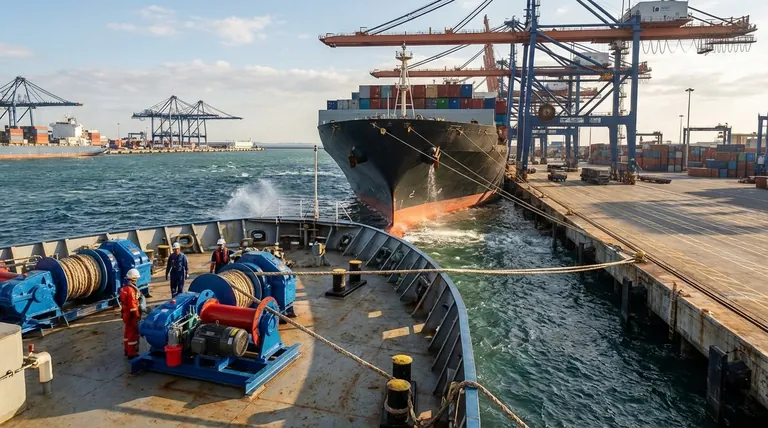
The Winch's Role in a Dynamic Environment
To truly understand the function of a winch, you must see it as more than a simple anchor point. It is a dynamic tool for managing force in an ever-changing environment.
A Mechanism for Controlled Force
A winch works by winding a heavy wire or rope around a rotating drum. This simple action allows a small input of energy to translate into a massive amount of pulling force.
By controlling the winch, the crew can precisely adjust the length and tension of each mooring line, effectively neutralizing the powerful forces acting on the hull.
Counteracting Wind and Current
A large vessel presents a massive surface area to the wind and current. These forces are constant and can shift in intensity and direction without warning.
Winches provide the power to pull the vessel into position and, more importantly, to hold it there against these relentless pressures, preventing unwanted movement that could damage the ship or the dock.
Creating a Stable Platform for Operations
The primary reason a ship is moored is to conduct operations, most commonly loading or unloading cargo. This requires a highly stable and predictable platform.
Winches ensure the ship remains perfectly aligned with dockside equipment like cranes and loading ramps, which is non-negotiable for both the safety of the crew and the security of the cargo.
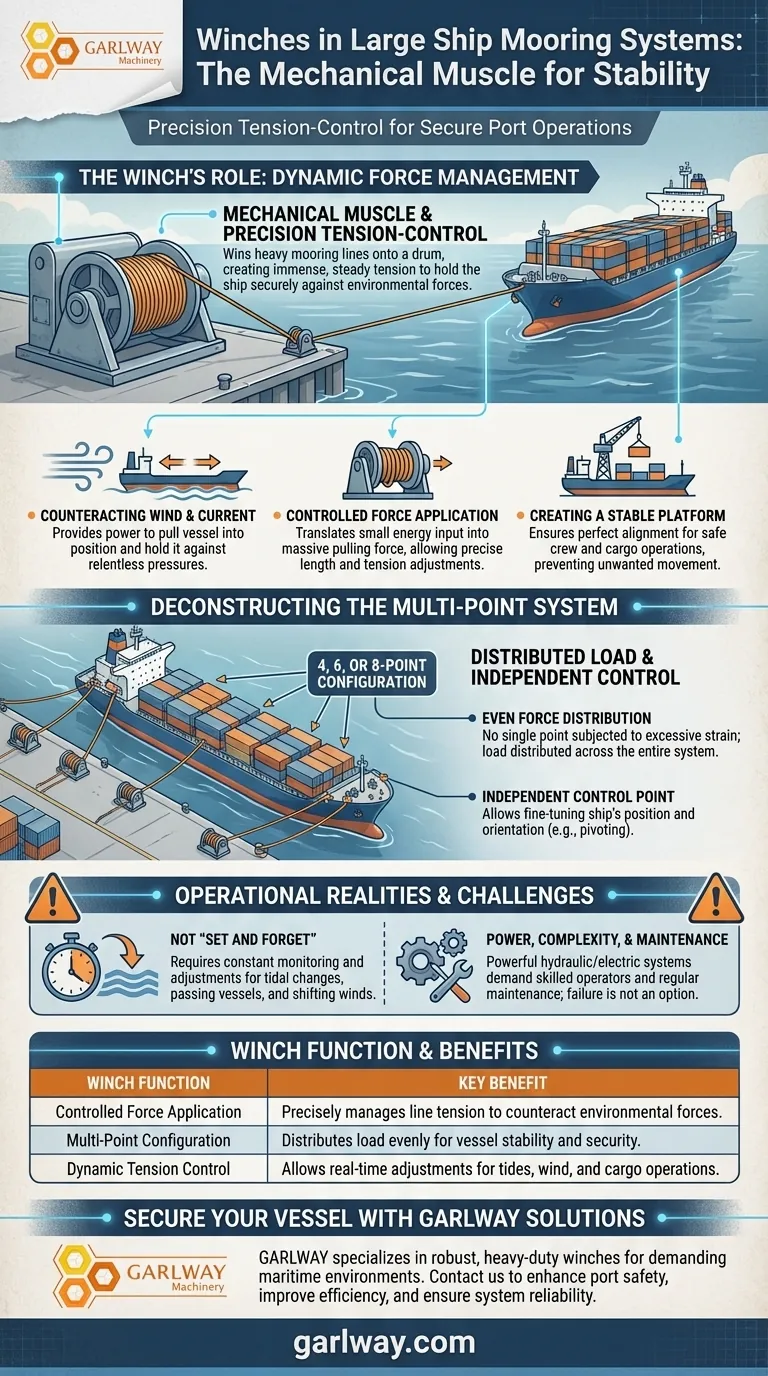
Deconstructing the Multi-Point System
No single winch can secure a large ship. They work as an integrated system, where each unit plays a specific and coordinated role.
The 4, 6, or 8-Point Configuration
Larger vessels utilize multiple mooring lines distributed along their length to balance the forces evenly. Each of these lines is controlled by its own dedicated winch.
This multi-point setup ensures that no single point on the hull or dock is subjected to excessive strain, distributing the load across the entire system.
Each Winch as an Independent Control Point
Having a winch for each line gives the crew independent control over every connection point.
This allows for fine-tuning the ship's position and orientation. For example, the crew can increase tension on bow lines while slightly slacking stern lines to pivot the vessel into a more favorable position.
Common Pitfalls and Operational Realities
While essential, relying on mooring winches comes with operational responsibilities and potential challenges that must be managed.
Mooring is Not "Set and Forget"
A common mistake is to assume the vessel is secure once the lines are tensioned. However, factors like tidal changes, passing vessels, and shifting winds require constant monitoring.
Crews must be prepared to adjust the winches—paying out or taking in line—to maintain appropriate tension and adapt to changing conditions.
Power, Complexity, and Maintenance
The winches on large ships are powerful hydraulic or electric systems. They are complex pieces of machinery that require skilled operators and regular maintenance to function safely and reliably.
System failure is not an option, as a loss of tension on even one line can compromise the entire mooring configuration and lead to a dangerous situation.
Making the Right Choice for Your Goal
Understanding the role of winches is fundamental to maritime safety and efficiency. Your operational focus will determine how you view their application.
- If your primary focus is operational safety: View mooring winches as dynamic tension-control systems, not static tie-downs, that demand constant situational awareness.
- If your primary focus is vessel security: Recognize that a multi-point winch system provides critical redundancy, ensuring the ship remains secure even if one line requires adjustment.
- If your primary focus is efficiency: Appreciate that precise winch control is what enables rapid and safe alignment with shore-based infrastructure for faster cargo turnaround.
Ultimately, the mastery of the mooring winch system is the critical skill that underpins safe and effective operations for any large vessel in port.
Summary Table:
| Winch Function | Key Benefit |
|---|---|
| Controlled Force Application | Precisely manages line tension to counteract environmental forces. |
| Multi-Point Configuration (4, 6, or 8 points) | Distributes load evenly for vessel stability and security. |
| Dynamic Tension Control | Allows real-time adjustments for tides, wind, and cargo operations. |
Secure Your Vessel with Precision-Engineered Mooring Solutions
Does your operation demand reliable, high-performance winches to ensure the safety and efficiency of your port calls? GARLWAY specializes in providing robust construction and machinery solutions, including heavy-duty winches designed for the demanding environments faced by construction companies, contractors, and maritime operators globally.
We can help you:
- Enhance Port Safety: Our winches offer the precise tension control needed for dynamic mooring.
- Improve Operational Efficiency: Achieve faster and safer vessel alignment for quicker cargo turnaround.
- Ensure System Reliability: Benefit from durable equipment built for continuous, heavy-duty use.
Ready to upgrade your mooring system? Contact GARLWAY today to discuss your specific requirements and discover how our winches can bring security and efficiency to your operations.
Visual Guide
Related Products
- Hydraulic Winding Engine Harbor Freight Winch
- Portable Small Trailer Winch
- Electric and Hydraulic Winch for Heavy Duty Applications
- Warn Winch Windlass Boat Trailer Winch
- Best 18000 Pound Drum Anchor Trailer Winch
People Also Ask
- What role does hydraulic fluid play in hydraulic winches? It's the Lifeblood of Your Heavy-Duty Pulling Power
- What vehicles commonly use hydraulic winches? For Industrial Trucks Needing Unmatched Power
- What are the features of hydraulic winches? Unmatched Power and Continuous Duty for Heavy Loads
- What preventive measures can be taken to avoid oil leakage in hydraulic winches? Ensure Long-Term Reliability
- What does 'power out' mean in a hydraulic winch? Achieve Absolute Control When Lowering Heavy Loads