
Yes, many windlasses can handle both rope and chain, but this capability is not universal. Only windlasses specifically designed with a combination chainwheel, often called a gypsy, can manage a rope-chain anchor rode. Attempting to use a rope on a windlass built only for chain will result in slippage and will not work.
The ability of a windlass to manage both rope and chain hinges entirely on two key design features: a specialized chainwheel to grip the rope and the orientation of the windlass itself, which dictates how securely that rope is held.
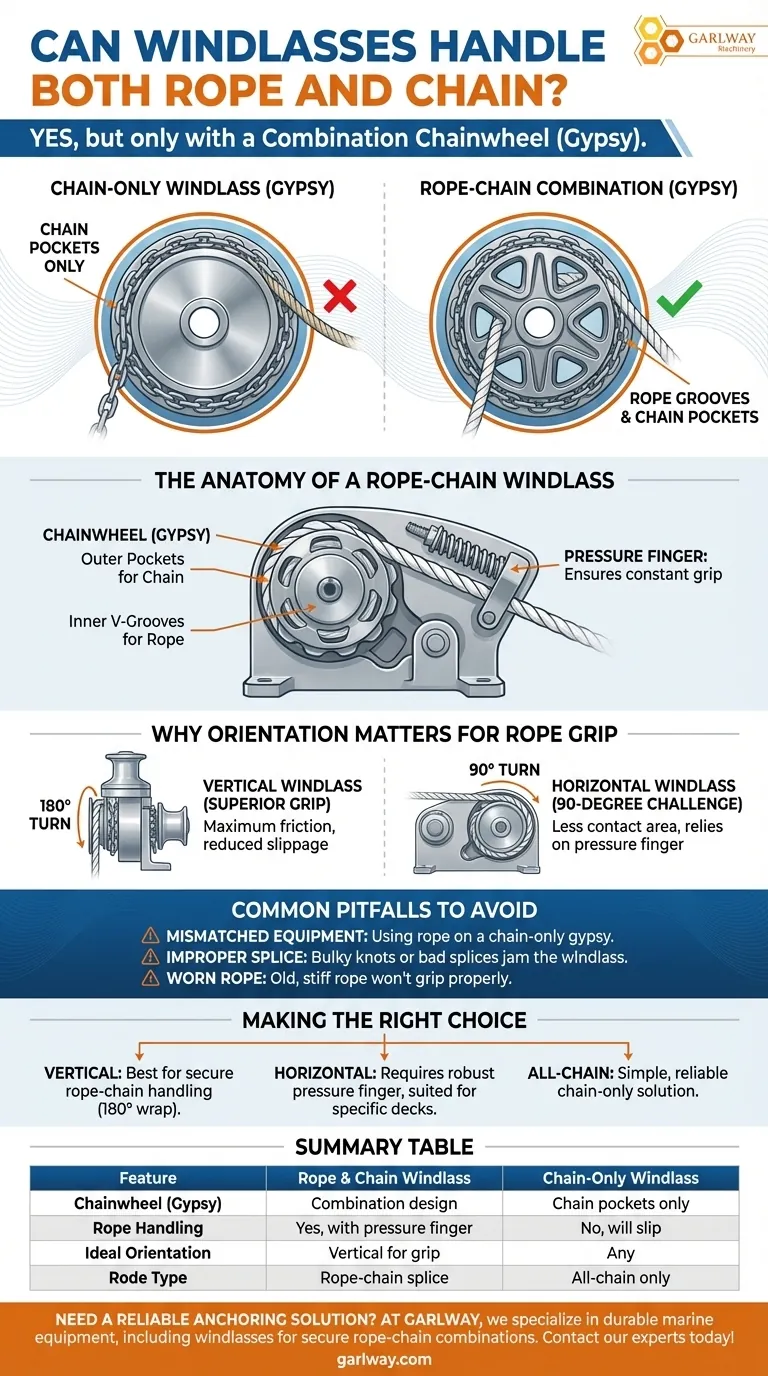
The Anatomy of a Rope-Chain Windlass
A windlass designed for a combination rode has specific components that a chain-only model lacks. Understanding these parts clarifies why only certain models are suitable for the job.
The Critical Role of the Chainwheel
The heart of the windlass is the chainwheel (or gypsy). On a combination model, it's engineered for two tasks. The outer pockets are shaped to grab the links of the anchor chain, while the inner surface has special V-shaped grooves or teeth designed to bite into and grip the fibers of a rope.
The Pressure Finger: Ensuring Grip
To prevent the rope from slipping, most rope-capable windlasses include a pressure finger. This is a spring-loaded arm that physically presses the rope down into the chainwheel's grooves, ensuring constant and firm contact as the rode is retrieved.
Why Windlass Orientation Matters for Rope
The physical layout of the windlass has a significant impact on its ability to handle rope effectively. This is one of the most important factors when choosing a unit for a combination rode.
Vertical Windlasses: Superior Grip
Vertical windlasses are generally better at handling rope. On these models, the rope makes a full 180-degree turn around the chainwheel. This extensive contact provides significantly more friction and a more secure grip, dramatically reducing the chance of slippage.
Horizontal Windlasses: A 90-Degree Challenge
On a horizontal windlass, the rode only makes a 90-degree turn over the top of the chainwheel. This provides far less surface area contact compared to a vertical unit, making it inherently more challenging to maintain a firm grip on the rope. While many horizontal models work well, they rely more heavily on a perfectly functioning pressure finger.
Common Pitfalls to Avoid
Choosing the wrong windlass or rode can lead to frustration and unsafe anchoring conditions. Being aware of the limitations is crucial for reliable operation.
Mismatched Equipment
The most common mistake is assuming any windlass can handle rope. Using a rope on a chain-only gypsy will fail, as there is nothing for the windlass to grip.
The Rope and Splice Matter
For a combination system to work, you must use a specific rope-to-chain splice that is designed to pass smoothly through the chainwheel. A bulky knot or an improper splice will jam the windlass. The condition of the rope is also critical; old, stiff, or worn-out rope will not grip properly in the gypsy's grooves.
Making the Right Choice for Your Anchoring System
Your decision should be based on your vessel's layout and your priority for anchoring reliability.
- If your primary focus is the most secure handling of a rope-chain rode: A vertical windlass is the technically superior choice due to the 180-degree wrap providing maximum grip.
- If your deck configuration or anchor locker demands a horizontal unit: You must select a model that is explicitly rated for your specific rope and chain size and features a robust pressure finger.
- If you use an all-chain anchor rode: A simpler and often more cost-effective chain-only windlass is the most direct and reliable solution.
Ultimately, selecting a windlass that is precisely engineered for your type of anchor rode is fundamental to a safe and dependable anchoring system.
Summary Table:
| Feature | Rope & Chain Windlass | Chain-Only Windlass |
|---|---|---|
| Chainwheel (Gypsy) | Combination design with rope grooves & chain pockets | Chain pockets only |
| Rope Handling | Yes, with a pressure finger for grip | No, will slip |
| Ideal Orientation | Vertical (180° wrap for superior grip) | Any |
| Rode Type | Rope-chain splice required | All-chain only |
Need a reliable anchoring solution for your vessel?
At GARLWAY, we specialize in durable marine equipment, including windlasses engineered for secure handling of rope-chain combinations. Our products are built for boat owners and marine professionals who demand dependable performance.
Contact our experts today to find the perfect windlass for your specific rope, chain, and vessel requirements.
Visual Guide
Related Products
- Electric Hoist Winch Boat Anchor Windlass for Marine Applications
- Quick Windlass Portable Winch for Truck and Boat Best Boat Winch
- Heavy Duty Electric Boat Winch Windlass Anchor
- Warn Winch Windlass Boat Trailer Winch
- 12000 lb Electric Boat Trailer Winch with Windlass Anchor Warn
People Also Ask
- How does an electric anchor winch work? Power, Safety, and Reliable Operation Explained
- What are the advantages of installing an electric anchor winch on a boat? Boost Safety & Ease for Boaters
- What are the operational differences between electric hoists and winches? A Guide to Safe Lifting vs. Pulling
- What are the main benefits of a boat anchor winch? Boost Safety & Efficiency for Your Vessel
- How does a boat anchor winch work? A Guide to Reliable Anchor Handling


