The Anatomy of a Standstill
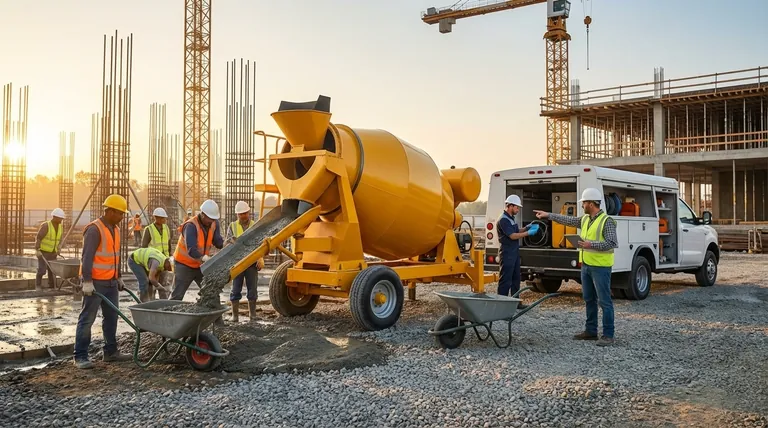
It’s 8 AM on a Tuesday. The concrete pour is critical, the crew is ready, and the schedule is tight. Suddenly, the mixer groans to a halt. A single, small component has failed.
The site manager makes a call. The diagnosis is quick, but the solution isn't. The part is weeks away.
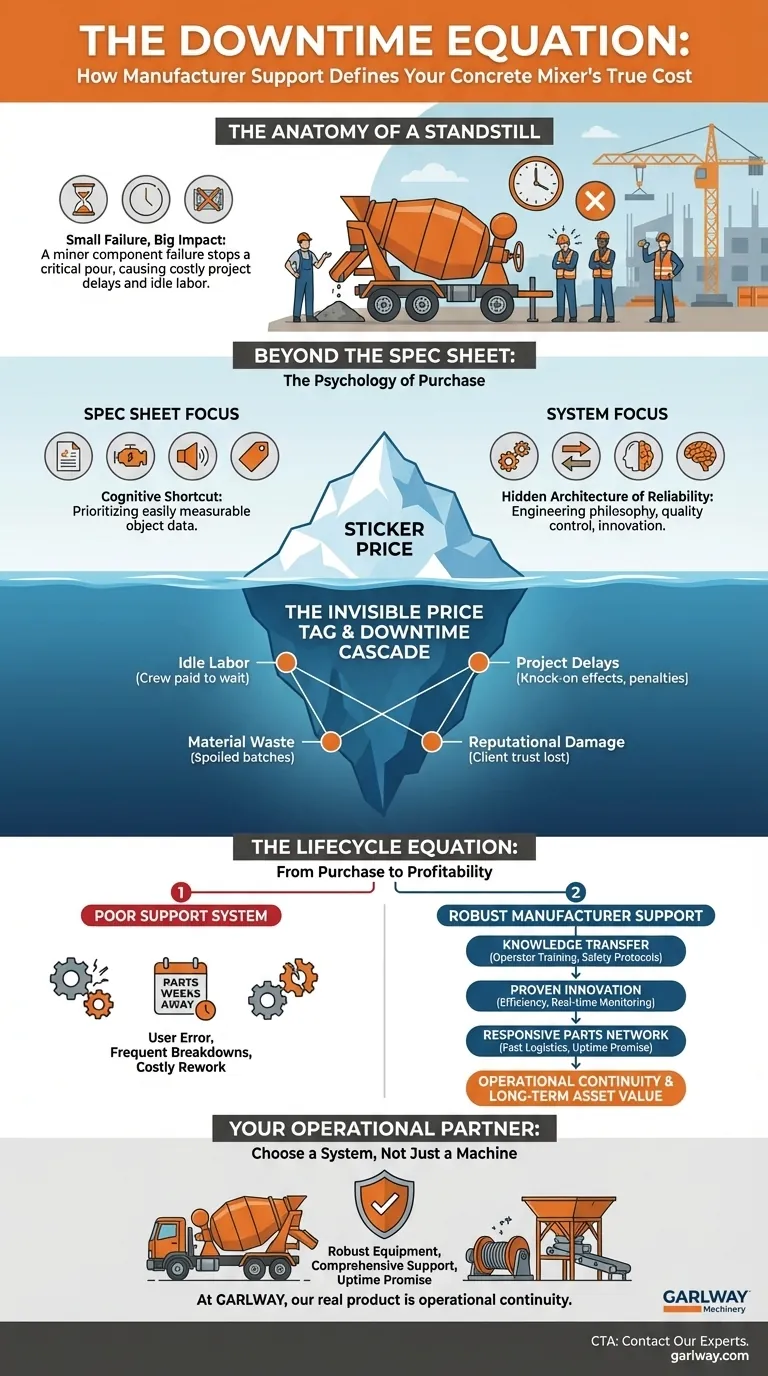
This scenario isn't a failure of machinery; it's a failure of the system behind the machine. The true cost of that mixer wasn't its sticker price. It's the cost of this standstill—the idle crew, the project delays, the contractual penalties. When choosing equipment, we often focus on the machine itself. But the real decision, the one that governs long-term success, is about the strength of the manufacturer behind it.
Beyond the Spec Sheet: The Psychology of a Purchase
It's human nature to gravitate toward what we can easily measure and compare. We lay out spec sheets side-by-side: mixing capacity, motor horsepower, drum volume. We compare price tags. It feels rational, like a purely objective decision.
But this is a cognitive shortcut. It prioritizes the tangible data of the object over the less visible but far more crucial data of the system.
The Hidden Architecture of Reliability
"Manufacturer strength" isn't a marketing term; it's an engineering philosophy. It manifests in ways that don't appear on a spec sheet:
- Materials Science: The specific grade of steel used for the drum, chosen for abrasion resistance.
- Weld Integrity: The precision and quality control ensuring the frame can withstand years of vibration and stress.
- Component Sourcing: The decision to use a more robust bearing or a higher-quality motor from a trusted supplier.
This deep-seated commitment to quality is what produces a consistent, homogenous mix, batch after batch. It’s what prevents premature failures and the costly rework that comes from inconsistent output.
Access to Proven Innovation
Leading manufacturers also invest in technology that enhances efficiency and safety. This can range from automated feeding systems that reduce labor to telematics that monitor equipment health in real-time. Choosing such a brand gives you access to an R&D department you could never afford on your own.
The Lifecycle Equation: From Purchase to Profitability
A machine’s life begins at purchase, but its value is only realized through years of operation. The post-purchase service a manufacturer provides is the ecosystem that allows the machine to function reliably throughout that lifecycle.
Knowledge Transfer: The First Line of Defense
Proper operator training is not a courtesy; it's the initial transfer of essential knowledge. A manufacturer who invests in training understands a fundamental truth: the most common cause of equipment damage is user error.
Ensuring your team knows the machine's operational limits and safety protocols is the first, and most effective, line of defense against preventable breakdowns.
The Ticking Clock of Spare Parts
Every machine will eventually need a replacement part. The difference between a minor inconvenience and a catastrophic project delay is logistics.
A strong manufacturer maintains a robust distribution network. They see spare parts not as a secondary revenue stream, but as a critical component of their promise of uptime. A weaker brand may have a parts catalog, but a strong one has a system designed to get that part to your job site, fast.
Calculating the Invisible Price Tag
The temptation to opt for a lower upfront cost is powerful. But this often proves to be a false economy, where the real price is paid later, in moments of crisis.
The True Cost of a Single Bad Day
Downtime isn't just a pause; it's a cascade of costs that radiates through the entire project.
| Cost Category | Impact |
|---|---|
| Idle Labor | A full crew paid to wait. |
| Project Delays | Knock-on effects for other trades and potential contract penalties. |
| Material Waste | A spoiled batch of concrete that must be disposed of. |
| Reputational Damage | The loss of trust with clients when deadlines are missed. |
A single significant breakdown on a poorly supported machine can easily erase any savings from the initial purchase. The lower sticker price was simply a down payment on future, far greater, expenses.
An Asset, Not Just a Tool
Equipment from a well-regarded manufacturer isn't just a tool; it's a long-term asset. It will not only perform more reliably and last longer, but it will also retain a significantly higher resale value. It’s a more stable investment for your business.
Your Operational Partner
Ultimately, choosing a concrete mixer is less about buying a piece of steel and more about choosing a partner for your operation. You are investing in a promise of reliability, support, and uptime. The spec sheet tells you what the machine can do. The manufacturer's strength and service tell you what it will do, day after day, year after year.
At GARLWAY, we build equipment designed for the harsh realities of the construction site. But more importantly, we build the support system to stand behind it. We provide robust concrete mixers, winches, and batching plants, but our real product is operational continuity. We partner with contractors to ensure that their investment is protected by comprehensive training, proactive maintenance support, and a responsive spare parts network.
To secure not just a machine, but a system dedicated to your project's success, Contact Our Experts.
Visual Guide
Related Products
- Portable Concrete Mixer Machine Equipment for Mixing Concrete
- Construction Products Concrete Plant Machine Mixing Concrete Mixer
- Portable Electric Concrete Mixer Machine for Cement Mixing
- JZC400 Mobile Small Concrete Mixer Cement Mixer Machine
- Hydraulic Concrete Mixer Machine Cement Mixing Equipment for Mixture Concrete
Related Articles
- How to Diagnose and Prevent Sensor Resistance Failures in Concrete Mixing Equipment
- How to Build an OSHA-Compliant Safety System for Concrete Mixer Workspaces
- How to Choose Concrete Mixers for Long-Term Reliability and Cost Savings
- How Concrete Composition Works: The Science Behind Stronger Structures
- How to Test Concrete Mixer Brake Systems for Optimal Safety and Compliance