Introduction
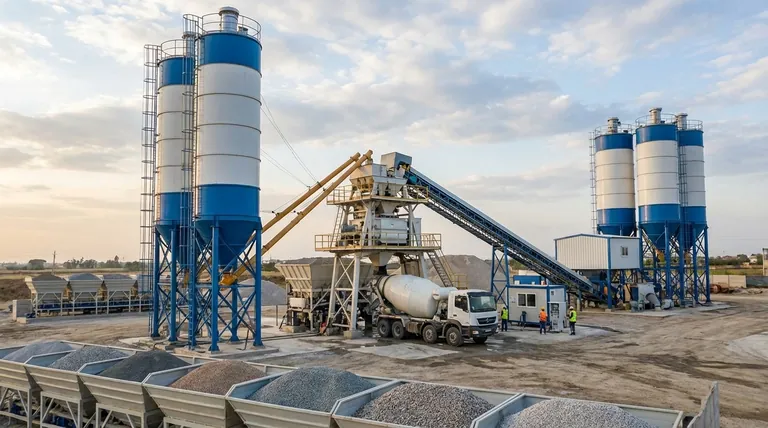
Concrete mixing isn’t just about combining materials—it’s a precision-driven process where every stage impacts structural integrity and project timelines. Whether you’re managing a small batch plant or a large-scale operation, optimizing aggregate preparation, mixing dynamics, and discharge protocols can reduce waste, prevent segregation, and ensure consistent quality. This guide breaks down actionable strategies, backed by industry practices, to elevate your batching process.
Foundations of Efficient Concrete Production
Aggregate Preparation: Beyond Basic Transportation
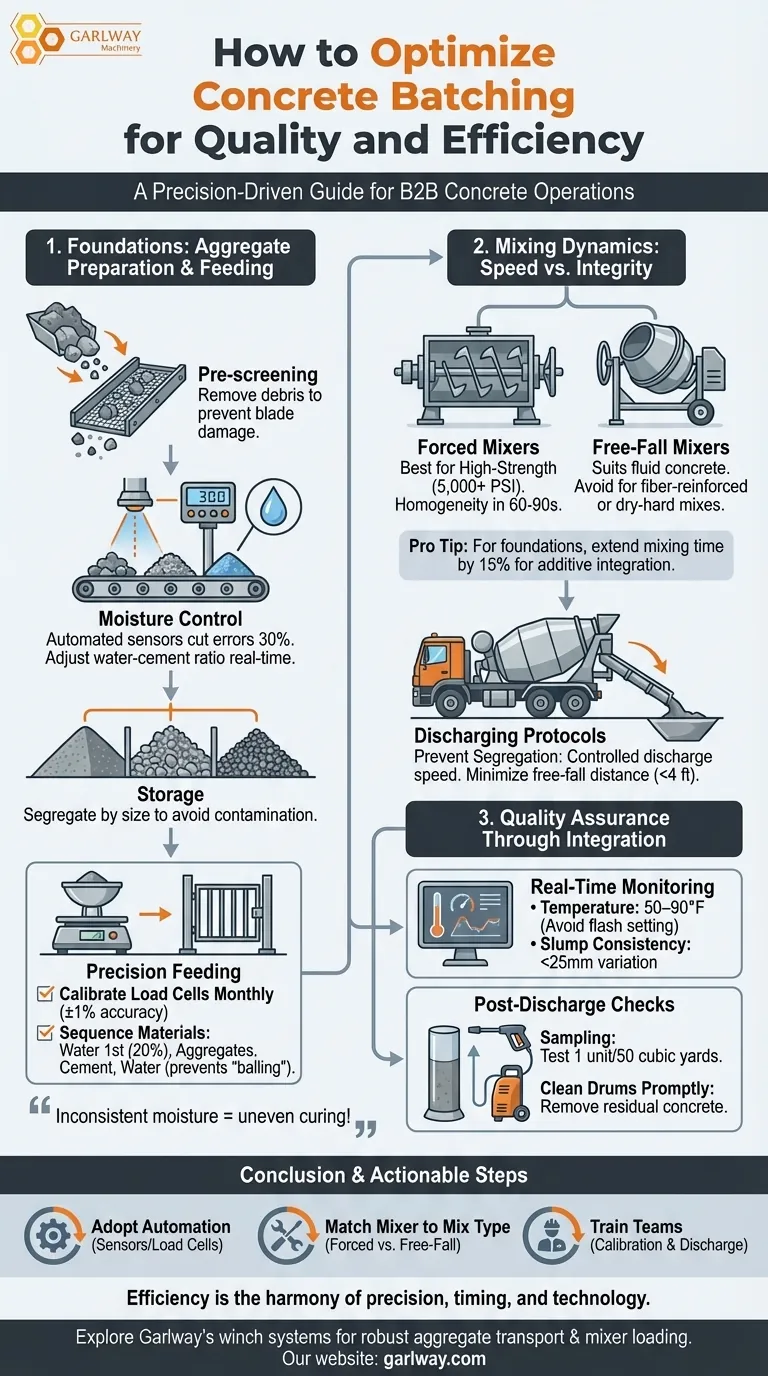
Aggregates account for 60–75% of concrete volume, making their preparation critical. Traditional methods rely on manual moisture checks, but automated moisture sensors now reduce errors by 30% and streamline workflows.
Key steps:
- Pre-screening: Remove oversized debris to prevent mixer blade damage.
- Moisture control: Wet aggregates compensate for mix water, but excess moisture weakens the mix. Automated sensors adjust water-cement ratios in real time.
- Storage: Segregate aggregates by size to avoid contamination.
Ever wondered why some batches cure unevenly? Inconsistent moisture levels are often the culprit.
Precision Feeding Systems and Load Monitoring
Modern batching plants use load cells and automated gates to measure materials within ±1% accuracy.
Best practices:
- Calibrate equipment monthly: Drift in sensor accuracy leads to over/under-feeding.
- Sequence materials: Add 20% of mixing water first to coat the drum, followed by aggregates, cement, and remaining water. This reduces "balling" of cement.
Mixing Dynamics: Balancing Speed and Material Integrity
Forced vs. Free-Fall Mixing
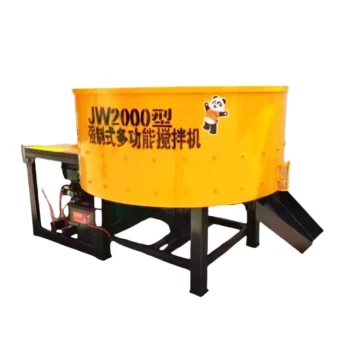
- Forced mixers (horizontal shaft) dominate for high-strength mixes (e.g., 5,000+ PSI). Blades shear through stiff mixes, ensuring homogeneity in 60–90 seconds.
- Tilt drum mixers (free-fall) suit fluid concrete but struggle with fiber-reinforced or dry-hard mixes.
Pro Tip: For foundations, extend mixing time by 15% to fully integrate additives like fly ash.
Discharging Protocols to Prevent Segregation
Segregation occurs when heavier aggregates settle faster than paste. Mitigate this by:
- Controlled discharge speed: Use adjustable chutes to maintain a steady flow.
- Minimizing free-fall distance: Keep drop height under 4 feet to reduce aggregate separation.
Quality Assurance Through Process Integration
Real-Time Monitoring
Integrate sensors to track:
- Temperature (ideal range: 50–90°F to avoid flash setting).
- Slump consistency (variations >25mm indicate mixing issues).
Post-Discharge Checks
- Sampling: Test 1 unit per 50 cubic yards for compressive strength.
- Clean drums promptly: Residual concrete hardens and unbalances mixer blades.
Conclusion & Actionable Steps
- Adopt automation: Moisture sensors and load cells cut errors by 30%.
- Match mixer to mix type: Use forced mixers for high-strength applications.
- Train teams: Emphasize calibration and discharge protocols.
For projects requiring robust material handling, explore Garlway’s winch systems designed to support aggregate transport and mixer loading with precision.
Final thought: In concrete, efficiency isn’t just speed—it’s the harmony of precision, timing, and technology.
Visual Guide
Related Products
- HZS75 Concrete Batching Plant Cement Mixer Price Concrete Mixer Bunnings Mixing Plant
- HZS35 Small Cement Concrete Mixing Batch Plant
- HZS120 Ready Mix Concrete Batching Plant Commercial Mud Cement Mixer
- HZS180 Ready Mix Concrete Plant for Foundations with Sand and Cement
- Commercial Electric Concrete Mixer Machine HZS 50 Small Batch Plant for Sale
Related Articles
- How Advanced Concrete Batching Technology Cuts Costs and Boosts Efficiency
- Control vs. Chance: The Engineering Case for Concrete Batching Plants
- How to Minimize Measurement Errors in Concrete Batching: 4 Proven Strategies
- How to Control Raw Material Variables for Flawless Concrete Batching
- Optimizing Concrete Batching Accuracy: Technology-Driven Solutions for Modern Plants