Concrete batching is the backbone of construction projects, but even minor measurement errors can lead to costly rework, structural weaknesses, or wasted materials. Modern sensor technologies—from load cells to moisture detectors—are transforming this process by automating precision. This article breaks down how these systems mechanically correct errors, integrate with control software, and deliver measurable ROI through case studies and emerging AI trends.
Precision Engineering in Concrete Production
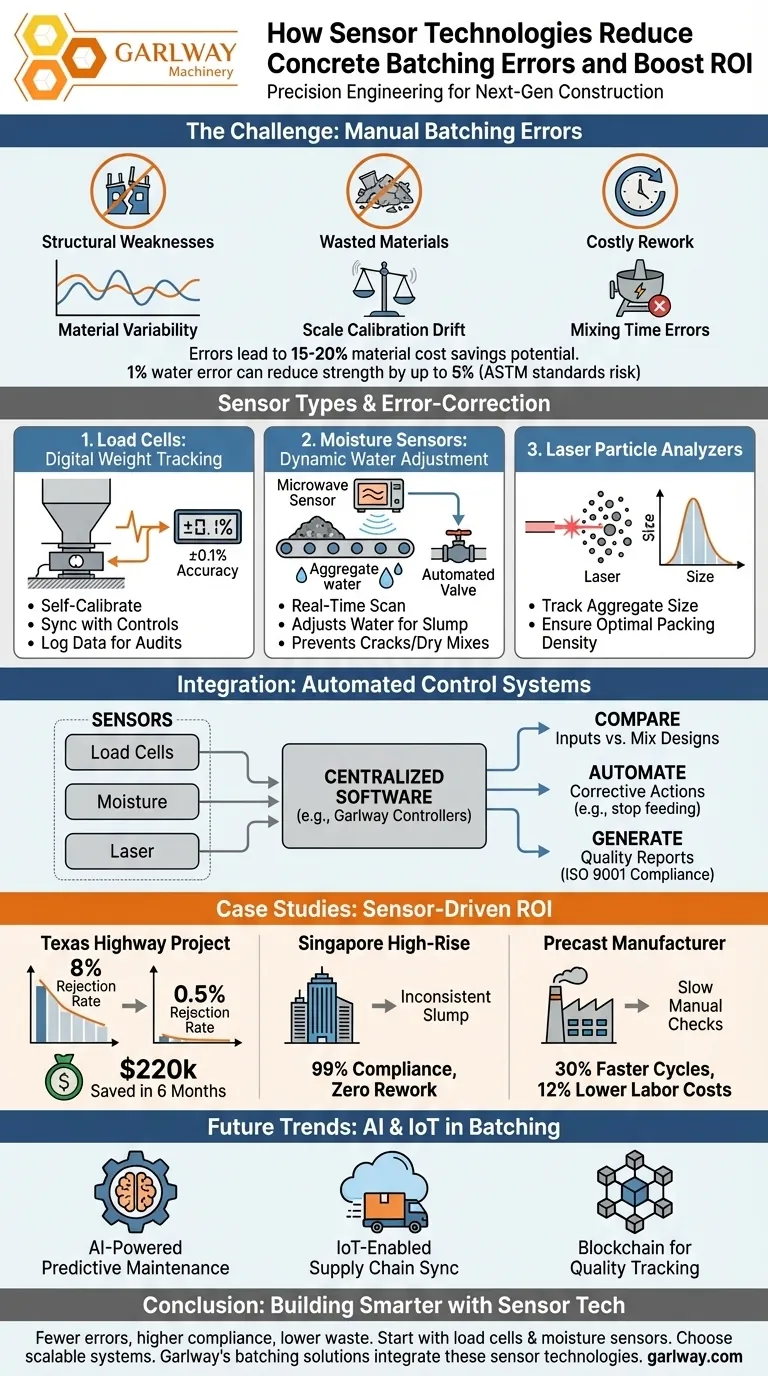
Concrete’s strength depends on exact ratios of cement, water, aggregates, and additives. Traditional manual batching is prone to human error, but sensors provide real-time feedback to maintain consistency.
Key Challenges Addressed by Sensors:
- Material Variability: Moisture content in aggregates fluctuates, affecting water-to-cement ratios.
- Scale Calibration Drift: Mechanical scales lose accuracy over time without detection.
- Mixing Time Errors: Undermixing weakens concrete; overmixing wastes energy.
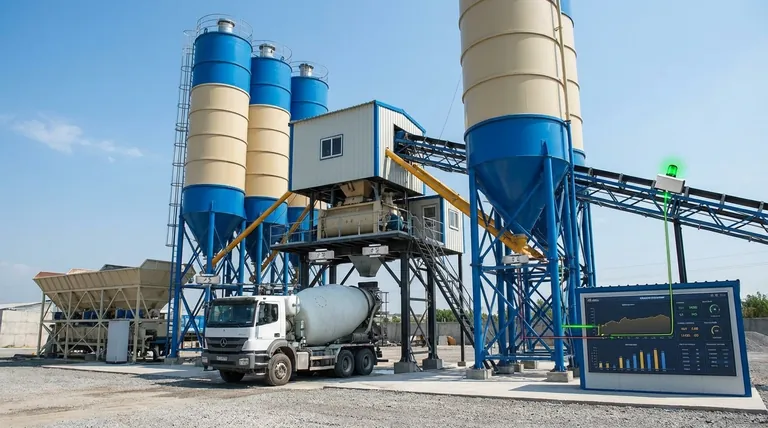
Sensors act as a "nervous system" for batching plants, continuously monitoring variables like weight, density, and flow rates. For example, load cells replace manual scales to measure ingredients within ±0.1% accuracy, while microwave moisture sensors adjust water inputs dynamically.
Ever wondered how a 1% error in water content impacts concrete strength? Studies show it can reduce compressive strength by up to 5%, risking compliance with ASTM standards.
Sensor Types and Their Error-Correction Mechanisms
1. Load Cells: The Digital Scale Revolution
Load cells convert force into electrical signals, enabling automated weight tracking. Unlike mechanical scales, they:
- Self-calibrate to prevent drift.
- Sync with control systems to halt feeding at target weights.
- Log data for compliance audits.
Reference Insight: Load cells improve space efficiency and reduce waste by eliminating over-pouring—a key factor in the 15–20% material cost savings reported by batching plants.
2. Moisture Sensors: Dynamic Water Adjustment
Microwave or capacitance-based sensors scan aggregates in real time, adjusting water volumes to maintain slump (workability). This prevents:
- Cracking from excess water.
- Poor compaction from overly dry mixes.
3. Laser Particle Analyzers
Deployed in advanced plants, these track aggregate size distribution, ensuring optimal packing density for stronger concrete.
Integration with Automated Control Systems
Sensors alone can’t fix errors—they need centralized software to process data and trigger adjustments. Modern systems like Garlway’s batching controllers:
- Compare sensor inputs against mix designs, flagging deviations.
- Automate corrective actions, e.g., stopping a conveyor belt when cement reaches its target weight.
- Generate reports for quality assurance, critical for projects requiring ISO 9001 compliance.
Case Example: A highway project in Texas used integrated load cells and moisture sensors to reduce batch rejection rates from 8% to 0.5%, saving $220,000 in six months.
Case Studies: Sensor-Driven Quality Improvements
Project 1: High-Rise Construction in Singapore
- Issue: Inconsistent slump due to tropical humidity.
- Solution: Real-time moisture sensors + automated water valves.
- Outcome: 99% compliance with specified slump tests; zero rework.
Project 2: Precast Concrete Manufacturer
- Issue: Manual weight checks slowed production.
- Solution: Load cells with predictive alerts for calibration drift.
- Outcome: 30% faster batching cycles; 12% lower labor costs.
Future Trends: AI and IoT in Batching Accuracy
-
AI-Powered Predictive Maintenance
Sensors will forecast equipment wear (e.g., mixer blade erosion) before failures occur. -
IoT-Enabled Supply Chain Sync
Moisture sensors could communicate with aggregate suppliers, ensuring delivered materials meet preset specs. -
Blockchain for Quality Tracking
Immutable batch records from sensors may become mandatory for government contracts.
Conclusion: Building Smarter with Sensor Tech
Sensor technologies turn concrete batching from a guessing game into a precision science. For contractors, the ROI is clear: fewer errors, higher compliance, and lower waste. To leverage these tools:
- Audit your current batching process for error hotspots.
- Start with load cells and moisture sensors—the highest-impact upgrades.
- Choose scalable systems that support future AI/IoT integrations.
Final Thought: In an era where sustainability and efficiency define competitiveness, sensors aren’t just tools—they’re the foundation of next-gen construction.
Note: Garlway’s batching solutions integrate these sensor technologies to optimize concrete production. Explore how automation can elevate your project’s precision.
Visual Guide
Related Products
- HZS120 Ready Mix Concrete Batching Plant Commercial Mud Cement Mixer
- HZS35 Small Cement Concrete Mixing Batch Plant
- HZS75 Concrete Batching Plant Cement Mixer Price Concrete Mixer Bunnings Mixing Plant
- HZS180 Ready Mix Concrete Plant for Foundations with Sand and Cement
- Commercial Electric Concrete Mixer Machine HZS 50 Small Batch Plant for Sale
Related Articles
- How Raw Material Variability Impacts Concrete Batching Accuracy
- How to Optimize Dust Control in Concrete Batching Plants: A Compliance-Focused Guide
- Optimizing Concrete Batching Accuracy: Technology-Driven Solutions for Modern Plants
- How Sensor Technologies Revolutionize Concrete Batching Accuracy
- How to Reduce Measurement Errors in Concrete Batching: Proven Strategies for Accuracy