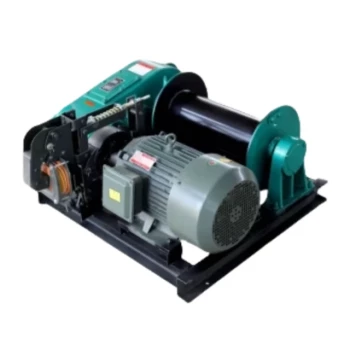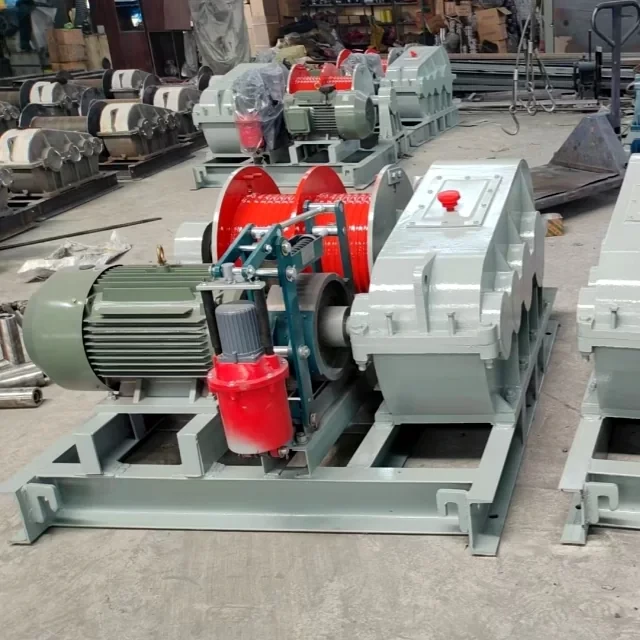
When equipment must perform heavy lifting in tight spaces, traditional winches often fall short. Coaxial winches, with their compact transmission design and energy-efficient operation, are redefining what’s possible in robotics, marine systems, and other space-constrained applications. This article breaks down their engineering advantages, real-world performance, and how they outperform conventional models—helping you decide if they’re the right solution for your industry’s unique demands.
Coaxial Winch Design Essentials
Core Components of the Coaxial Transmission Mechanism
Unlike traditional winches that rely on separate motors and gearboxes, coaxial designs integrate the drum, motor, and gear system into a single axis. This eliminates bulky external linkages, reducing the footprint by up to 40% while maintaining torque output. Key elements include:
- In-line Drum Assembly: Rotates directly on the motor shaft, minimizing power loss from belt or chain drives.
- Planetary Gear Systems: Nest inside the drum to provide high reduction ratios without added width.
- Unibody Housing: Protects components while serving as a structural support, cutting unnecessary weight.
Ever wondered how a winch can fit into a robotic arm’s elbow joint? Coaxial engineering makes it possible.
Weight-Saving Engineering Principles
By consolidating parts, coaxial winches reduce material use without sacrificing strength. Aerospace-derived aluminum alloys and hollow shaft designs further lighten the load—critical for applications like drone payload systems or underwater ROVs where every gram counts.
Industry Applications and Performance Advantages
Robotics and Automation: Precision in Confined Spaces
In assembly-line robots or surgical assistance devices, coaxial winches enable precise cable management where lateral space is limited. For example, their streamlined profile allows integration into robotic wrists, delivering smooth retraction for tools or sensors without protruding mechanisms.
Marine Operations: Corrosion Resistance and Compact Deployment
Saltwater environments demand winches that resist corrosion while fitting narrow deck spaces. Coaxial models with marine-grade stainless steel and sealed bearings thrive here. Their self-contained design also simplifies installation on autonomous boats or floating cranes, where accessibility for repairs is limited.
Think about the last time you saw a winch on a research vessel—was it bulky or surprisingly sleek?
Technical Comparison with Traditional Winches
Energy Efficiency Metrics
Coaxial systems lose 15–20% less energy compared to conventional winches, as direct power transmission reduces friction from auxiliary components. Independent tests show they require 30% less motor input for equivalent load capacity, lowering long-term operational costs.
Maintenance Simplicity
Fewer moving parts mean fewer failure points. With no external gears or belts to replace, maintenance often involves just lubricating the central shaft—a boon for offshore wind turbines or remote automated warehouses where downtime is costly.
Conclusion: Is a Coaxial Winch Right for Your Project?
Coaxial winches excel where space, weight, and efficiency are non-negotiable. Whether you’re designing agile robotics or rugged marine equipment, their compact power delivery and low-maintenance design can streamline operations. For industries pushing the limits of confined-space engineering, these winches aren’t just an option—they’re becoming the standard.
Actionable Next Steps:
- Evaluate your spatial constraints and torque requirements.
- Compare energy consumption data between coaxial and traditional models in your sector.
- Explore Garlway’s range of coaxial winch solutions for tailored industrial applications.
By focusing on real-world performance metrics and human-centric design impacts, coaxial winches prove that smaller footprints can drive bigger productivity gains.
Related Products
- Small Electric Winch 120V and 240V for Compact Applications
- Electric and Hydraulic Winch for Heavy Duty Applications
- Hydraulic Winding Engine Harbor Freight Winch
- Electric 120V Boat Winch by Badlands
- Electric Hoist Winch Boat Anchor Windlass for Marine Applications
Related Articles
- How to Maximize Electrical Winch Performance in Challenging Environments
- How Electric Winch Safety Features Prevent Catastrophic Industrial Accidents
- How to Choose Between Manual and Electric Winches for Your Project
- How Electric Winches Solve Industrial Safety and Cost Challenges
- How Electric Winches’ Engineering Enhances Efficiency and Safety in Heavy-Duty Applications