
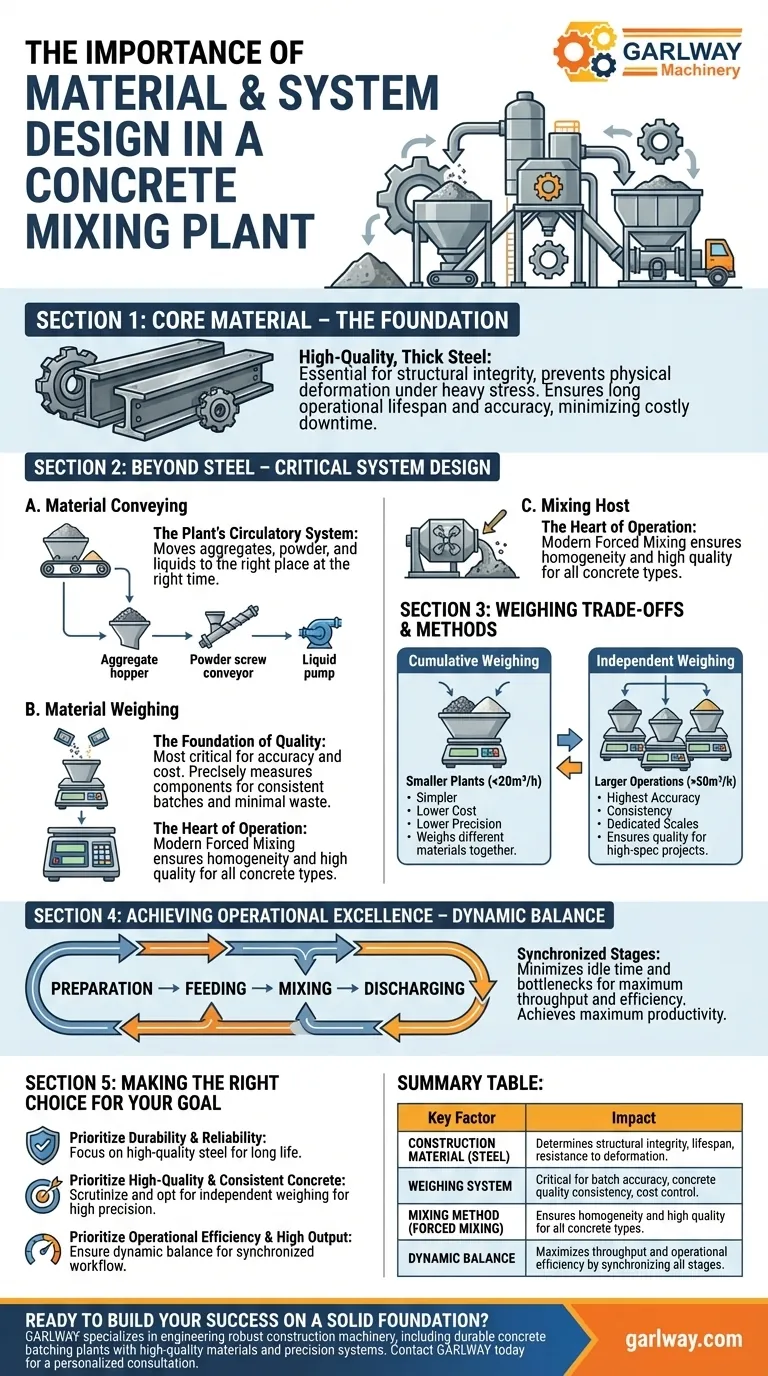
The choice of material for a concrete mixing plant is a foundational decision that directly impacts its structural integrity, operational lifespan, and the quality of its output. High-quality, thick steel is essential because inferior materials can lead to physical deformation under the heavy, constant stress of production. This structural failure compromises accuracy, disrupts operations, and leads to costly downtime.
While the steel used to construct the plant ensures its physical durability, the true importance lies in how the entire system—from conveying to weighing—is engineered to handle the concrete materials themselves. The quality of the plant's construction underpins the precision and efficiency of the concrete it produces.
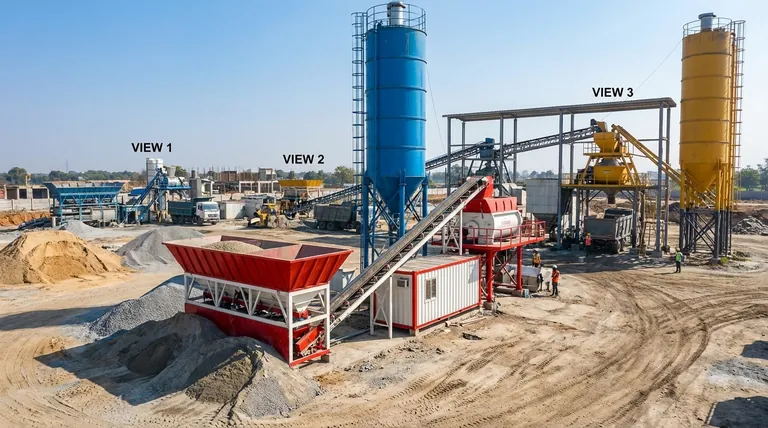
Beyond Steel: Why System Design is Paramount
A plant's value extends far beyond its frame. The engineering of its core systems, which handle the raw materials of concrete, is what truly determines its performance and the quality of the final product.
The Critical Role of Material Conveying
The material conveying system is the plant's circulatory system, responsible for moving components to the right place at the right time. It is typically divided into three parts.
Aggregates (sand and gravel) are moved by either a hopper lift or a belt conveyor. Powder components like cement are transported via screw conveyors, and liquids like water and admixtures are moved with pumps.
The Foundation of Quality: Material Weighing
The weighing system is arguably the most critical component for affecting both concrete quality and production cost. An inaccurate system leads to inconsistent batches and wasted material.
This system precisely measures aggregates, powders, and liquids before they enter the mixer, ensuring each batch meets the exact design specifications.
The Heart of the Operation: The Mixing Host
The method of mixing determines the homogeneity and quality of the concrete. Modern plants overwhelmingly use forced mixing.
This method is highly effective for all types of concrete, including fluid, semi-hard, and hard mixes. Older, less effective free-fall mixing methods are rarely used today.
Understanding the Trade-offs: Weighing Methods
The precision of a plant often comes down to its weighing methodology, which presents a clear trade-off between cost, complexity, and accuracy. This choice is typically dictated by the plant's intended output capacity.
Cumulative Weighing for Smaller Plants
In smaller plants, typically those producing less than 20 cubic meters per hour, a cumulative weighing method is common.
Here, different aggregates are weighed together in the same bin, and powders are also weighed together. This approach is simpler and less expensive but offers lower precision than other methods.
Independent Weighing for Larger Operations
For larger plants producing over 50 cubic meters per hour, independent weighing is the standard.
Each material is weighed separately using dedicated electronic scales and computer controls. This method ensures the highest degree of accuracy and batch-to-batch consistency, which is critical for large-scale or high-specification projects.
Achieving Operational Excellence: Dynamic Balance
The most productive plants operate in a state of dynamic balance, where every stage of the process is perfectly synchronized to maximize throughput.
Minimizing Idle Time
A well-coordinated plant ensures that the preparation, feeding, mixing, and discharging stages flow seamlessly into one another. This eliminates bottlenecks and idle time for the mixing host.
Maximizing Throughput and Efficiency
By maintaining this balance, the plant can operate continuously and efficiently. This allows the facility to achieve its maximum theoretical productivity, turning raw materials into finished concrete with minimal waste or delay.
Making the Right Choice for Your Goal
Selecting a concrete plant requires aligning its features with your primary objectives.
- If your primary focus is long-term durability and reliability: Prioritize plants built with high-quality, thick steel to prevent structural deformation and ensure a long operational life.
- If your primary focus is producing high-quality, consistent concrete: Scrutinize the weighing system, opting for independent weighing for any project requiring high precision.
- If your primary focus is operational efficiency and high output: Ensure the plant's conveying, weighing, and mixing systems are engineered to achieve a dynamic balance, minimizing idle time between batches.
Ultimately, a well-built plant is the essential foundation upon which consistent, high-quality, and cost-effective concrete production is achieved.
Summary Table:
| Key Factor | Impact on Plant Performance |
|---|---|
| Construction Material (Steel) | Determines structural integrity, lifespan, and resistance to deformation. |
| Weighing System | Critical for batch accuracy, concrete quality consistency, and cost control. |
| Mixing Method (Forced Mixing) | Ensures homogeneity and high quality for all concrete types. |
| Dynamic Balance | Maximizes throughput and operational efficiency by synchronizing all stages. |
Ready to build your success on a solid foundation?
Choosing the right concrete mixing plant is critical for the durability, quality, and efficiency of your projects. GARLWAY specializes in engineering robust construction machinery, including durable concrete batching plants, mixers, and winches for contractors and construction companies worldwide.
Our solutions are designed with high-quality materials and precision systems to ensure your operation achieves maximum productivity and consistent results.
Contact GARLWAY today for a personalized consultation and discover the reliable partner you need for your next project.
Visual Guide
Related Products
- HZS120 Ready Mix Concrete Batching Plant Commercial Mud Cement Mixer
- HZS35 Small Cement Concrete Mixing Batch Plant
- HZS75 Concrete Batching Plant Cement Mixer Price Concrete Mixer Bunnings Mixing Plant
- HZS180 Ready Mix Concrete Plant for Foundations with Sand and Cement
- Commercial Electric Concrete Mixer Machine HZS 50 Small Batch Plant for Sale
People Also Ask
- What is a ready mix concrete batching plant? The Engine of Modern Construction
- What is the name of the machine used in ready mix? Unpacking the Complete Concrete System
- What is the core component of a concrete batching plant? The Mixer Unit Defines Your Concrete Quality
- What are the types of concrete mixers used in batching plants? Choose the Right Mixer for Your Project
- What are the advantages and disadvantages of concrete batching plants? Maximize Quality & Efficiency





