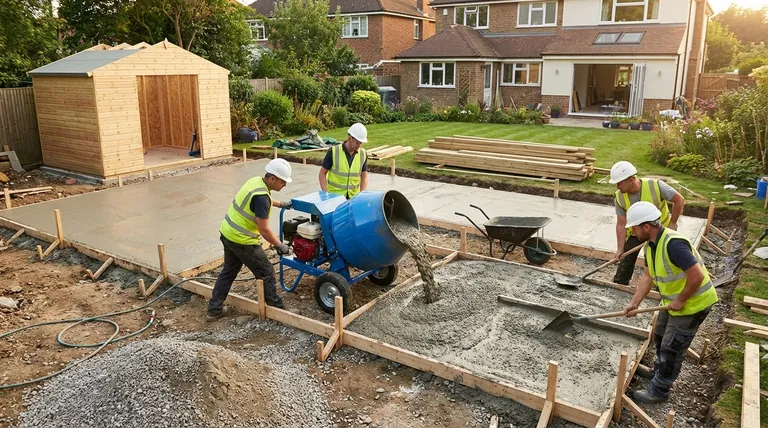
In short, a concrete mixer is recommended for any project that requires more concrete than you can comfortably and consistently mix by hand in a wheelbarrow. This typically includes projects like pouring foundations for sheds, constructing driveways and large patios, building sidewalks, or setting multiple fence posts at once.
The decision to use a concrete mixer isn't about the type of project, but its scale. A mixer becomes essential when the required volume of concrete makes manual mixing impractical, risking inconsistent quality, physical exhaustion, and a flawed final product.
The Core Principle: When Volume Dictates the Method
The fundamental reason to use a concrete mixer is to overcome the limitations of manual labor. It introduces efficiency and, more importantly, consistency that is difficult to achieve by hand.
Beyond a Handful of Bags
For a very small task, like setting a single fence post or patching a small crack, mixing a bag or two of concrete in a wheelbarrow is perfectly acceptable and efficient.
The Tipping Point for a Mixer
A mixer becomes necessary when your project requires a continuous supply of consistently mixed concrete. This threshold is often crossed when dealing with slab work, multiple footings, or long sections of a walkway.
The Critical Need for Consistency
For any structural application—from a simple slab to a foundation—every batch of concrete must have the same water-to-cement ratio and aggregate distribution. A mixer guarantees this consistency, which is vital for strength and durability.
A Spectrum of Mixer-Appropriate Projects
Concrete mixers range from small, portable electric units to massive industrial trucks. The right tool depends entirely on the job's scope.
Small to Medium-Scale Projects (Portable Mixers)
These are the most common projects for homeowners and small contractors where a portable mixer is the ideal tool.
- Foundations and Slabs: Pouring a foundation for a shed, a small outbuilding, or a large patio requires a significant volume that demands a mixer.
- Driveways and Sidewalks: These projects require durable, uniform surfaces, making batch consistency from a mixer essential.
- Retaining Walls and Footings: Building retaining walls or pouring multiple concrete footings for a deck is made far more manageable with a mixer.
- Multiple Fence Posts: While a single post is easy by hand, setting an entire fence line requires dozens of batches that should be uniform.
- Custom Projects: Smaller, precise jobs like concrete countertops also benefit from the perfect mix a machine can provide.
Large-Scale Construction (Industrial Mixers)
For major construction, specialized equipment is used, but the underlying principle of needing high-volume, consistent concrete remains the same.
- Infrastructure: Projects like bridges, tunnels, and highways rely on self-loading mixers and ready-mix trucks to deliver vast quantities of concrete.
- Commercial Buildings: The foundations and structures of skyscrapers and other large buildings are only possible with industrial-scale mixing and delivery.
Understanding the Trade-offs
Choosing to use a mixer is a decision based on balancing effort against quality and time.
The Cost of Manual Mixing
Mixing large quantities by hand is incredibly labor-intensive. It risks physical strain and introduces the high probability of "hot spots" (unmixed cement) or inconsistent water content, leading to weak points in the final structure.
The Commitment of Using a Mixer
While a mixer saves time and effort during the mixing process, it requires planning. You must account for the logistics of renting or buying the machine, its setup on a level surface, access to power and water, and the critical step of thorough cleanup after use.
Making the Right Choice for Your Goal
Select your method based on the primary demand of your project: volume, consistency, or simple convenience.
- If your primary focus is a small repair (e.g., patching a step or setting one post): Manual mixing is the most efficient choice and requires no special equipment.
- If your primary focus is structural integrity and speed for a sizable project (e.g., a patio slab, driveway, or shed foundation): A portable concrete mixer is the correct and necessary tool for the job.
- If your primary focus is a commercial or infrastructure project: The only viable option is professional-grade equipment, such as ready-mix concrete delivery trucks.
Ultimately, using a concrete mixer is about investing in a tool to guarantee a higher-quality, more durable, and professional-looking result.
Summary Table:
| Project Type | Recommended Mixer Size | Key Benefit |
|---|---|---|
| Small/Medium Projects (e.g., shed foundations, patios, sidewalks) | Portable Mixer | Ensures consistent batch quality for structural integrity. |
| Large-Scale Construction (e.g., commercial buildings, infrastructure) | Industrial Mixer / Ready-Mix Truck | Delivers high-volume, uniform concrete efficiently. |
| Multiple Installations (e.g., fence lines, retaining walls) | Portable Mixer | Saves time and labor over manual mixing. |
Achieve Professional Results on Your Next Project
For construction companies and contractors, the right equipment is key to project success. GARLWAY specializes in high-performance construction machinery, including durable and efficient concrete mixers, winches, and batching plants designed for demanding job sites.
Let us help you select the perfect mixer for your project's scale and ensure consistent, high-quality concrete every time.
Contact GARLWAY today to discuss your equipment needs and get a quote!
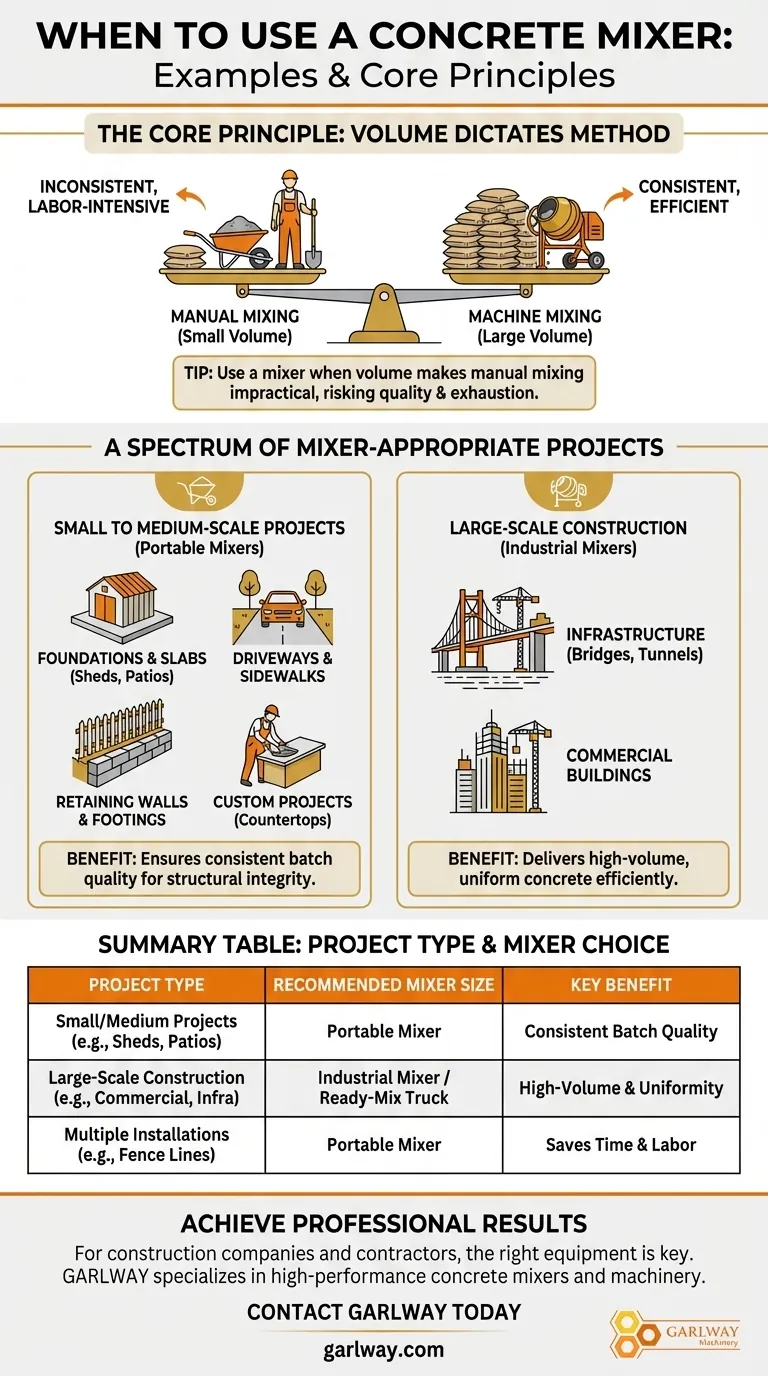
Visual Guide
Related Products
- Portable Concrete Mixer Machine Equipment for Mixing Concrete
- Construction Products Concrete Plant Machine Mixing Concrete Mixer
- Portable Electric Concrete Mixer Machine for Cement Mixing
- JZC400 Mobile Small Concrete Mixer Cement Mixer Machine
- Hydraulic Concrete Mixer Machine Cement Mixing Equipment for Mixture Concrete
People Also Ask
- Why is it necessary to use a portable concrete mixer? Gain Total Control & Efficiency
- How much concrete can you pour with a portable mixer? Find the Perfect Fit for Your Project
- What types of projects are portable concrete mixers suitable for? Ideal for DIY & Small-Scale Construction
- How much does a portable concrete mixer hold? A Guide to Choosing the Right Capacity
- What types of portable concrete mixers exist? Find the Perfect Mixer for Your Project