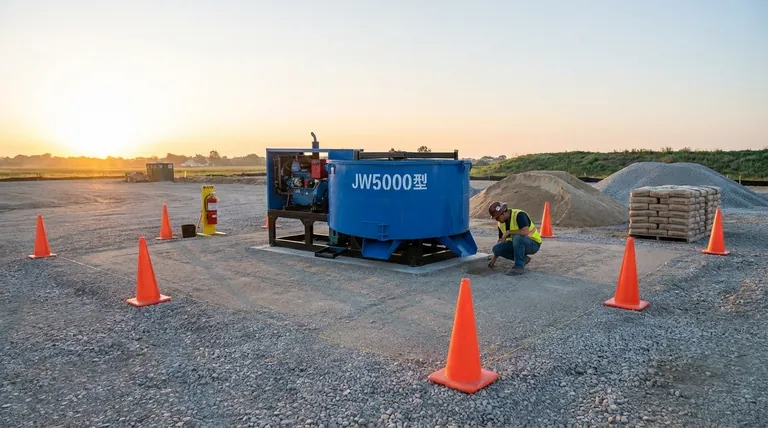
Before using a concrete mixer, your first priority is to prepare the work area. The ground must be level and stable to prevent tipping, and the entire area should be clean, tidy, and completely free of any obstacles or hazardous materials that could cause trips or other accidents.
A safe work area is the critical first step, but it is only one component of a comprehensive pre-operation check. True safety and efficiency depend on inspecting the environment, the machine, and the operator's readiness before any work begins.
Establishing a Safe Foundation: The Work Area
The environment where you operate the mixer is your first line of defense against accidents. A poorly prepared site introduces unnecessary risks before the machine is even started.
Ensure a Level and Stable Surface
Positioning the mixer on a firm, level surface is non-negotiable. This prevents the machine from tipping over, especially when loaded with heavy materials.
An even surface also ensures the drum rotates correctly for an efficient and consistent mix.
Clear All Obstacles and Hazards
The immediate vicinity must be clear of tools, debris, and other clutter. This eliminates trip hazards for everyone working in the area.
Ensure there are no flammable or hazardous materials nearby that could react with spills or create a dangerous situation.
Pre-Operation Machine Inspection: Beyond the Area
A safe site is useless if the machine itself is faulty. A thorough mechanical check is essential to prevent unexpected failures and ensure the mixer runs as intended.
Verify Critical Fluid Levels
Before starting the engine, check all essential fluids. This includes ensuring adequate levels of fuel, engine oil, coolant, and hydraulic fluid.
Running low on these can cause sudden equipment failure or permanent damage to the machine.
Inspect Mechanical and Safety Components
Visually inspect the mixer for any signs of damage or significant wear. Pay close attention to the tires, ensuring they are properly inflated and in good condition.
Test the brakes to confirm they are functioning correctly. Check that all safety devices, such as guards, emergency stop buttons, and warning lights, are in place and working.
Confirm Controls are Functional
Briefly test the machine’s controls to ensure they respond as expected. Make sure all indicators and gauges are providing accurate readings.
Understanding the Risks and Trade-offs
Skipping these preparatory steps may seem like a time-saver, but it introduces significant risks that far outweigh any minor convenience.
The Risk of an Uneven Surface
Operating on a slope or soft ground dramatically increases the risk of the mixer tipping over, which can cause serious injury and costly material spills. It also leads to an inconsistent, poor-quality concrete mix.
The Danger of Skipping Inspections
A missed fluid check can lead to engine seizure, and a faulty brake system can be catastrophic. Ignoring worn parts or malfunctioning safety guards turns a controllable risk into a potential disaster.
The Consequence of Overloading
While not a pre-check, it's crucial to know the mixer's capacity. Overfilling the drum strains the motor, leads to incomplete mixing, and causes spills that create hazards in the work area you just cleared.
A Checklist for Safe and Effective Operation
Use this checklist to align your preparation with your primary goal for the job.
- If your primary focus is preventing accidents: Prioritize a perfectly level surface and confirming that all safety devices, especially brakes and emergency stops, are fully functional.
- If your primary focus is machine longevity: Never skip fluid checks, respect the manufacturer's loading capacity, and clean the drum thoroughly after every use to prevent hardened buildup.
- If your primary focus is mix quality: Ensure the ground is level for consistent drum rotation and always add materials in the correct order, typically starting with water.
Thorough preparation is the foundation of a safe and successful concrete project.
Summary Table:
| Preparation Step | Key Action | Primary Benefit |
|---|---|---|
| Work Area | Ensure level, stable ground; clear obstacles. | Prevents tipping and trip hazards. |
| Machine Inspection | Check fluids, brakes, tires, and safety guards. | Ensures operational safety and longevity. |
| Operator Readiness | Verify controls and understand load capacity. | Guarantees a consistent, high-quality mix. |
Ready to ensure your project's success with reliable equipment?
GARLWAY specializes in providing durable and efficient construction machinery, including concrete mixers, winches, and batching plants for contractors and construction companies worldwide. Our equipment is engineered for safety and performance, helping you build with confidence.
Contact GARLWAY today to find the perfect concrete mixer for your needs and get expert advice on safe operation!
Visual Guide
Related Products
- Portable Concrete Mixer Machine Equipment for Mixing Concrete
- Construction Products Concrete Plant Machine Mixing Concrete Mixer
- Portable Electric Concrete Mixer Machine for Cement Mixing
- JZC400 Mobile Small Concrete Mixer Cement Mixer Machine
- Hydraulic Concrete Mixer Machine Cement Mixing Equipment for Mixture Concrete
People Also Ask
- Why is it necessary to use a portable concrete mixer? Gain Total Control & Efficiency
- How much concrete can you pour with a portable mixer? Find the Perfect Fit for Your Project
- What types of projects are portable concrete mixers suitable for? Ideal for DIY & Small-Scale Construction
- How much does a portable concrete mixer hold? A Guide to Choosing the Right Capacity
- What types of portable concrete mixers exist? Find the Perfect Mixer for Your Project