
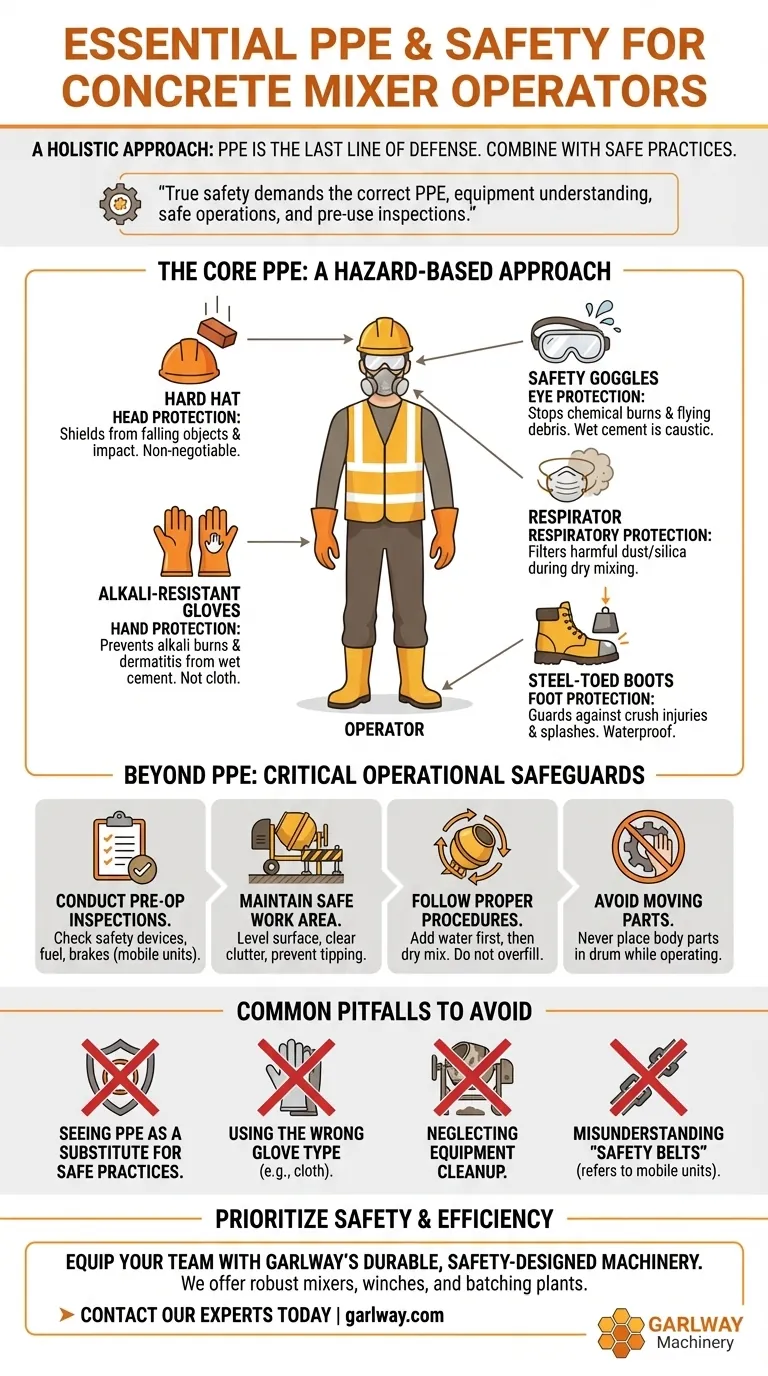
When operating a concrete mixer, the required personal protective equipment (PPE) is a critical last line of defense against serious injury. The essential gear includes high-impact safety goggles, alkali-resistant gloves, steel-toed boots, and a hard hat. This equipment is designed to protect you from the specific mechanical and chemical hazards associated with mixing and handling concrete.
True operator safety extends beyond simply wearing the right gear. It demands a holistic approach that combines the correct PPE with a thorough understanding of the equipment, safe operational practices, and consistent pre-use inspections.

The Core PPE: A Hazard-Based Approach
Each piece of personal protective equipment is designed to mitigate a specific, predictable hazard. Understanding the "why" behind each item ensures it is used correctly and consistently.
Eye Protection (Goggles or Safety Glasses)
Wet cement is highly alkaline and can cause severe chemical burns and permanent eye damage upon contact. Goggles also protect your eyes from splashes, dust from dry mix, and flying debris.
Hand Protection (Alkali-Resistant Gloves)
Prolonged skin contact with wet cement can lead to chemical burns, dermatitis, and skin irritation. Use heavy-duty, waterproof, and alkali-resistant gloves to create a reliable barrier.
Foot Protection (Steel-Toed Boots)
Construction sites present numerous foot hazards. Steel-toed, waterproof boots protect you from crush injuries from heavy materials or the machine itself and prevent cement from splashing onto your feet and soaking through to your skin.
Head Protection (Hard Hat)
On any active construction site, a hard hat is non-negotiable for protection against falling objects. It also provides crucial protection from accidental impact with parts of the mixer, especially on larger models.
Respiratory Protection (Dust Mask or Respirator)
When adding dry ingredients to the mixer, significant amounts of fine dust, including crystalline silica, can become airborne. Inhaling this dust can lead to serious, long-term respiratory illness. A dust mask or respirator is essential during this phase.
Beyond PPE: Critical Operational Safeguards
PPE is your last line of defense. The first lines are always a safe machine and safe procedures. Integrating these habits is essential for a truly safe work environment.
Conduct Pre-Operation Inspections
Before starting work, always perform a quick check. Ensure all safety devices, like emergency stop buttons and protective barriers, are functioning. For mobile units, inspect fuel levels, hydraulic fluid, tires, and brakes.
Maintain a Safe Work Area
Position the mixer on a firm, level surface to prevent tipping, which can cause both injury and spills. Keep the area around the mixer clear of clutter and unnecessary personnel.
Follow Proper Operating Procedures
Adhere to the manufacturer's instructions. Typically, this involves adding water first, followed by the dry ingredients, to minimize dust. Never overfill the drum, as this can lead to spills and improper mixing.
Avoid Contact with Moving Parts
Never place hands, tools, or any body part inside the mixing drum while it is in operation. Be aware of all moving components, including the drum and loading mechanisms, to prevent entanglement or crush injuries.
Common Pitfalls to Avoid
Even with the right gear, common misconceptions can compromise safety and lead to accidents.
Seeing PPE as a Substitute for Safe Practices
Never rely on PPE to protect you from a deliberately unsafe act. It is designed to mitigate accidents, not to enable shortcuts. Safe machine operation and situational awareness are paramount.
Using the Wrong Type of Glove
Standard cloth or leather gloves are not suitable for concrete work. They absorb wet cement, trapping the caustic material against your skin and potentially worsening chemical burns. Always use waterproof, alkali-resistant models.
Neglecting Equipment Cleanup
Failing to clean the mixer thoroughly after each use is a safety risk. Hardened concrete can unbalance the drum, hide cracks or structural damage, and create hazards for the next operator.
Misunderstanding "Safety Belts"
Some safety checklists mention safety belts. This almost always refers to the seatbelt for an operator of a large, mobile self-loading concrete mixer vehicle, not a restraint system for a standard portable mixer.
Making the Right Choice for Your Goal
Your safety protocol should match the scale and frequency of your work.
- If your primary focus is intermittent, small-scale projects: Prioritize the non-negotiable core four: proper eye protection, alkali-resistant gloves, steel-toed boots, and a quality dust mask when adding dry mix.
- If your primary focus is daily professional operation: Mandate a full suite of PPE including a hard hat, and integrate rigorous pre-operation equipment checks and strict adherence to safe operating procedures into your daily routine.
- If your primary focus is managing a team of operators: Ensure all personnel are fully trained not just on what to wear, but on the why behind each safety rule, including the specific chemical and mechanical hazards of concrete work.
A true culture of safety is built not just on wearing the right gear, but on a deep and consistent respect for the equipment and the materials you work with.
Summary Table:
| Essential PPE | Primary Hazard Mitigated |
|---|---|
| Eye Protection (Goggles) | Chemical burns from wet cement, flying debris |
| Alkali-Resistant Gloves | Skin irritation, chemical burns, dermatitis |
| Steel-Toed Boots | Crush injuries, cement splashes |
| Hard Hat | Falling objects, impact with machinery |
| Respiratory Protection | Airborne dust and crystalline silica |
Prioritize Safety and Efficiency on Your Jobsite
Equipping your team with the right PPE is the first step. The next is ensuring they operate reliable, high-performance machinery. GARLWAY specializes in durable construction equipment designed with safety and productivity in mind.
We offer a range of robust concrete mixers, winches, and batching plants built for the demands of professional contractors and construction companies.
Let us help you build a safer, more efficient worksite.
➤ Contact our experts today for a consultation to find the perfect equipment for your project needs.
Visual Guide
Related Products
- Portable Concrete Mixer Machine Equipment for Mixing Concrete
- Construction Products Concrete Plant Machine Mixing Concrete Mixer
- Portable Electric Concrete Mixer Machine for Cement Mixing
- JZC400 Mobile Small Concrete Mixer Cement Mixer Machine
- Hydraulic Concrete Mixer Machine Cement Mixing Equipment for Mixture Concrete
People Also Ask
- Why is it necessary to use a portable concrete mixer? Gain Total Control & Efficiency
- How much concrete can you pour with a portable mixer? Find the Perfect Fit for Your Project
- What types of projects are portable concrete mixers suitable for? Ideal for DIY & Small-Scale Construction
- How much does a portable concrete mixer hold? A Guide to Choosing the Right Capacity
- What types of portable concrete mixers exist? Find the Perfect Mixer for Your Project






