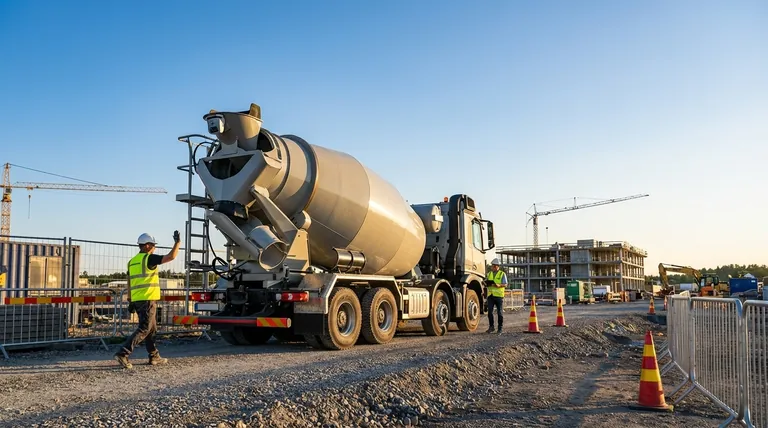
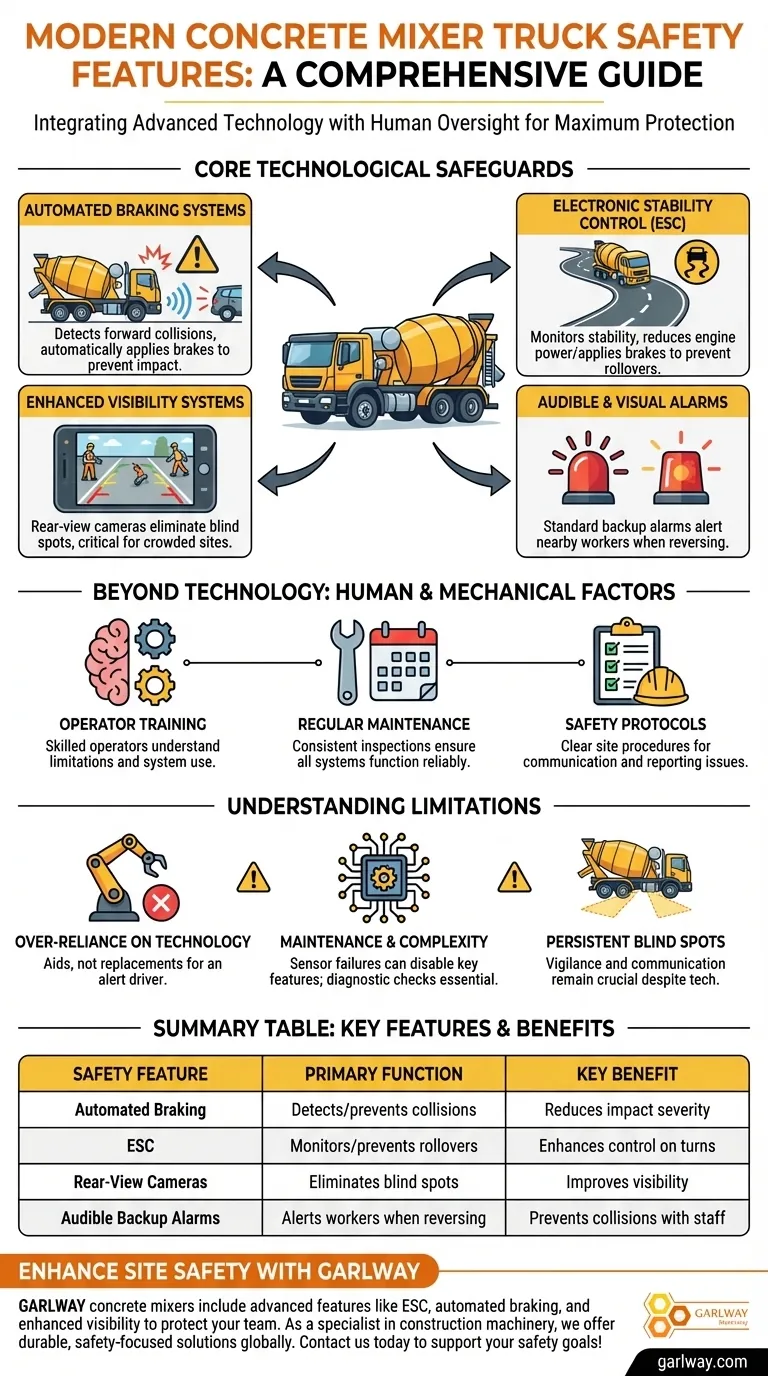
Modern concrete mixer trucks are engineered with a suite of advanced safety systems designed to protect both the operator and ground personnel. These core features include automatic braking systems to prevent collisions, electronic stability control to mitigate rollovers, rear-view cameras to eliminate blind spots, and audible alarms to alert those nearby.
The key takeaway is that while advanced technology forms the foundation of modern truck safety, it is only truly effective when integrated into a comprehensive system that includes rigorous operator training, consistent maintenance, and clear worksite protocols.
Core Technological Safeguards
The most significant safety advancements in modern mixers are found in their integrated electronic systems. These features work proactively to prevent accidents before they happen.
Automated Braking Systems
These systems use sensors to detect potential forward collisions. If an imminent crash is identified, the truck can automatically apply the brakes to prevent or lessen the severity of an impact.
Electronic Stability Control (ESC)
Concrete mixers are top-heavy and have a high center of gravity, making them susceptible to rollovers. ESC constantly monitors the vehicle's stability and can automatically reduce engine power or apply individual brakes to help the driver maintain control during sharp turns or sudden maneuvers.
Enhanced Visibility Systems
Large blind spots are a major hazard. Modern trucks are equipped with rear-view cameras that provide the operator with a clear view of the area directly behind the vehicle, which is critical on crowded construction sites.
Audible and Visual Alarms
Backup alarms are a standard and essential feature, creating an audible warning whenever the truck is in reverse. These systems alert ground workers who may not see the vehicle moving.
Beyond Technology: The Human and Mechanical Factors
Onboard technology is a powerful tool, but true worksite safety depends on a broader operational framework. The most advanced features can be undermined by human error or mechanical failure.
The Critical Role of Operator Training
A skilled, well-trained operator is the most important safety feature on any vehicle. Proper training ensures the driver understands the truck's limitations, how to use its safety systems correctly, and how to navigate challenging site conditions responsibly.
The Mandate for Regular Maintenance
All safety systems, from brakes to cameras, require regular inspections and maintenance to function as designed. A consistent inspection schedule is non-negotiable for ensuring that these critical components are reliable when needed most.
The Importance of Safety Protocols
Every worksite must have established protocols for communication and safety. This includes procedures for reporting potential vehicle issues or safety concerns, ensuring that problems are addressed promptly before they can lead to an incident.
Understanding the Limitations
While modern safety features significantly reduce risk, it's crucial to recognize their limitations to avoid a false sense of security.
Over-reliance on Technology
Automated systems are aids, not replacements for an alert driver. Over-reliance can lead to complacency and a failure to react appropriately in situations the technology may not be designed to handle.
Maintenance and Complexity
Advanced electronic systems add complexity and cost to maintenance routines. A failure in a sensor or control module can disable a key safety feature, making regular diagnostic checks essential.
Persistent Blind Spots
Even with cameras and mirrors, blind spots can still exist around a large vehicle. Technology reduces but does not completely eliminate the need for operator vigilance and clear communication with ground personnel.
Making the Right Choice for Your Goal
When evaluating a concrete mixer truck, your primary safety objective will determine which features to prioritize.
- If your primary focus is preventing rollovers and high-speed collisions: Prioritize trucks with robust Electronic Stability Control (ESC) and forward-looking automatic braking systems.
- If your primary focus is worksite safety for ground personnel: Emphasize vehicles with comprehensive camera systems and loud, multi-tone backup alarms.
- If your primary focus is long-term operational safety: Invest in a rigorous, documented program for operator training and preventative maintenance that complements the vehicle's built-in technology.
Ultimately, creating a safe operating environment is a continuous commitment that integrates advanced machinery with disciplined human oversight.
Summary Table:
| Safety Feature | Primary Function | Key Benefit |
|---|---|---|
| Automated Braking Systems | Detects and prevents forward collisions | Reduces impact severity and prevents accidents |
| Electronic Stability Control (ESC) | Monitors and prevents rollovers | Enhances vehicle control on turns and sudden maneuvers |
| Rear-View Cameras | Eliminates blind spots behind the truck | Improves visibility for operator and protects ground personnel |
| Audible Backup Alarms | Alerts nearby workers when reversing | Prevents collisions with ground staff in busy areas |
Enhance your construction site safety with GARLWAY's reliable machinery. Our concrete mixer trucks are equipped with advanced safety features like ESC, automated braking, and enhanced visibility systems to protect your team and boost productivity. As a specialist in construction machinery, including winches, concrete mixers, and batching plants, GARLWAY serves contractors and construction companies globally with durable, safety-focused solutions. Contact us today to learn how our equipment can support your safety goals and operational efficiency!
Visual Guide
Related Products
- Ready Mixer Machine for Construction Ready Mix Machinery
- JW1000 Mobile Cement Mixer Concrete Mixer Truck and Batching Plant
- Mini Cement Mortar Mixer Truck for Construction
- Harbor Freight JS1500 On Site Concrete Mixing Volumetric Cement Mixer
- HZS90 Large Multiquip Concrete Mixers for Construction
People Also Ask
- What are the purposes of low-speed agitation in truck mixers? Preserve Concrete Quality During Transit
- How is ready-mixed concrete transported from a commercial concrete batching plant? Ensuring Quality & Timely Delivery
- What are the main ingredients mixed in a concrete mixer truck? Master the Formula for Strong Concrete
- In what ways does a mobile concrete mixer improve quality control and consistency? Achieve Superior On-Site Concrete Quality
- What types of construction projects typically use concrete mixer trucks? From Highways to Home Foundations