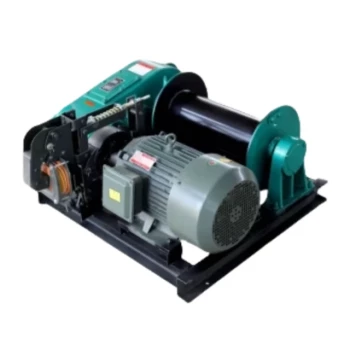
The defining feature of a capstan winch is its ability to pull an unlimited length of rope without storing it on the device itself. Unlike a traditional winch that winds cable onto a fixed-size drum, a capstan uses a rotating cylinder (the capstan) that creates pulling force through friction, allowing the rope to pass through the system rather than accumulate.
The critical distinction is that a capstan winch is a line puller, not a line storer. This fundamental difference makes it exceptionally portable and versatile for long-distance tasks where the fixed capacity of a traditional spooling winch would be a limitation.
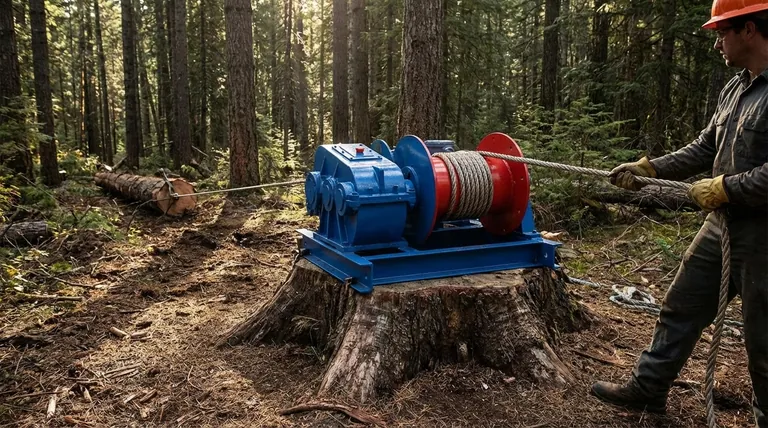
The Core Principle: Friction Over Spooling
To grasp the advantage of a capstan winch, it's essential to understand how it differs from the more common drum or spooling winch.
How a Traditional Winch Works
A traditional winch, like one found on the front of a truck, has a large drum that the steel cable or synthetic rope is wound onto. The motor turns this drum, pulling in the load and storing the line simultaneously.
The amount you can pull is limited by the length of cable that can fit on the drum.
The Capstan Difference
A capstan winch operates on a simpler, more elegant principle. The rope is not permanently attached or stored on the winch.
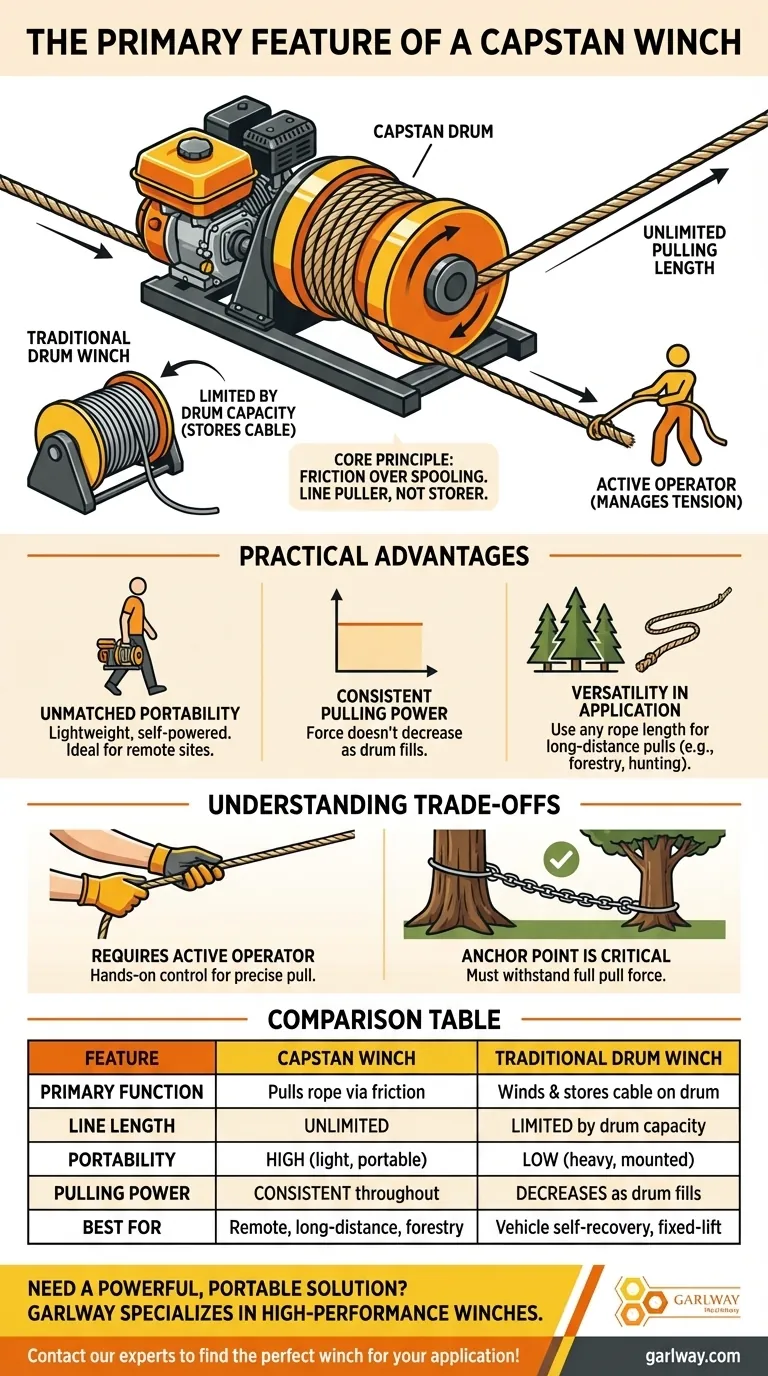
Instead, the operator wraps the rope around the powered capstan drum a few times. When the engine or motor turns the drum, friction between the spinning drum and the rope grips the line. The operator applies light tension to the free end of the rope, and this friction does all the heavy work of pulling the load.
Unlimited Pulling Distance
Because the rope simply passes around the drum, you are not limited by the winch's storage capacity. You can use a rope of any length, making the capstan winch ideal for pulling loads over very long distances.
The Practical Advantages of the Capstan Design
This unique mechanism creates several key benefits that define when and where a capstan winch excels.
Unmatched Portability
Without the need for a heavy drum and hundreds of feet of steel cable, capstan winches are significantly lighter and more compact. Many are self-powered with small gas engines, meaning they don't need to be mounted to a vehicle and can be carried by a single person to remote job sites.
Consistent Pulling Power
A traditional winch's pulling power decreases as the drum fills with cable. A capstan winch, however, delivers consistent pulling force throughout the entire operation because the relationship between the rope and the drum never changes.
Versatility in Application
The ability to use any length of rope makes the capstan winch incredibly versatile. It's perfectly suited for applications like forestry, retrieving large game during a hunt, or setting up complex block-and-tackle systems that require long lengths of line.
Understanding the Trade-offs
The capstan winch's design comes with a different operational model that is important to recognize.
It Requires an Active Operator
A capstan winch is not a "set it and forget it" tool. It requires an operator to actively manage the tail end of the rope, maintaining tension to control the pull and guide the line. This hands-on approach offers precise control but is less automated than a typical electric winch.
The Anchor Point is Critical
Like any winch, a capstan's effectiveness is entirely dependent on its anchor point. The winch must be securely fastened to a stable object, such as a tree or vehicle frame, that can withstand the full force of the load being pulled.
When to Choose a Capstan Winch
Your final decision should be based entirely on the specific demands of your task.
- If your primary focus is remote or long-distance pulling: The capstan winch's unlimited line length and superior portability make it the clear choice for jobs in forestry, hunting, or remote sites.
- If your primary focus is vehicle self-recovery: A permanently mounted, traditional spooling winch is often faster and more convenient for this single, dedicated purpose.
- If your primary focus is maximum flexibility: The capstan winch's lightweight, self-powered design allows one person to tackle diverse pulling jobs in areas completely inaccessible to a vehicle.
By understanding that a capstan winch pulls rope instead of storing it, you can confidently choose the right tool for the unique challenge you face.
Summary Table:
| Feature | Capstan Winch | Traditional Drum Winch |
|---|---|---|
| Primary Function | Pulls rope via friction | Winds and stores cable on a drum |
| Line Length | Unlimited | Limited by drum capacity |
| Portability | High (lightweight, often self-powered) | Low (heavy, vehicle-mounted) |
| Pulling Power | Consistent throughout the pull | Decreases as the drum fills |
| Best For | Remote sites, long-distance pulls, forestry, hunting | Vehicle self-recovery, fixed-location lifting |
Need a powerful, portable solution for your toughest pulling jobs?
GARLWAY specializes in high-performance construction machinery, including robust winches designed for demanding environments. Whether you're a contractor on a remote site or a forestry professional, our equipment delivers the reliable, unlimited pulling power you need.
Let us help you tackle your next challenge. Contact our experts today to find the perfect winch for your specific application!
Visual Guide
Related Products
- Portable Small Trailer Winch
- Small Electric Winch 120V and 240V for Compact Applications
- Electric and Hydraulic Winch for Heavy Duty Applications
- 12000 lb Heavy Duty Electric Boat Winch
- Hydraulic Winding Engine Harbor Freight Winch
People Also Ask
- What features were incorporated into the upgraded portable winch system? Boost Your Recovery Power & Safety
- What are some uses mentioned for portable winches beyond vehicle recovery? Essential Versatility for Property & Work
- How could the twisting issue with a portable winch be mitigated? Achieve Safe, Centered Pulls with Proper Rigging
- What is the significance of trailer winches in the boating industry? Ensure Safe and Efficient Boat Recovery
- What should be considered when mounting a winch on a trailer? Ensure a Safe, Aligned Installation