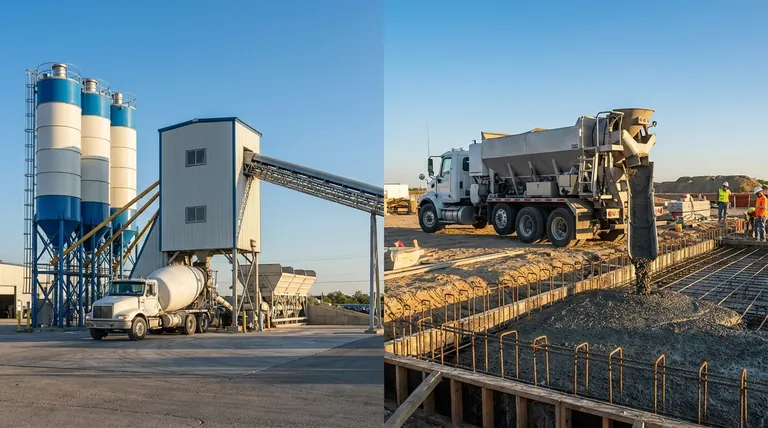
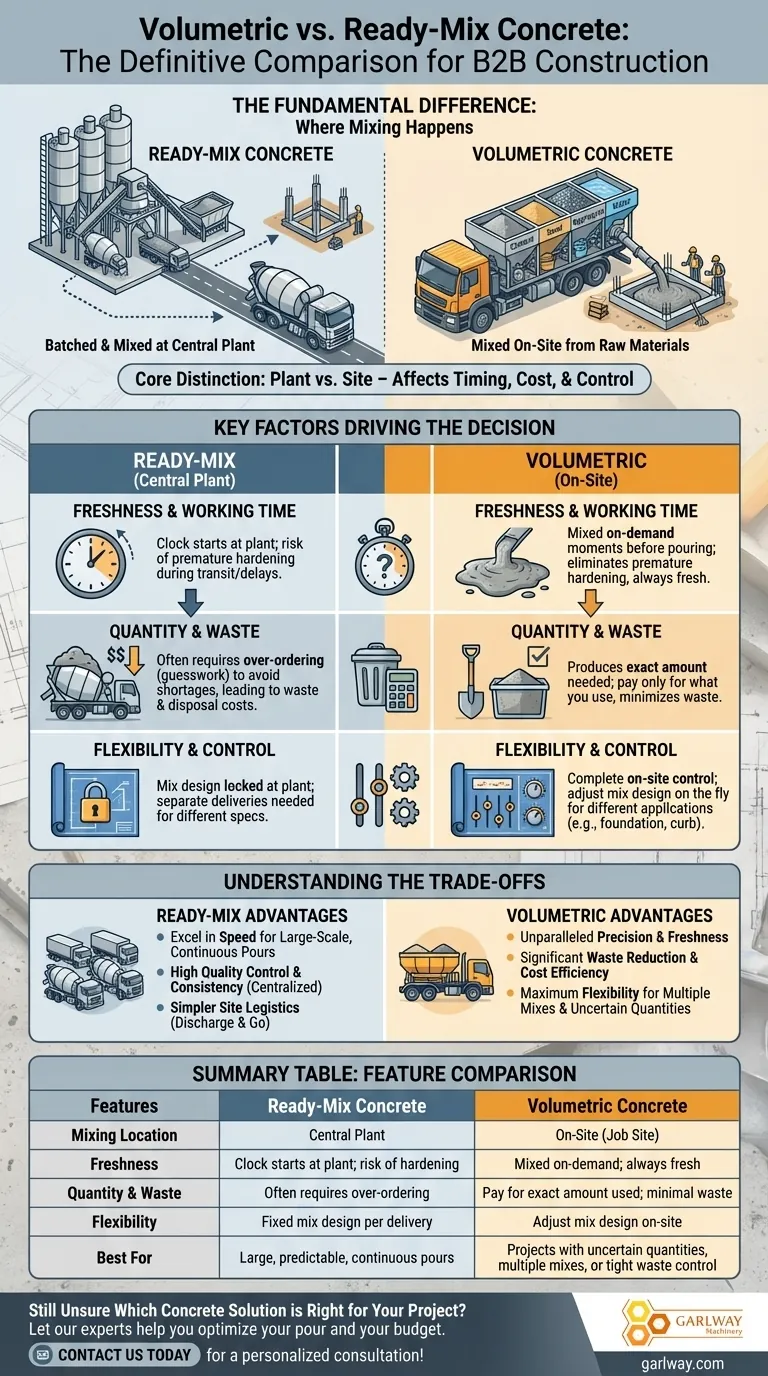
The fundamental difference between volumetric and ready-mix concrete is where the mixing happens. Ready-mix concrete is batched and mixed at a central plant before being transported to your job site in a traditional rotating drum truck. Volumetric concrete, by contrast, is mixed on-site from raw materials carried in a specialized truck that functions as a mobile batching plant.
The choice between them is a classic trade-off: Ready-mix offers logistical simplicity for large, predictable jobs, while volumetric provides unparalleled precision, freshness, and waste reduction for projects that demand flexibility.
The Core Distinction: Plant vs. Site
Understanding how each type is produced and delivered is the key to knowing which one suits your project's needs. The location of mixing has significant downstream effects on timing, cost, and quality control.
How Ready-Mix Concrete Works
Ready-mix concrete is the traditional method. All ingredients—cement, sand, aggregate, and water—are precisely measured and combined at a central batching plant under controlled conditions.
The mixture is then loaded into a familiar drum truck, which rotates continuously during transit to prevent the concrete from setting prematurely.
Upon arrival, the concrete is ready to be poured immediately. The clock starts ticking the moment it's mixed at the plant.
How Volumetric Concrete Works
A volumetric mixer is essentially a batch plant on wheels. It carries all the necessary ingredients in separate compartments.
When it arrives at the job site, the operator sets the machine to the desired mix design. The materials are then combined, mixed with water, and dispensed on-demand.
This process means the concrete is always perfectly fresh, as it is only created moments before it's poured. You can start, stop, and restart the pour as needed.
Key Factors Driving the Decision
The "where" of mixing directly impacts three critical project variables: time, cost, and control. Choosing the wrong type can lead to waste, delays, and compromised quality.
Freshness and Working Time
With ready-mix, the concrete begins its hydration (curing) process at the plant. Any delays in transit or on-site can significantly reduce the workable time, potentially forcing you to add water and compromise the concrete's strength.
With volumetric, the concrete is mixed as it's needed. This completely eliminates the risk of premature hardening and ensures you are always working with the freshest possible material.
Quantity and Waste
Ordering ready-mix often involves guesswork. To avoid a costly shortage, you must over-order, leading to wasted material and unnecessary expense for disposal.
A volumetric mixer produces the exact amount you need, down to the last shovel full. You only pay for what you use, making it highly cost-effective, especially for projects with uncertain final quantities.
Flexibility and Control
The mix design for ready-mix is locked in at the plant. If you need a different strength or consistency for another part of your project, you would need a separate delivery.
Volumetric mixers provide complete on-site control. The operator can adjust the mix design on the fly, allowing you to pour a foundation, a curb, and a slab with different specifications all from the same truckload of materials.
Understanding the Trade-offs
While volumetric concrete offers significant advantages in flexibility and efficiency, ready-mix remains the standard for certain applications for good reason.
The Speed of Large-Scale Pours
For massive, continuous pours like a large commercial foundation, ready-mix excels. A fleet of trucks can be coordinated to deliver a huge, uninterrupted volume of concrete faster than a single volumetric mixer could produce it.
Quality Control and Consistency
Ready-mix plants operate under highly controlled, centralized conditions, ensuring excellent batch-to-batch consistency.
While modern volumetric mixers are extremely precise, the quality is dependent on the calibration of the individual machine and the skill of its on-site operator.
Site Logistics
Both truck types require adequate access, but a volumetric mixer needs space to operate on-site for the duration of the pour. A ready-mix truck simply needs to get to the pour location, discharge its load, and leave.
Making the Right Choice for Your Project
Selecting the right concrete delivery method hinges entirely on the specific demands of your job.
- If your primary focus is a large, continuous pour: Ready-mix is likely the most efficient solution for delivering high volumes quickly.
- If your primary focus is minimizing waste and controlling costs: Volumetric is superior, as you pay only for the exact amount you use.
- If your primary focus is flexibility for uncertain quantities or multiple mix designs: Volumetric provides unmatched on-site control and ensures maximum freshness.
Ultimately, choosing the right type of concrete is about matching the delivery method to the unique constraints and goals of your project.
Summary Table:
| Feature | Ready-Mix Concrete | Volumetric Concrete |
|---|---|---|
| Mixing Location | Central Plant | On-Site (Job Site) |
| Freshness | Clock starts at plant; risk of hardening | Mixed on-demand; always fresh |
| Quantity & Waste | Often requires over-ordering | Pay for exact amount used; minimal waste |
| Flexibility | Fixed mix design per delivery | Adjust mix design on-site |
| Best For | Large, predictable, continuous pours | Projects with uncertain quantities, multiple mixes, or tight waste control |
Still Unsure Which Concrete Solution is Right for Your Project?
At GARLWAY, we specialize in providing construction machinery and expert advice to help contractors and construction companies make the best choice for their specific needs. Whether your project requires the logistical simplicity of ready-mix or the precision and waste reduction of volumetric concrete, our range of concrete mixers and batching plants is designed for maximum efficiency and durability.
Let our experts help you optimize your pour and your budget. Contact us today for a personalized consultation!
Visual Guide
Related Products
- Portable Concrete Mixer Machine Equipment for Mixing Concrete
- Construction Products Concrete Plant Machine Mixing Concrete Mixer
- Portable Electric Concrete Mixer Machine for Cement Mixing
- JZC400 Mobile Small Concrete Mixer Cement Mixer Machine
- Hydraulic Concrete Mixer Machine Cement Mixing Equipment for Mixture Concrete
People Also Ask
- Why is it necessary to use a portable concrete mixer? Gain Total Control & Efficiency
- How much concrete can you pour with a portable mixer? Find the Perfect Fit for Your Project
- What types of projects are portable concrete mixers suitable for? Ideal for DIY & Small-Scale Construction
- How much does a portable concrete mixer hold? A Guide to Choosing the Right Capacity
- What types of portable concrete mixers exist? Find the Perfect Mixer for Your Project