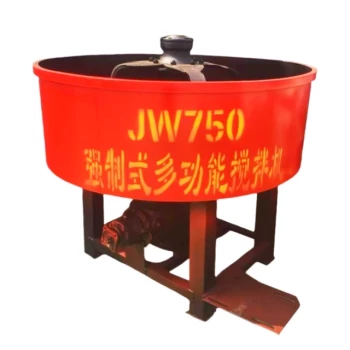
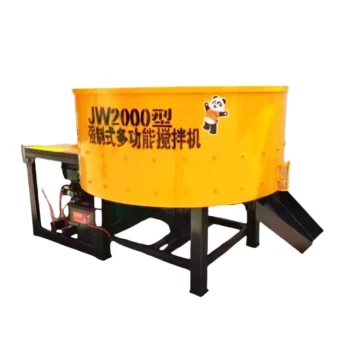
The primary design advantage of a pan-type mixer is its stationary pan combined with internal rotating blades. This configuration creates a forced-mixing action that ensures a rapid, consistent, and exceptionally homogenous blend of materials, outperforming the simple tumbling action of a traditional drum mixer.
The core advantage is not just speed, but control. By actively forcing materials to blend with rotating paddles inside a static container, pan mixers achieve a level of mix quality and consistency that is essential for high-performance and specialized applications.
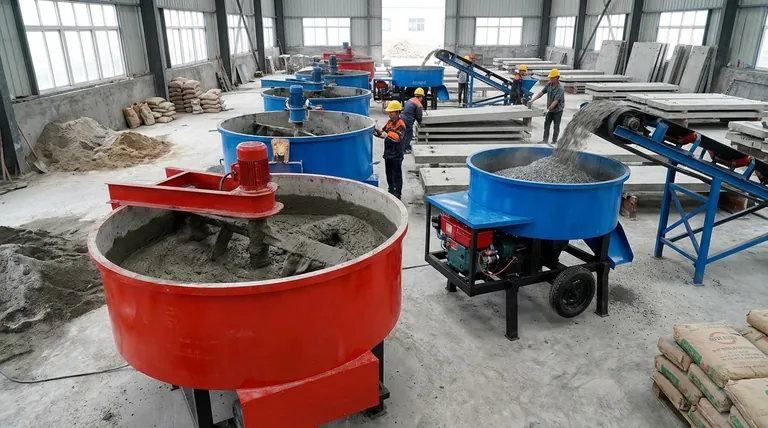
The Mechanics of a Superior Mix
The unique design of a pan mixer directly translates to its performance. Unlike drum mixers that rely on gravity and tumbling, pan mixers use a more direct and energetic method to combine ingredients.
The Stationary Pan
The foundation of the design is a fixed, cylindrical pan. Because the pan itself does not move, it provides a stable and predictable environment for the mixing process to occur.
The Forced-Mixing Action
Inside the static pan, a set of rotating blades, paddles, or stars moves through the material. This creates a powerful shearing and blending force, ensuring every particle is actively folded into the mixture.
This forced-mixing action is far more intensive than the passive tumbling of a drum mixer. It guarantees that all components, including fine powders, aggregates, and liquids, are thoroughly and evenly distributed.
Eliminating "Dead Zones"
The path of the rotating blades is engineered to cover the entire floor of the pan. This systematic movement ensures that no material is left untouched, eliminating the "dead zones" or unmixed pockets that can sometimes occur in other mixer types.
Key Applications Where Pan Mixers Excel
The high-quality output of pan mixers makes them the preferred choice for applications where mix consistency is non-negotiable.
Precast Concrete Production
In precast manufacturing, every batch of concrete must meet precise strength and finish specifications. The pan mixer's ability to produce a highly homogenous mix is critical for creating durable and aesthetically consistent structural elements.
Stiff and Demanding Mixtures
Materials like stiff (low-slump) concrete, refractory materials, or mixes with large aggregates are difficult to blend properly with a simple tumbling action. The powerful blades of a pan mixer can handle these tough mixtures with ease.
Mortar, Grout, and Plaster
These materials require perfect consistency to be workable and to cure correctly. A pan mixer ensures that all components are fully integrated, resulting in a smooth, high-quality final product.
Understanding the Trade-offs
While highly effective, the pan mixer design does come with specific considerations. Its advantages are geared toward quality and performance, which involves certain trade-offs.
Increased Mechanical Complexity
The internal gearbox and rotating blade assembly are more complex than the simple drive of a drum mixer. This can lead to higher maintenance requirements and more potential wear points over the life of the machine.
Higher Initial Cost
The precision engineering required for the drive system and durable mixing blades typically makes pan mixers more expensive upfront than standard drum mixers of a similar capacity.
Batch-Oriented Operation
Pan mixers are designed for batch mixing. Material is loaded, mixed, and then discharged, typically through a gate in the bottom of the pan. While this is highly efficient, they are not suited for continuous-flow operations.
Making the Right Choice for Your Goal
Selecting the right mixer depends entirely on the quality demands of your final product.
- If your primary focus is high-strength, uniform precast concrete: The pan mixer is the definitive choice for its superior homogeneity and consistency.
- If your primary focus is blending stiff, dry, or refractory materials: The pan mixer’s powerful forced-mixing action is essential to achieve a proper blend.
- If your primary focus is general-purpose, portable mixing at a lower cost: A traditional drum mixer often provides a more practical and economical solution.
Understanding this core design principle allows you to match the tool directly to the technical demands of your project.
Summary Table:
| Design Feature | Key Advantage | Ideal For |
|---|---|---|
| Stationary Pan | Stable mixing environment; predictable results. | Consistent batch quality. |
| Rotating Blades/Paddles | Forced-mixing action; eliminates dead zones. | Stiff concrete, mortars, refractory materials. |
| Batch Operation | Complete control over each mix cycle. | Precast concrete production, high-spec applications. |
| Trade-off: Complexity | Higher initial cost and maintenance for superior performance. | Projects where mix quality is non-negotiable. |
Need a Mixer That Guarantees Batch-to-Batch Consistency?
If your construction or precast concrete projects demand uncompromising mix quality and homogeneity, the forced-mixing action of a GARLWAY pan mixer is the solution.
GARLWAY specializes in robust construction machinery, providing reliable pan mixers, concrete batching plants, and winches for contractors and construction companies worldwide. Our equipment is engineered for durability and performance in the most demanding environments.
Let us help you achieve superior results. Contact our experts today to discuss your specific mixing requirements and find the perfect GARLWAY solution for your business.
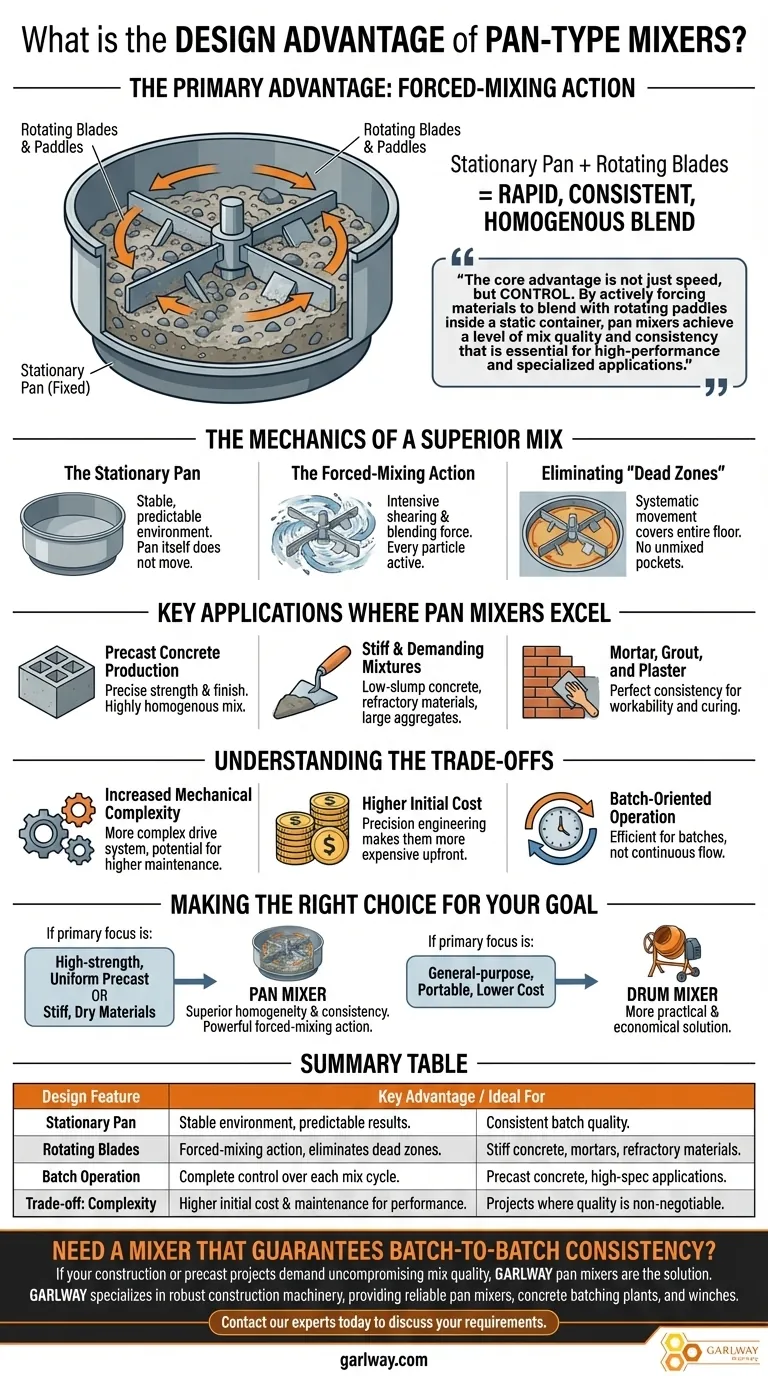
Visual Guide
Related Products
- Portable Concrete Mixer Machine Equipment for Mixing Concrete
- Construction Products Concrete Plant Machine Mixing Concrete Mixer
- Hydraulic Concrete Mixer Machine Cement Mixing Equipment for Mixture Concrete
- Portable Cement Mixer with Lift Concrete Machine
- Harbor Freight JS1500 On Site Concrete Mixing Volumetric Cement Mixer
People Also Ask
- Why is it necessary to use a portable concrete mixer? Gain Total Control & Efficiency
- How much concrete can you pour with a portable mixer? Find the Perfect Fit for Your Project
- What types of projects are portable concrete mixers suitable for? Ideal for DIY & Small-Scale Construction
- How much does a portable concrete mixer hold? A Guide to Choosing the Right Capacity
- What types of portable concrete mixers exist? Find the Perfect Mixer for Your Project