
At its core, a windlass is a mechanical device designed to pull or hoist heavy loads. Its most common and critical application in the modern era is on boats and ships, where it is used to raise and lower the anchor. However, the fundamental principle also applies to other tasks, like raising water from a well or operating canal lock mechanisms.
A windlass provides immense mechanical advantage for managing heavy lines and chains, but its power demands a clear understanding of proper operational procedures to prevent equipment damage and ensure operator safety.
Primary Application: The Anchor Windlass
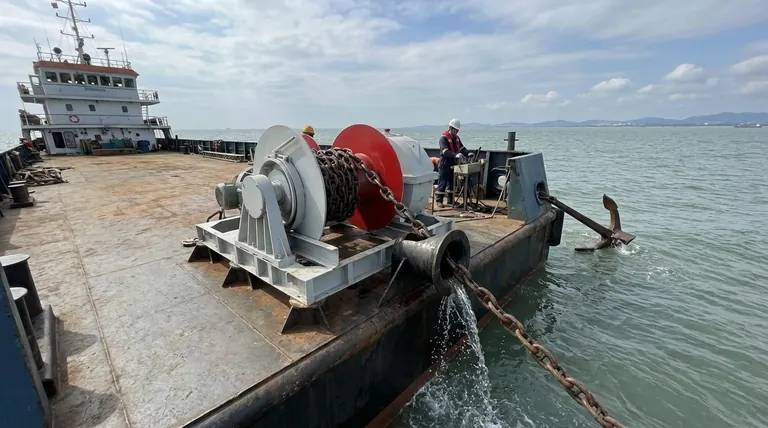
The vast majority of modern windlasses are found on the bow of a boat, where they are an essential piece of equipment for handling ground tackle (the anchor and its chain or rope).
Hoisting the Anchor
The primary function of an anchor windlass is to retrieve the anchor and its heavy rode (the line or chain connecting it to the boat). It uses a powerful motor—either electric or hydraulic—to turn a drum or gypsy, effortlessly pulling in hundreds of feet of chain that would be impossible to manage by hand.
Controlled Anchor Deployment
While some systems rely on gravity for a "free-fall" drop, many windlasses also allow for powered, controlled deployment of the anchor. This gives the operator precise control over the speed and placement of the anchor on the seabed.
Managing Heavy Chain
A windlass isn't just about moving the anchor itself. It manages the significant weight of the chain, ensuring it is brought aboard safely and stowed correctly in the chain locker below deck.
Other Historical and Niche Applications
The simple, effective design of the windlass has led to its use in various non-marine contexts for centuries.
Raising Water from a Well
The classic image of a well with a bucket on a rope uses a simple, hand-cranked windlass. This demonstrates the machine in its most basic form, trading user effort for mechanical advantage.
Operating Canal Locks
On the United Kingdom's inland waterways, the handle used to open and close the lock gates is known as a windlass or "lock key." This tool provides the leverage needed to turn the stiff gate mechanisms.
Understanding the Operational Principles
Using a windlass correctly, especially in a marine environment, is critical for safety and the longevity of the equipment. It is a tool for hoisting, not for pulling the entire vessel.
Use the Engine, Not the Windlass
An anchor windlass is designed to lift the anchor and rode vertically, not to pull the full weight of the boat forward. Always use the boat's engine to slowly motor up to the anchor's position before beginning retrieval.
Break Out the Anchor with Boat Power
If an anchor is firmly stuck on the bottom, do not use the windlass to break it free. This can overload and burn out the motor. Instead, secure the chain with a chain stopper and use the boat's engine and momentum to dislodge the anchor.
Ensure a Stable Power Supply
Electric windlasses draw a significant amount of power. It is standard practice to keep the boat's main engine running during anchor retrieval to ensure the battery is being charged and the windlass receives consistent voltage.
Common Pitfalls and Safety Protocols
The immense power of a windlass requires strict adherence to safety protocols. Misuse can lead to serious injury or equipment failure.
Respect Stored Tension
Never release an item under tension carelessly. The lever action of the windlass creates a powerful pull, and a rope or chain that slips or breaks can recoil with dangerous force.
Prevent Chain Pile-Up
Ensure the anchor chain falls freely down the hawse-hole (the pipe leading to the chain locker) and does not pile up. A jam can damage the windlass or cause the chain to jump off the gypsy.
Secure the Anchor Rode
The bitter end of the anchor chain must always be securely fastened inside the chain locker. Additionally, marking the chain at regular intervals (e.g., with paint or cable ties) allows you to know how much scope you have deployed.
Making the Right Choice for Your Goal
- If your primary focus is marine safety: Always use the engine to move the boat, never the windlass, and secure the chain with a stopper to break a stuck anchor free.
- If your primary focus is operational efficiency: Keep the engine running for stable power and ensure your chain locker is configured to prevent chain from piling up during retrieval.
- If your primary focus is general understanding: Recognize the windlass as a powerful hoisting tool that provides mechanical advantage, whether on a boat or at a well.
Ultimately, a windlass is a purpose-built machine that multiplies force, making it an indispensable tool for managing otherwise impossible loads.
Summary Table:
| Application | Primary Function | Key Equipment/Context |
|---|---|---|
| Anchor Handling | Hoist and deploy anchor and rode | Boats/Ships (Bow-mounted) |
| Water Raising | Lift water from a well | Hand-cranked windlass |
| Canal Lock Operation | Open/close lock gates | Lock key/Windlass handle |
Need a reliable hoisting solution for your construction or marine project?
GARLWAY specializes in heavy-duty machinery, offering robust winches and concrete equipment designed for the demanding needs of construction companies and contractors globally. Our windlass-inspired technology provides the power and control you need to handle heavy loads safely and efficiently.
Contact GARLWAY today to discuss how our solutions can enhance your operational safety and productivity!
Visual Guide
Related Products
- Quick Windlass Portable Winch for Truck and Boat Best Boat Winch
- Warn Winch Windlass Boat Trailer Winch
- Electric Hoist Winch Boat Anchor Windlass for Marine Applications
- Heavy Duty Electric Boat Winch Windlass Anchor
- 12000 lb Electric Boat Trailer Winch with Windlass Anchor Warn
People Also Ask
- What features were incorporated into the upgraded portable winch system? Boost Your Recovery Power & Safety
- What are some uses mentioned for portable winches beyond vehicle recovery? Essential Versatility for Property & Work
- How could the twisting issue with a portable winch be mitigated? Achieve Safe, Centered Pulls with Proper Rigging
- What are the primary uses of a portable winch for a truck? Boost Your Truck's Capability and Self-Reliance
- What is the single rope traction force of the quick winch without a pulley block? 0.5 to 40 Tons Explained


