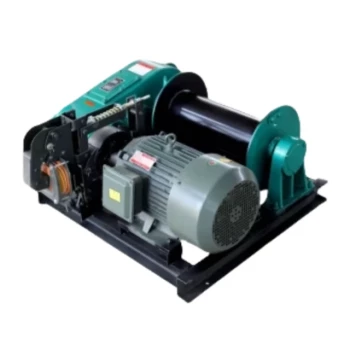
At its core, a portable winch is a compact, self-contained pulling device designed to be carried and set up wherever you need it. Unlike traditional winches permanently bolted to a vehicle, its primary advantage is its mobility, allowing you to bring powerful pulling force to remote locations or use it across multiple vehicles and trailers.
The true value of a portable winch isn't just its pulling capacity, but its fundamental flexibility. It decouples power from a fixed location, giving you the freedom to solve problems from the most advantageous angle.
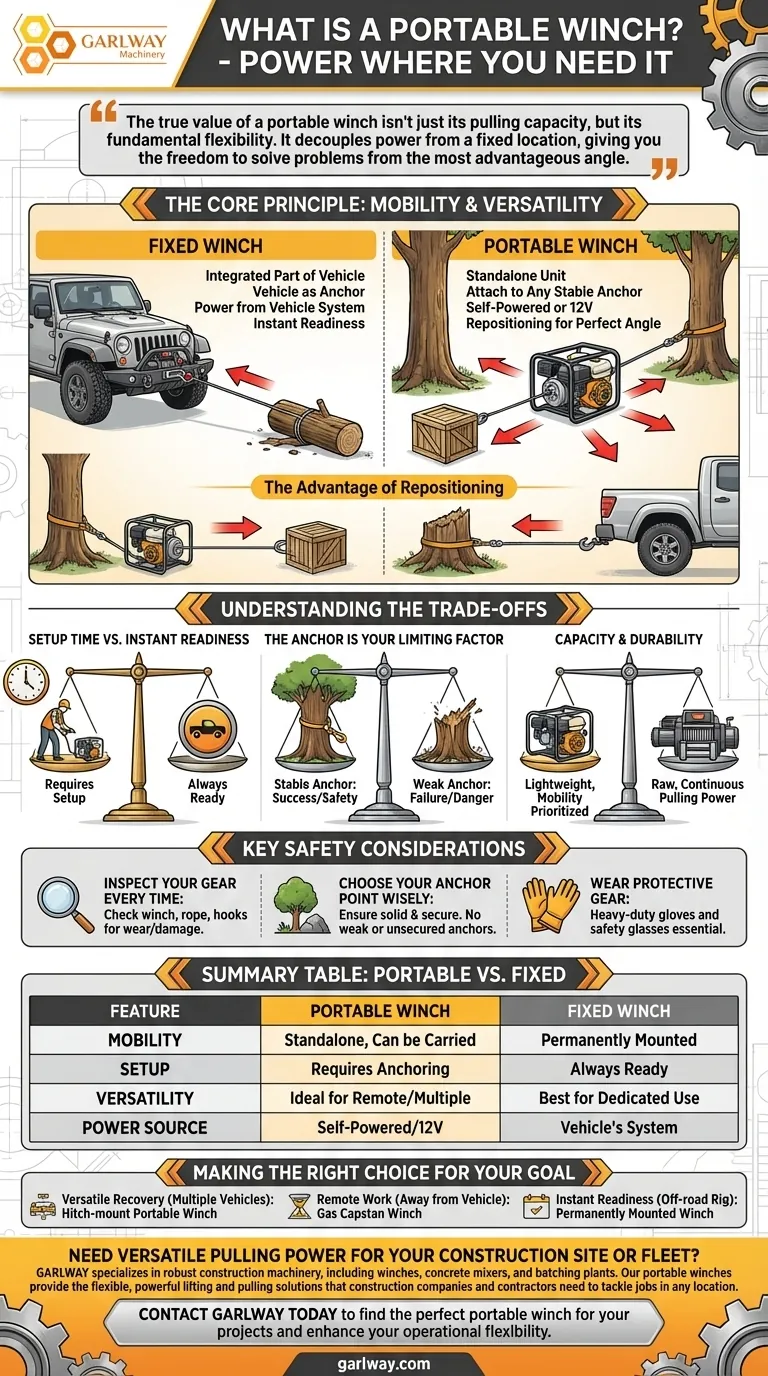
The Core Principle: Power Where You Need It
A portable winch operates on the principle of bringing the tool to the work, not the other way around. This introduces a level of versatility that fixed systems cannot match.
How It Differs from a Fixed Winch
A traditional winch is an integrated part of a vehicle, drawing power directly from its electrical system and relying on the vehicle's mass as an anchor.
A portable winch is a standalone unit. It can be attached to any stable anchor point—a tree, a rock, or a tow hitch—and then used to pull an object toward that point.
The Advantage of Repositioning
The ability to move the winch is its greatest strength. If your vehicle is stuck, you can attach the winch to the front, rear, or even side hitch receiver to achieve the perfect pulling angle.
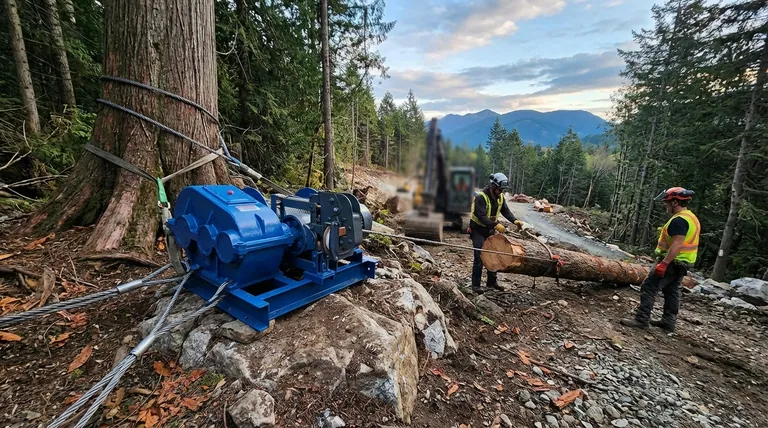
This adaptability is invaluable in forestry or hunting, where you may need to pull a log or game from a location inaccessible to a vehicle.
Common Power Sources
Portable winches are typically self-powered, often using small gasoline engines (like a capstan winch) or connecting to a 12-volt battery via long cables. This self-reliance makes them ideal for jobs far from any vehicle or power grid.
Understanding the Trade-offs
While incredibly versatile, portable winches come with a set of considerations that differ from their fixed counterparts. Understanding these is key to using them effectively and safely.
Setup Time vs. Instant Readiness
A permanently mounted winch is always ready to go. A portable winch requires setup: carrying it to the location, securing it to a suitable anchor, and managing the rope or cable.
The Anchor Is Your Limiting Factor
The winch's rated pulling power is meaningless without an anchor that can withstand that force. The stability of your chosen anchor point—be it a tree, another vehicle, or a ground anchor—is the most critical element for both safety and success.
Capacity and Durability
While many portable winches are powerful, they may not match the extreme pulling capacities of the largest heavy-duty truck winches. Their lightweight design prioritizes mobility, which can be a trade-off against raw, continuous pulling power for the most demanding recoveries.
Key Safety Considerations
The dynamic nature of a portable winch setup demands a strict focus on safety protocols.
Inspect Your Gear Every Time
Before any operation, thoroughly inspect the winch, the rope or cable, and all hooks and shackles for signs of wear, fraying, or damage. A failure under load is extremely dangerous.
Choose Your Anchor Point Wisely
Ensure your anchor is solid and secure. A weak or unstable anchor can break free, turning the winch and rigging into a projectile. Never use a rotted tree or a vehicle that is not properly secured.
Wear Protective Gear
Always wear heavy-duty gloves to protect your hands from the rope or cable. Safety glasses are also essential to protect your eyes from debris or a snapping line.
Making the Right Choice for Your Goal
A portable winch is an exceptional tool when applied to the right task. Your primary goal will determine if it's the best solution for you.
- If your primary focus is versatile recovery for multiple vehicles: A portable winch that mounts to a standard hitch receiver is a cost-effective and highly flexible solution.
- If your primary focus is work in remote areas away from a vehicle: A self-powered gas capstan winch provides unmatched pulling capability in places no other tool can reach.
- If your primary focus is instant readiness for a dedicated off-road rig: A permanently mounted winch may be the more efficient choice for immediate, high-power needs.
Ultimately, choosing a portable winch is about prioritizing adaptable, on-demand power for almost any situation you might encounter.
Summary Table:
| Feature | Portable Winch | Fixed Winch |
|---|---|---|
| Mobility | Standalone, can be carried to any location | Permanently mounted to a single vehicle |
| Setup | Requires anchoring to a stable point | Always ready, integrated with vehicle |
| Versatility | Ideal for remote sites, multiple vehicles | Best for dedicated, immediate use on one vehicle |
| Power Source | Self-powered (gas engine) or 12V battery | Vehicle's electrical system |
Need versatile pulling power for your construction site or fleet?
GARLWAY specializes in robust construction machinery, including winches, concrete mixers, and batching plants. Our portable winches provide the flexible, powerful lifting and pulling solutions that construction companies and contractors need to tackle jobs in any location.
Contact GARLWAY today to find the perfect portable winch for your projects and enhance your operational flexibility.
Visual Guide
Related Products
- Quick Windlass Portable Winch for Truck and Boat Best Boat Winch
- Portable Small Trailer Winch
- Small Electric Winch 120V and 240V for Compact Applications
- Electric Hoist Winch Boat Anchor Windlass for Marine Applications
- Warn Winch Windlass Boat Trailer Winch
People Also Ask
- What features were incorporated into the upgraded portable winch system? Boost Your Recovery Power & Safety
- What are some uses mentioned for portable winches beyond vehicle recovery? Essential Versatility for Property & Work
- How could the twisting issue with a portable winch be mitigated? Achieve Safe, Centered Pulls with Proper Rigging
- What are the primary uses of a portable winch for a truck? Boost Your Truck's Capability and Self-Reliance
- What is the single rope traction force of the quick winch without a pulley block? 0.5 to 40 Tons Explained