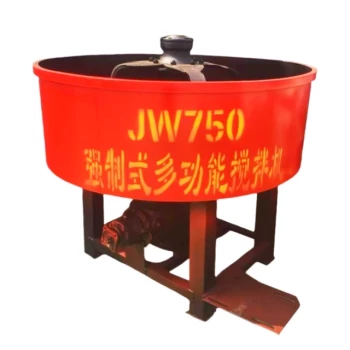
In short, the aggregate batching process is a highly controlled, automated procedure that precisely measures different types of aggregates, such as sand and gravel, according to a specific recipe. After being accurately weighed, these materials are transferred via a hopper or conveyor into a concrete mixer. This critical first step ensures the final concrete mixture has the exact proportions needed for its intended strength and quality.
The core function of aggregate batching is not just about moving materials, but achieving precise measurement. It is the foundational step in concrete production that dictates the consistency and structural integrity of the final product by ensuring the aggregate proportions are exactly as designed.
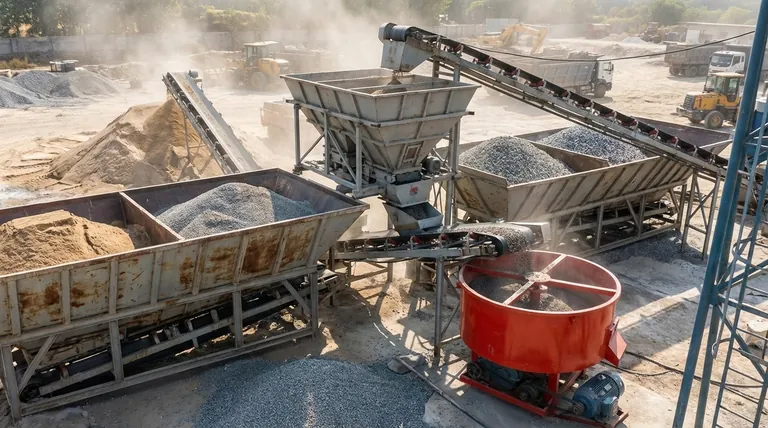
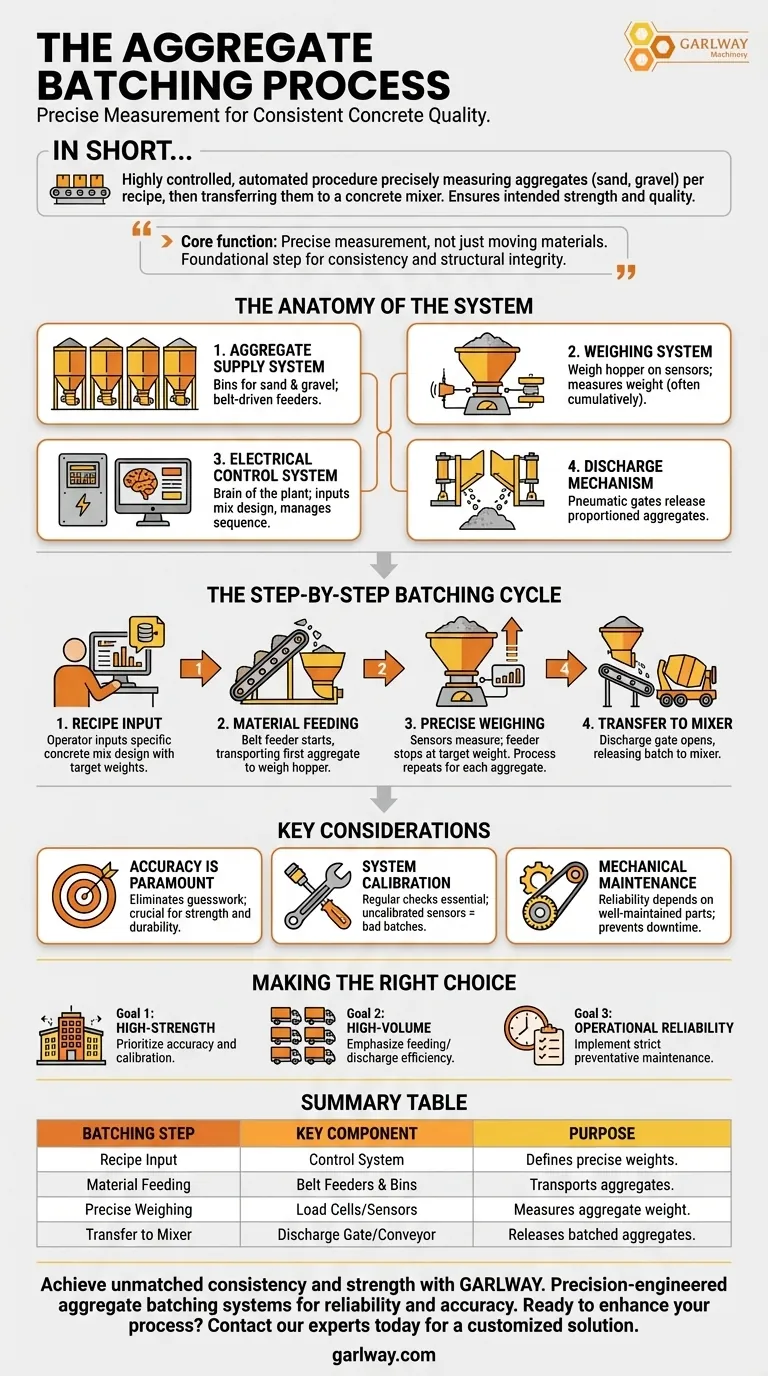
The Anatomy of an Aggregate Batching System
To understand what happens during batching, it’s essential to know the key components involved. The entire system is designed for accuracy and repeatability, managed by a central control unit.
The Aggregate Supply System
This is the starting point of the process. Aggregates are stored in separate large bins, typically sorted by size and type (e.g., fine sand, coarse sand, different gravel sizes). A belt-driven feeding device is positioned under these bins to draw out the required material.
The Weighing System
This is the heart of the operation. The system uses a large weigh hopper suspended on sensors (also known as load cells). As the feeding device delivers aggregate into the hopper, these sensors constantly measure the accumulating weight.
This weighing process is often done cumulatively. The first aggregate is added until it reaches its target weight, then the second is added on top of it until the new total weight is reached, and so on.
The Electrical Control System
This is the brain of the batching plant. An operator inputs the desired concrete mix design (the "stipulations"), which tells the system the exact weight required for each type of aggregate. The control system manages the entire sequence, starting and stopping the feeding belts with precision based on real-time data from the weighing sensors.
The Discharge Mechanism
Once the total weight of all required aggregates is reached in the weigh hopper, the control system activates a discharge gate. This is often operated by powerful pneumatic cylinders that open the bottom of the hopper, releasing the perfectly proportioned aggregates for transfer to the mixer.
The Step-by-Step Batching Cycle
The aggregate batching process follows a clear, automated sequence to ensure every batch is consistent.
Step 1: Recipe Input
An operator selects or inputs the specific concrete mix design into the electrical control system. This program contains the precise target weights for each sand and gravel type needed for the batch.
Step 2: Material Feeding
The control system starts the first belt-driven feeder, which begins transporting the first aggregate from its storage bin into the weigh hopper.
Step 3: Precise Weighing
The sensors under the weigh hopper continuously send weight data back to the control system. The instant the target weight for the first aggregate is met, the system stops the feeder belt. It immediately starts the feeder for the next aggregate, repeating the process until all materials are weighed.
Step 4: Transfer to Mixer
Once the final aggregate is added and the total target weight is confirmed, the batch is complete. The control system then signals the pneumatic cylinders to open the discharge gates of the weigh hopper, releasing the entire batch onto a conveyor belt or directly into the concrete mixer.
Understanding the Key Considerations
While the process is automated, its effectiveness depends on balancing several factors. Understanding these helps ensure consistent, high-quality output.
Accuracy is Paramount
The entire purpose of a batching system is to eliminate guesswork. The accuracy of the weighing sensors is non-negotiable. Even small deviations from the mix design can significantly impact the concrete's strength, workability, and long-term durability.
The Role of System Calibration
The control system's reliance on sensors means that regular calibration is critical. An uncalibrated sensor can consistently produce bad batches, compromising entire construction projects. The system must be checked and adjusted to ensure the weight it reads is the true weight being delivered.
Maintenance of Mechanical Parts
The reliability of the system also depends on its mechanical components. Worn conveyor belts, sticking feeder gates, or slow pneumatic cylinders can disrupt the timing and accuracy of the batching cycle, leading to inconsistencies and costly downtime.
Making the Right Choice for Your Goal
The objective of any batching operation is to achieve consistent, high-quality concrete reliably. How you prioritize your operation depends on your specific goals.
- If your primary focus is high-strength structural concrete: Prioritize the accuracy of your weighing system, ensuring sensors are frequently calibrated and the control system can make micro-adjustments.
- If your primary focus is high-volume production: Emphasize the efficiency of the feeding and discharge mechanisms, ensuring belts and pneumatic systems are well-maintained to minimize cycle time without sacrificing precision.
- If your primary focus is operational reliability: Implement a strict preventative maintenance schedule for all electrical and mechanical components, from the control panel to the discharge gate cylinders.
Ultimately, mastering the aggregate batching process is about transforming raw materials into a predictable, high-performance product through precision and control.
Summary Table:
| Batching Step | Key Component | Purpose |
|---|---|---|
| Recipe Input | Control System | Defines precise weights for each aggregate type. |
| Material Feeding | Belt Feeders & Bins | Transports specific aggregates to the weigh hopper. |
| Precise Weighing | Load Cells / Sensors | Measures aggregate weight to exact mix design targets. |
| Transfer to Mixer | Discharge Gate & Conveyor | Releases the batched aggregates into the concrete mixer. |
Achieve unmatched consistency and strength in your concrete with GARLWAY.
Our precision-engineered aggregate batching systems are designed for construction companies and contractors who demand reliability and accuracy. GARLWAY specializes in robust construction machinery, including concrete batching plants, mixers, and winches, to optimize your production and ensure every batch meets your exact specifications.
Ready to enhance your batching process? Contact our experts today for a customized solution that boosts your efficiency and project quality.
Visual Guide
Related Products
- HZS35 Small Cement Concrete Mixing Batch Plant
- HZS120 Ready Mix Concrete Batching Plant Commercial Mud Cement Mixer
- HZS75 Concrete Batching Plant Cement Mixer Price Concrete Mixer Bunnings Mixing Plant
- HZS180 Ready Mix Concrete Plant for Foundations with Sand and Cement
- Commercial Electric Concrete Mixer Machine HZS 50 Small Batch Plant for Sale
People Also Ask
- Why buy concrete batch plant parts only from the manufacturer? Protect Your Investment and Maximize Uptime
- Why is proper maintenance important for a concrete batch mix plant? Maximize Uptime & Profitability
- What is the advantage of a mobile concrete batching plant? Achieve On-Site Production & Total Control
- What are the advantages and disadvantages of concrete batching plants? Maximize Quality & Efficiency
- What are the two methods of material charging in a concrete mixing station? Single vs. Multiple Charging Explained