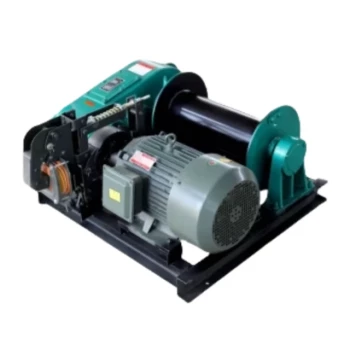
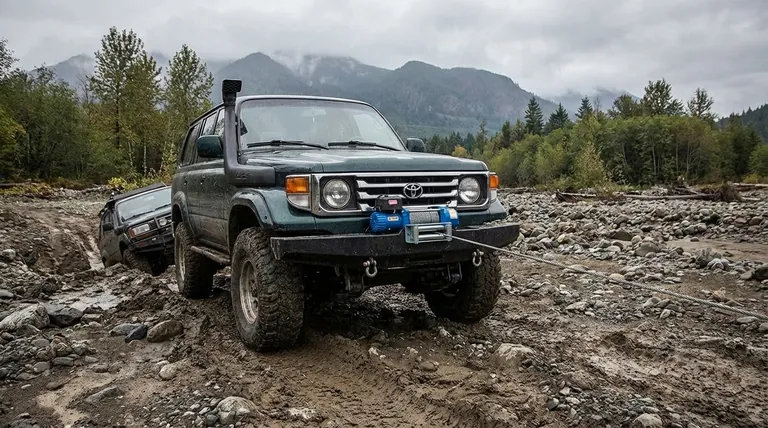
The three main types of vehicle-mounted winches are categorized by their power source: electric, hydraulic, and manual. While different mounting styles exist—such as bumper, grille-guard, and hitch-mounted—the core technology that drives the winch is the most fundamental distinction that determines its performance, cost, and ideal use case.
The choice between an electric, hydraulic, or manual winch is a strategic decision based on your vehicle's capabilities, your intended usage frequency, and your budget. Electric winches offer the best all-around versatility for most users, while hydraulic winches are built for relentless, heavy-duty work.
The Three Core Winch Types (By Power Source)
Understanding how a winch gets its power is the first step in selecting the right tool. Each method comes with a distinct set of advantages and operational requirements.
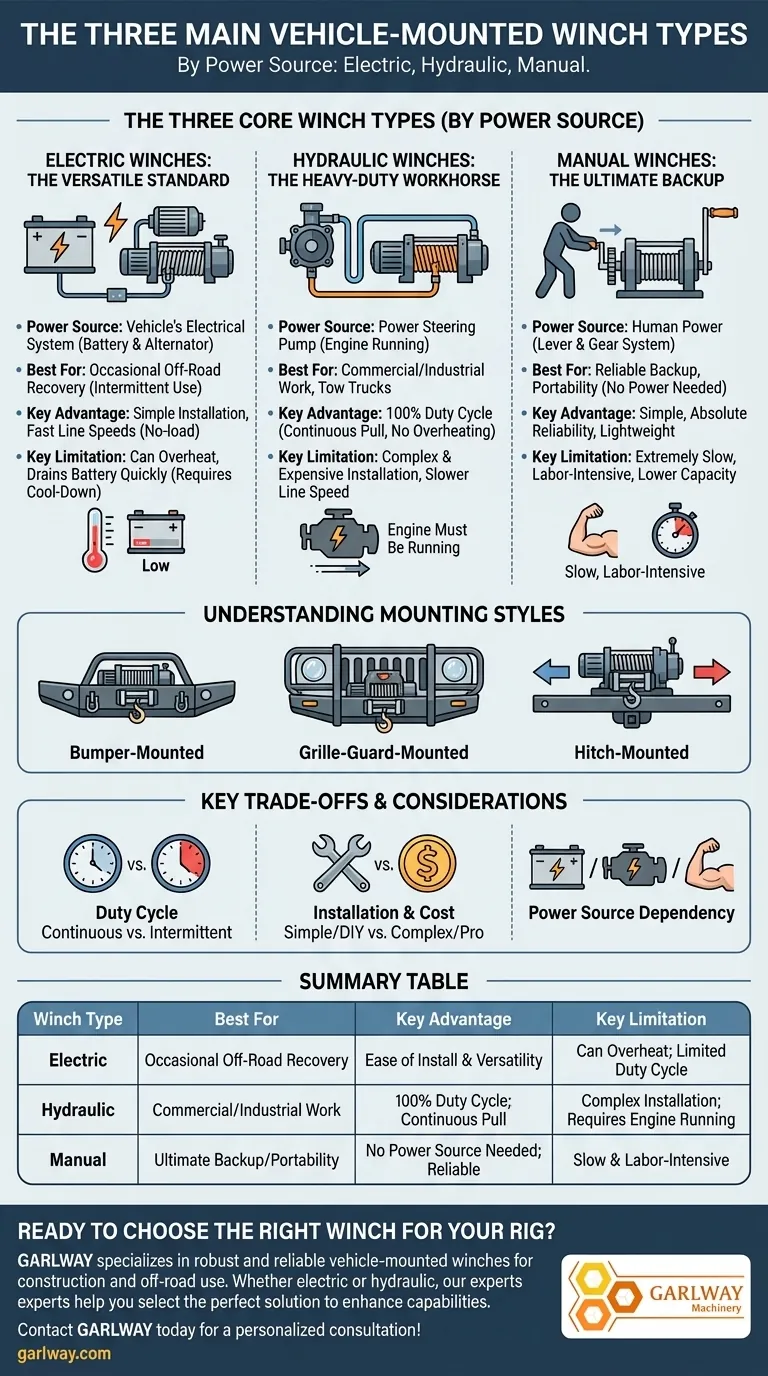
Electric Winches: The Versatile Standard
An electric winch is the most common type found on consumer 4x4s and trucks. It connects directly to your vehicle's electrical system, drawing power from the battery and alternator.
They are popular due to their relatively simple installation, wide availability, and fast line speeds under no-load conditions. This makes them ideal for the intermittent use typical in off-road recovery.
The primary limitation is their reliance on the vehicle's battery. A long, heavy pull can drain a battery quickly and potentially cause the winch motor to overheat, requiring a cool-down period.
Hydraulic Winches: The Heavy-Duty Workhorse
A hydraulic winch taps into the vehicle's power steering pump for its power. This design makes it a favorite for commercial and industrial applications like tow trucks and heavy-duty work rigs.
Its key advantage is a 100% duty cycle. Because it's powered by the vehicle's running engine via the hydraulic system, it can pull continuously for long periods without overheating or fading.
However, hydraulic winches are generally slower, more expensive, and significantly more complex to install than their electric counterparts. The vehicle's engine must be running for the winch to operate.
Manual Winches: The Ultimate Backup
A manual winch, often known as a hand winch or come-along, relies entirely on human power. It uses a lever and a gear system to allow a single person to pull thousands of pounds.
Their value lies in their absolute simplicity and reliability. They require no power source, are relatively lightweight, and can be used in situations where an electric or hydraulic winch might fail.
The obvious downside is that they are extremely slow and labor-intensive. Their pulling capacity is also generally lower, making them best suited as a reliable backup tool rather than a primary recovery device.
Understanding Mounting Styles
Once you've considered the power source, the next decision is how to attach the winch to your vehicle. The mounting style affects convenience, vehicle performance, and aesthetics.
Bumper-Mounted
This is the most common permanent installation for off-road vehicles. The winch is bolted directly to a heavy-duty aftermarket bumper designed to handle the immense forces of a recovery operation.
Grille-Guard-Mounted
Some winch mounts are integrated directly into a grille guard or bull bar. This setup can offer excellent front-end protection while maximizing the vehicle's approach angle for climbing obstacles.
Hitch-Mounted
For maximum flexibility, a winch can be installed on a cradle that slides into a standard receiver hitch. This allows the winch to be used on either the front or rear of the vehicle and can be removed when not needed to save weight.
Key Trade-offs and Considerations
Choosing a winch involves balancing performance characteristics. What makes one type ideal for one person can make it the wrong choice for another.
Duty Cycle: Continuous vs. Intermittent Use
This is the most critical trade-off. If you anticipate long, sustained pulls, like in commercial recovery or industrial settings, a hydraulic winch is superior. For the shorter, less frequent pulls of recreational off-roading, an electric winch is more than sufficient.
Installation Complexity and Cost
An electric winch is a straightforward DIY installation for many, requiring basic wiring to the battery. A hydraulic winch requires tapping into power steering lines, a complex job often best left to a professional, which adds to the overall cost.
Power Source Dependency
Each winch type has a critical dependency. Electric winches need a healthy battery and alternator. Hydraulic winches require the engine to be running. Manual winches depend entirely on your physical stamina.
Making the Right Choice for Your Vehicle
Your specific goal is the best guide for selecting a winch.
- If your primary focus is occasional off-road recovery: An electric winch offers the best combination of power, speed, and ease of installation for recreational use.
- If your primary focus is commercial or industrial work: A hydraulic winch provides the unmatched reliability and continuous duty cycle required for professional applications.
- If your primary focus is a simple, foolproof backup: A high-quality manual winch is an invaluable tool that will work in any condition, independent of your vehicle's status.
Ultimately, choosing the right winch means matching the tool's core strengths to the demands of your specific task.
Summary Table:
| Winch Type | Power Source | Best For | Key Advantage | Key Limitation |
|---|---|---|---|---|
| Electric | Vehicle Battery | Occasional Off-Road Recovery | Ease of Installation & Versatility | Can Overheat; Limited Duty Cycle |
| Hydraulic | Power Steering Pump | Commercial/Industrial Work | 100% Duty Cycle; Continuous Pulling | Complex Installation; Requires Engine Running |
| Manual | Human Power | Ultimate Backup/Portability | No Power Source Needed; Reliable | Slow & Labor-Intensive |
Ready to Choose the Right Winch for Your Rig?
GARLWAY specializes in providing robust and reliable construction machinery, including a range of vehicle-mounted winches perfect for construction companies, contractors, and off-road enthusiasts globally. Whether you need the versatile power of an electric winch for your fleet or the relentless performance of a hydraulic model for heavy-duty work, we have the solution.
Let our experts help you select the perfect winch to enhance your vehicle's capabilities and ensure you're prepared for any job.
Contact GARLWAY today for a personalized consultation!
Visual Guide
Related Products
- Portable Small Trailer Winch
- Quick Windlass Portable Winch for Truck and Boat Best Boat Winch
- Warn Winch Windlass Boat Trailer Winch
- Electric and Hydraulic Winch for Heavy Duty Applications
- Electric Hoist Winch Boat Anchor Windlass for Marine Applications
People Also Ask
- What features were incorporated into the upgraded portable winch system? Boost Your Recovery Power & Safety
- What are some uses mentioned for portable winches beyond vehicle recovery? Essential Versatility for Property & Work
- How could the twisting issue with a portable winch be mitigated? Achieve Safe, Centered Pulls with Proper Rigging
- What is the significance of trailer winches in the boating industry? Ensure Safe and Efficient Boat Recovery
- What should be considered when mounting a winch on a trailer? Ensure a Safe, Aligned Installation