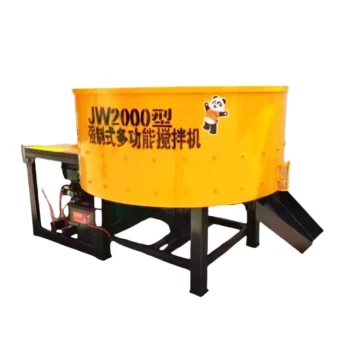
On any construction site, a small cement mixer's primary use is to efficiently combine materials like cement, sand, gravel, and water to create fresh concrete or mortar on demand. They are essential tools for small-to-medium scale jobs where a large ready-mix truck is either impractical or too costly.
The core value of a small cement mixer isn't just mixing; it's providing precise, on-site control over the material supply for jobs that demand flexibility, speed, and access to constrained areas.
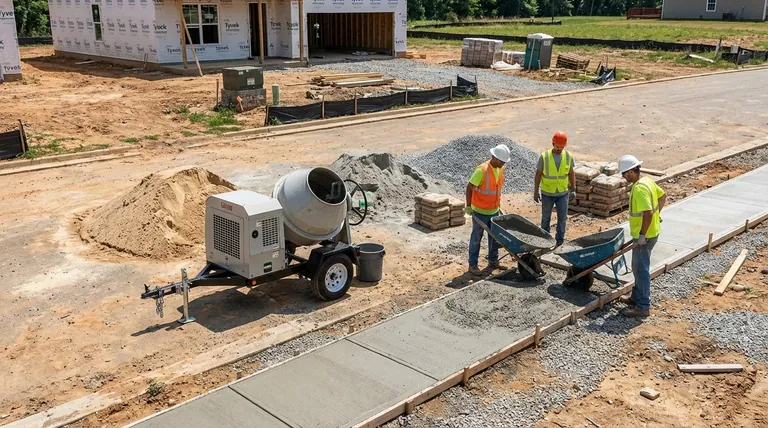
The Core Function: On-Demand Material Production
A portable mixer is fundamentally a small-batch production plant. It allows crews to create exactly what they need, when they need it, directly at the point of use.
Mixing Concrete and Mortar
The most common application is producing fresh concrete for structural and flatwork tasks. It is also indispensable for mixing mortar used in masonry for binding blocks, bricks, and stones.
Combining Aggregates
Beyond standard mixes, these machines are used to combine various dry materials. This includes blending different types of sand, gravel, and lime to create custom aggregate bases or specific mortar compositions.
Key Applications in Construction Projects
The versatility of small mixers makes them suitable for a wide range of common construction and repair tasks that are too large for manual mixing but too small to justify a ready-mix truck.
Foundational and Flatwork
Small mixers are ideal for pouring concrete for sidewalks, small slabs, driveways, and patches. They are also frequently used for creating sturdy bases and footings for posts, decks, and small foundations.
Structural and Masonry Work
For masonry projects, a steady supply of fresh mortar is critical. These mixers ensure masons have a consistent mix for laying block or brick walls and for setting anchor bolts or fence posts securely in the ground.
Accessing Constrained Sites
Their portability is a significant advantage. A small mixer can be moved to hard-to-reach areas like backyards, basements, or remote sections of a larger site that a concrete truck simply cannot access.
Understanding the Trade-offs
While incredibly useful, small mixers are not a universal solution. Understanding their limitations is key to using them effectively.
Volume and Speed Constraints
The most obvious limitation is batch volume. These mixers are inefficient for large-scale pours, such as a full building foundation, where the continuous flow from a ready-mix truck is required.
Labor and Consistency
Using a small mixer is a labor-intensive process that requires manually loading all raw materials for each batch. The final consistency of the concrete also depends entirely on the operator's precision in measuring ingredients, which can vary between batches.
On-Site Material Management
You are responsible for sourcing, delivering, and storing all the raw components—cement bags, sand, and aggregate piles. This requires significant space and logistical planning that is handled for you with a ready-mix delivery.
Making the Right Choice for Your Job
Selecting the right mixing method comes down to the scale and specific needs of your project.
- If your primary focus is repair work or small additions: A small mixer provides the perfect scale for tasks like patching concrete, setting a few fence posts, or pouring a small sidewalk section.
- If your primary focus is accessibility on a difficult site: The portability of a small mixer is its key advantage, allowing you to produce concrete exactly where you need it, regardless of truck access.
- If your primary focus is cost-effectiveness for multiple small pours: A small mixer eliminates the high cost and potential waste associated with minimum order fees from ready-mix concrete suppliers.
Ultimately, a small cement mixer empowers you with direct control over your schedule, material quality, and job site logistics.
Summary Table:
| Primary Use | Ideal For | Key Limitation |
|---|---|---|
| Mixing Concrete & Mortar | Small slabs, sidewalks, patching, masonry work | Limited batch volume; not for large-scale pours |
| Combining Aggregates | Custom sand, gravel, or lime blends | Requires manual material sourcing and storage |
| Accessing Constrained Sites | Backyards, basements, remote areas | Labor-intensive; consistency depends on operator skill |
Need a reliable small cement mixer for your next project? GARLWAY specializes in construction machinery, offering durable and efficient concrete mixers designed for contractors and construction companies. Our equipment ensures precise on-site material control, saving you time and costs on small-to-medium jobs. Contact us today to find the perfect mixer for your needs!
Visual Guide

Related Products
- JDC350 Small Cement Concrete Mortar Mixer
- JZC400 Mobile Small Concrete Mixer Cement Mixer Machine
- Portable Electric Small Cement Mixer Concrete Machine
- HZS35 Small Cement Concrete Mixing Batch Plant
- Mini Cement Mortar Mixer Truck for Construction
People Also Ask
- What are the primary uses of a small cement mixer? Boost Efficiency for Small to Medium Construction Jobs
- What are the physical benefits of using a small cement mixer? Reduce Strain and Prevent Injury
- What are the cost benefits of using a small cement mixer? Save on Labor, Materials & Time
- What makes small cement mixers easy and convenient to use? Boost Productivity on Any Job Site
- What factors should be considered before purchasing a small cement mixer? Find the Perfect Match for Your Project