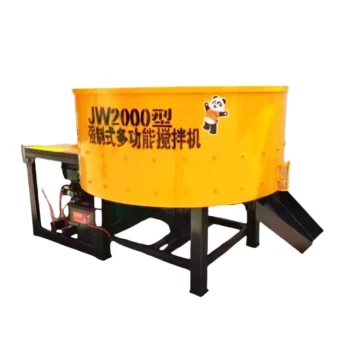
While often confused, the fundamental difference between a cement mixer and a mortar mixer lies in their mixing action, which is purpose-built for vastly different materials. The term "cement mixer" is a common misnomer for a concrete mixer, which uses a rotating drum to tumble coarse gravel. A mortar mixer, by contrast, uses stationary paddles inside a trough to fold and shear a much finer, stickier material.
The critical takeaway is that these machines are not interchangeable. A concrete mixer is designed to handle the abrasive force of stone and gravel, while a mortar mixer is engineered to achieve a specific, workable consistency for materials that lack large aggregate.
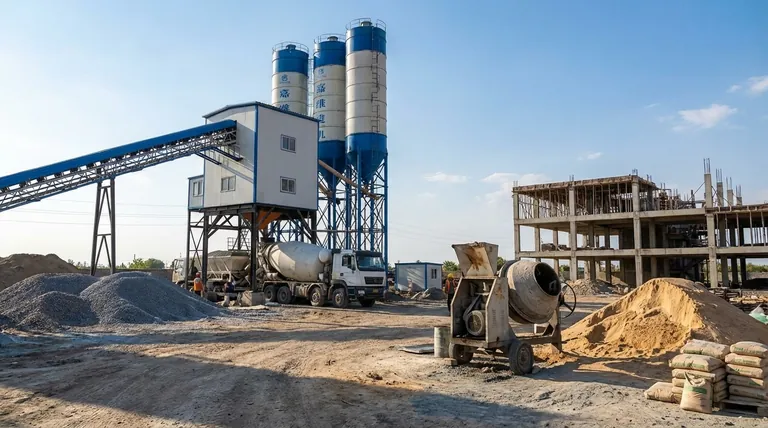
The Core Distinction: Tumble vs. Paddle Mixing
The design of each machine is a direct response to the material it is intended to mix. One is built for brute force and heavy lifting, while the other is built for a more thorough, consistent blend.
The Concrete Mixer (The "Cement Mixer")
A concrete mixer features a large, rotating drum with fixed fins or baffles on the inside.
As the drum spins, it continuously lifts the ingredients—cement, sand, water, and coarse aggregate like gravel—and drops them. This tumbling action is essential for coating the large, heavy stones with cement paste, ensuring a homogenous and strong final product.
Think of it like a large clothes dryer; the tumbling ensures everything is mixed evenly through gravity and motion.
The Mortar Mixer (The "Paddle Mixer")
A mortar mixer, sometimes called a paddle or trough mixer, works on a completely different principle.
It has a stationary drum or trough, and a set of rotating paddles (often with rubber blades) on a central shaft does the mixing. These paddles shear, fold, and knead the material, which consists only of cement, sand, and water.
This action is closer to a commercial stand mixer in a bakery. It is designed to whip air into the mix and create the smooth, sticky, and plastic consistency that mortar requires to bond bricks or blocks effectively.
Why You Can't Swap Them: Material Matters
The mechanical differences exist because concrete and mortar are fundamentally different materials with different structural purposes.
What is Concrete?
Concrete is a composite material made of cement, sand, water, and a coarse aggregate like gravel or crushed stone.
This aggregate is the source of its immense compressive strength, making it ideal for foundations, slabs, and structural supports. However, it also makes the mix heavy, abrasive, and difficult to handle.
What is Mortar?
Mortar is a simpler mixture, containing only cement, a fine aggregate (sand), and water.
The absence of coarse aggregate makes mortar a much less abrasive, stickier material. Its primary purpose is not to bear massive loads but to act as a binding agent or "glue" for masonry units like bricks, blocks, or stone.
Understanding the Risks of Misuse
Using the wrong mixer for your material will lead to a poor-quality final product and will almost certainly damage your equipment.
The Risk of Mixing Concrete in a Mortar Mixer
This is the most common and damaging mistake. The gravel in a concrete mix will quickly destroy a mortar mixer.
The paddles and rubber wipers are not designed to handle the impact and abrasion of heavy stone. They will bend, break, or wear down rapidly, and the strain can easily burn out the mixer's motor.
The Inefficiency of Mixing Mortar in a Concrete Mixer
While less destructive, this approach is highly ineffective. Mortar is too sticky for a tumbling action.
Instead of mixing properly, the mortar will simply cling to the sides of the drum and the fins, creating large, unmixed clumps. The result is an inconsistent, low-quality batch that lacks the workability needed for masonry.
Making the Right Choice for Your Job
Selecting the right machine is critical for both the quality of your project and the longevity of your equipment.
- If you are pouring footings, slabs, or structural columns: You need a concrete mixer to properly combine the coarse aggregate required for high-strength concrete.
- If you are laying bricks, blocks, or stone: You need a mortar mixer to achieve the smooth, consistent, and workable texture required for a strong masonry bond.
Choosing the correct mixer isn't just about convenience; it's fundamental to the structural integrity and professional quality of your work.
Summary Table:
| Feature | Concrete Mixer ("Cement Mixer") | Mortar Mixer (Paddle Mixer) |
|---|---|---|
| Mixing Action | Rotating drum tumbles materials | Stationary paddles shear and fold materials |
| Material Handled | Concrete (cement, sand, water, GRAVEL) | Mortar (cement, sand, water) |
| Primary Use | Foundations, slabs, structural work | Laying bricks, blocks, stone (masonry) |
| Risk of Misuse | Inefficient for mortar; creates clumps | Gravel in concrete will damage paddles/motor |
Ensure Professional Results with the Right Equipment
Don't let the wrong mixer compromise your project's integrity or damage your equipment. GARLWAY specializes in providing durable and efficient construction machinery for contractors and construction companies worldwide.
We offer a range of reliable concrete mixers for heavy-duty structural work and mortar mixers for precise masonry applications.
Contact us today to find the perfect mixer for your specific needs and ensure a strong, professional finish on every job.
Get a Free Consultation & Quote
Visual Guide

Related Products
- JDC350 Small Cement Concrete Mortar Mixer
- HZS25 Best Cement Mixer for Quick Mix Concrete at Bunnings
- Mini Cement Mortar Mixer Truck for Construction
- Commercial Construction Mixer Machine for Soil Cement Mixing Concrete
- JZC500 Large Cement Mixer Machine Price for Concrete Mix
People Also Ask
- What are the primary uses of a small cement mixer? Boost Efficiency for Small to Medium Construction Jobs
- What are the physical benefits of using a small cement mixer? Reduce Strain and Prevent Injury
- What are the cost benefits of using a small cement mixer? Save on Labor, Materials & Time
- What makes small cement mixers easy and convenient to use? Boost Productivity on Any Job Site
- What factors should be considered before purchasing a small cement mixer? Find the Perfect Match for Your Project