
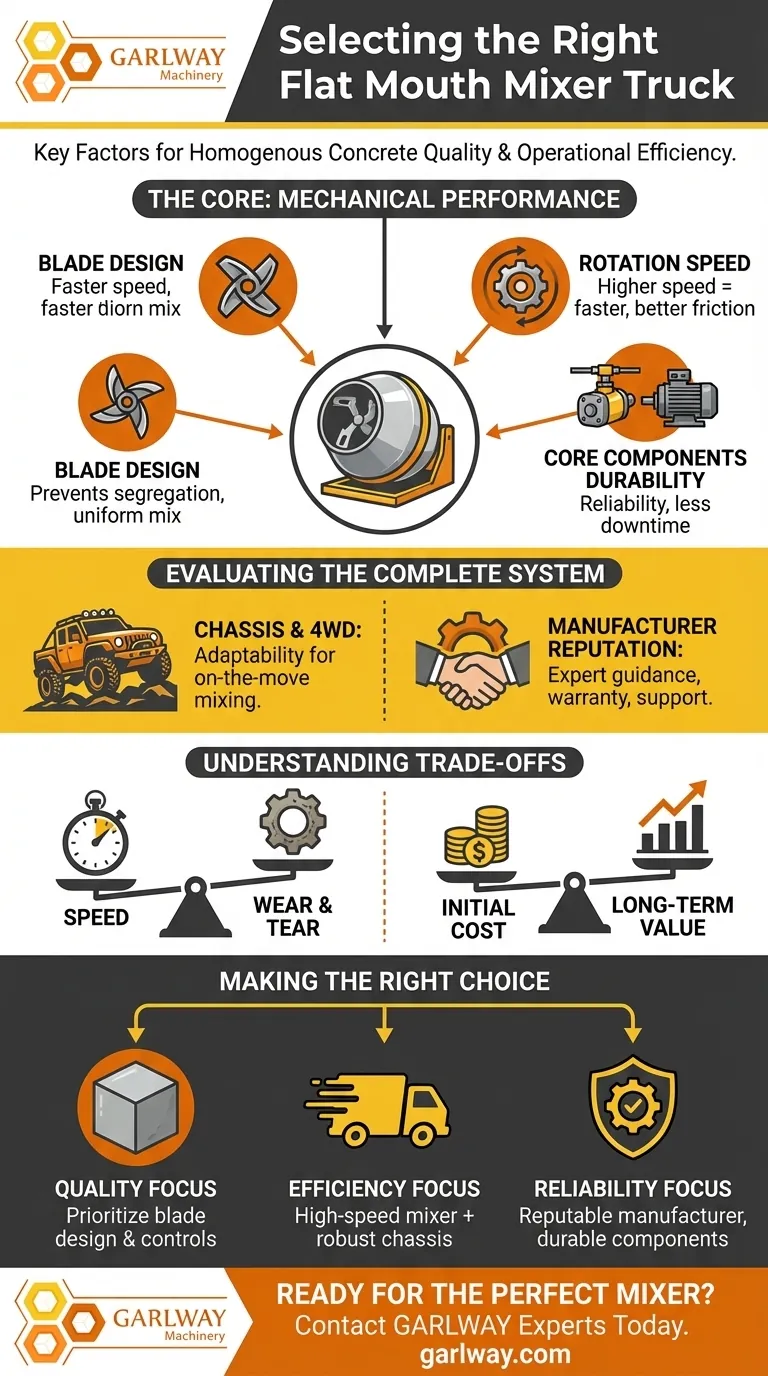
In short, the key factors in selecting a mixer for a flat mouth mixer truck are its mechanical performance and overall build quality. This comes down to three primary elements: a high rotation speed, well-designed mixing blades, and the durability of the core components that drive the system.
The goal is not simply to buy a mixer, but to secure a system that guarantees uniform concrete quality efficiently and reliably. Your selection should prioritize the mechanical elements that directly impact the mix—blade design and rotation speed—backed by a robust chassis and a reputable manufacturer.
The Core of the Mixer: Mechanical Performance
The effectiveness of a flat mouth mixer truck is determined by its ability to produce a homogenous concrete mix consistently. This depends entirely on the design and power of the mixing unit itself.
The Critical Role of Blade Design
The arrangement and shape of the mixing blades are paramount. Well-designed blades ensure that all raw materials—cement, aggregate, and water—are thoroughly combined without segregation.
Poor blade design can create "dead zones" within the mixer, leading to an uneven mix and compromising the structural integrity of the final concrete.
The Impact of Rotation Speed
A higher mixing speed, within safe operational limits, is generally better. Increased speed enhances the friction and rolling action of materials inside the drum.
This acceleration leads to a more uniform mix in a shorter amount of time, directly boosting the efficiency of your construction work.
The Importance of Mixing Time
The ideal mixing time is a balance. Insufficient time results in an uneven mix, while excessive time wastes energy and causes unnecessary wear on the equipment.
A high-quality mixer with efficient speed and blade design allows you to achieve a uniform mix in the shortest possible time, optimizing both quality and operational costs.
Evaluating the Complete System
The disc-type mixer is the heart of the machine, but its performance is supported by the entire truck system. A holistic evaluation is necessary for a wise investment.
Chassis and Terrain Adaptability
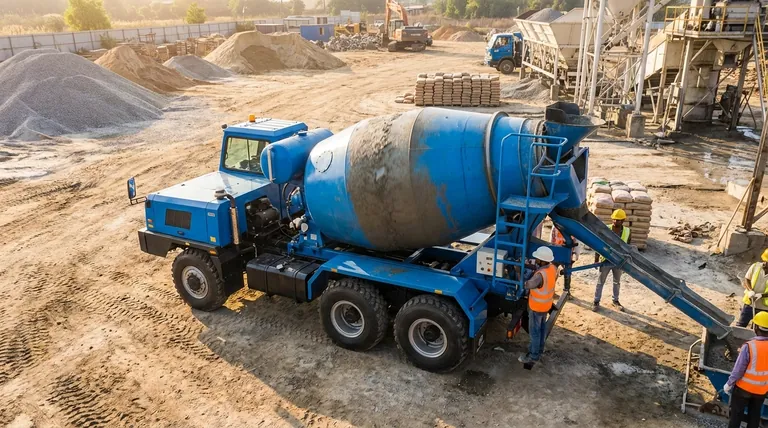
The flat mouth mixer truck's primary advantage is its ability to mix while moving, often on difficult terrain. The four-wheel drive chassis is a non-negotiable component.
Ensure the chassis and tires are suited for your typical work environment, whether it's rural road construction or navigating tight building sites.
Durability of Core Components
Look beyond the mixer itself to the components that power it. This includes the hydraulic motor, reducer, and radiator.
Failure in any of these supporting parts will bring your entire operation to a halt. High-quality, durable components are essential for reliability and minimizing downtime.
The Manufacturer's Reputation
Choosing a reliable manufacturer is a critical factor. An established manufacturer can provide expert guidance on the right model for your project size.
Furthermore, they offer competitive pricing, reliable warranties, and considerate after-sales service, ensuring the long-term value and usability of your investment.
Understanding the Trade-offs
Every equipment decision involves balancing competing factors. Being aware of these trade-offs will help you avoid common pitfalls.
Speed vs. Wear and Tear
While high speed is beneficial for mixing efficiency, running the equipment at its absolute maximum constantly can accelerate wear on the motor, reducer, and blades.
The ideal mixer operates efficiently well within its design limits, not at the edge of them.
Initial Cost vs. Long-Term Value
A lower upfront price is often tempting, but it can signal inferior components in the chassis, hydraulic system, or mixer itself.
These initial savings are often lost to higher maintenance costs, unexpected downtime, and a shorter operational lifespan. Focus on the total cost of ownership, not just the purchase price.
Making the Right Choice for Your Project
Your final decision should be aligned with the specific demands of your work. Use your primary goal as a guide to prioritize the most important factors.
- If your primary focus is maximum concrete quality: Prioritize a mixer with a proven, well-engineered blade design and precise controls over speed and time.
- If your primary focus is operational efficiency: Look for a high-speed mixer paired with a robust chassis and powertrain to maximize output and minimize transit and mixing time.
- If your primary focus is long-term reliability: Select a truck from a reputable manufacturer known for using high-quality, durable components and offering excellent parts and service support.
Choosing the right mixer is an investment in the quality and efficiency of every project you undertake.
Summary Table:
| Key Selection Factor | Why It Matters |
|---|---|
| Blade Design | Prevents concrete segregation and ensures a uniform mix. |
| Rotation Speed | Increases mixing efficiency for faster, more homogenous results. |
| Chassis & 4WD | Provides terrain adaptability for mixing on the move. |
| Core Components | Durable hydraulic motor and reducer ensure reliability and reduce downtime. |
| Manufacturer Reputation | Guarantees quality, expert support, and long-term value. |
Ready to find the perfect flat mouth mixer truck for your projects?
At GARLWAY, we specialize in high-performance construction machinery. Our expertise in winches, concrete mixers, and batching plants ensures we can provide a solution tailored to your needs—whether you're a contractor focused on quality, efficiency, or long-term reliability.
Contact our experts today to discuss your requirements and get a mixer truck that guarantees superior concrete quality and maximizes your operational efficiency.
Visual Guide
Related Products
- Mini Cement Mortar Mixer Truck for Construction
- Ready Mixer Machine for Construction Ready Mix Machinery
- JW1000 Mobile Cement Mixer Concrete Mixer Truck and Batching Plant
- Portable Ready Mix Concrete Mixer Equipment
- Portable Concrete Mixer Machine Equipment for Mixing Concrete
People Also Ask
- Why might mixing mortar in a cement truck be problematic? Avoid Costly Mixing Mistakes
- What are the main types of construction cement mixers available? Choose the Right Mixer for Your Project
- What are the two primary methods for filling a cement mixer truck? Central vs. Transit Mix Explained
- What are the common uses of cement mixer trucks? Boosting Construction Efficiency and Quality
- What are the primary methods to fill a cement mixer truck? Central Mix vs. Transit Mix Explained


