Before filling a concrete mixer truck, an operator must perform three critical steps: thoroughly clean the drum of any old residue, conduct a pre-trip inspection including lubrication of moving parts and checking fluids, and position the truck on firm, level ground. These actions are non-negotiable for ensuring safety, maintaining the quality of the new mix, and protecting the equipment from damage.
The initial preparation of a concrete mixer is not merely a preliminary task; it is the foundation for a safe and successful pour. Neglecting these steps compromises the integrity of the concrete, risks catastrophic equipment failure, and endangers personnel.
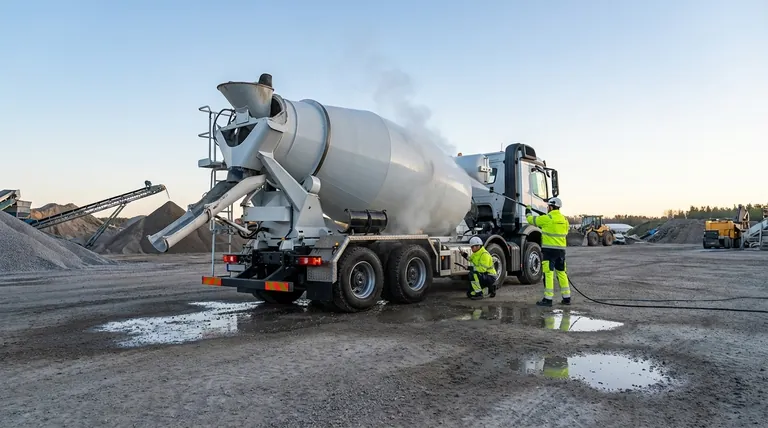
The Foundation: Why Pre-Fill Checks are Critical
Proper preparation is a system of checks that guarantees the machinery is ready for the immense stress of loading and mixing thousands of pounds of material. Each step directly impacts the outcome of the job.
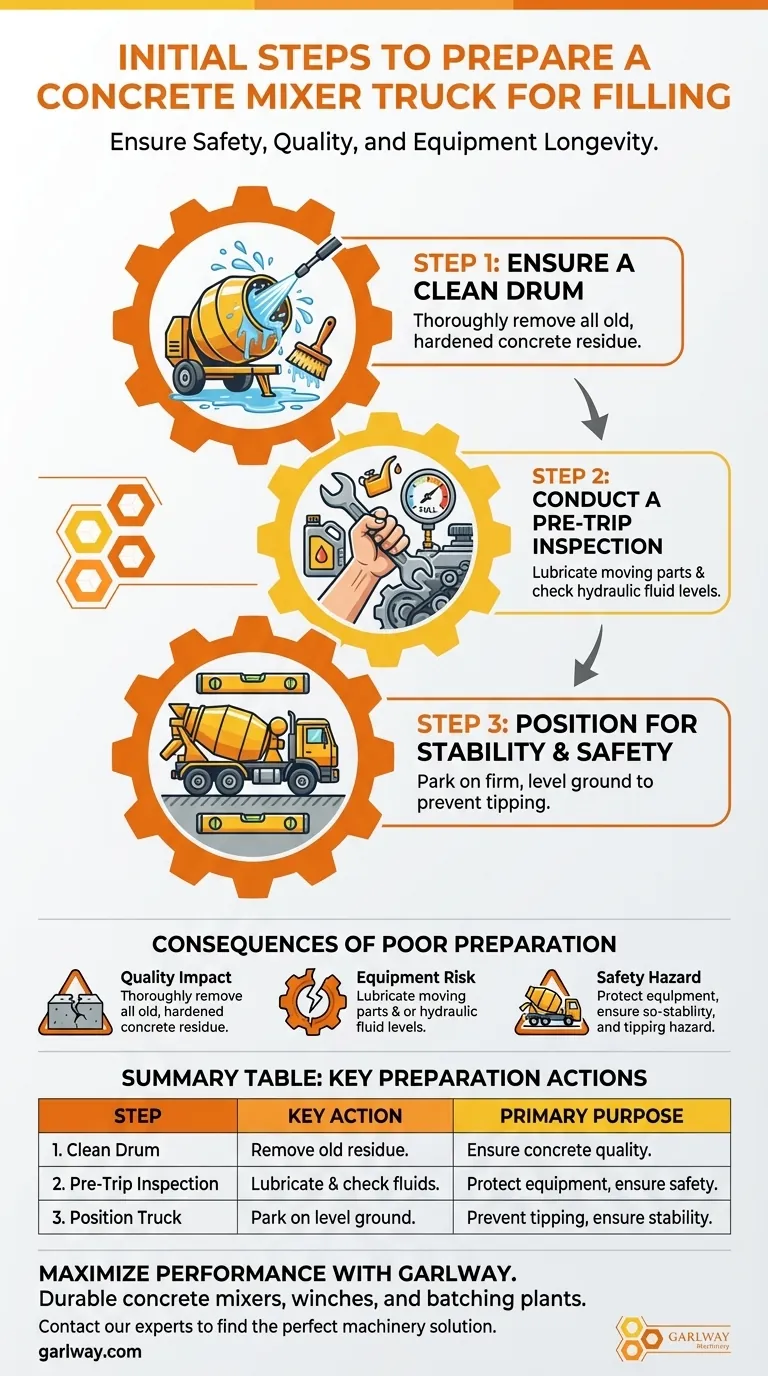
Step 1: Ensure a Clean Drum
The first and most important step is to guarantee the mixing drum is completely free of hardened concrete from previous loads.
Old residue can break off and contaminate the new batch, altering the carefully calculated mix design and compromising its structural integrity. A clean surface also ensures the new materials mix evenly from the start.
Step 2: Conduct a Pre-Trip Inspection
Before every trip, a thorough mechanical check is essential for safe operation.
This inspection must include lubricating all moving parts to ensure the drum rotates smoothly under load. It also involves checking critical systems like the hydraulic oil levels, which power the drum's rotation and discharge chute.
Step 3: Position for Stability and Safety
A concrete mixer truck is extremely top-heavy, and its center of gravity shifts dramatically during loading.
It is absolutely essential to position the truck on stable, level ground before filling begins. Loading on an incline or soft surface creates a significant risk of the truck tipping over, which can be a catastrophic failure.
Understanding the Consequences of Poor Preparation
Skipping preparation steps introduces immediate and long-term risks. Understanding these consequences reinforces why the pre-fill checklist is so important.
Impact on Concrete Quality
If water is added first to a dirty drum—a common technique to reduce dust and improve the mix—it will immediately loosen old material, contaminating the new batch before the cement and aggregate are even loaded.
Risk to Equipment Longevity
Failing to lubricate moving parts or operate with low hydraulic fluid puts immense strain on the machinery, leading to premature wear and costly breakdowns.
Likewise, allowing concrete to harden inside the drum permanently reduces its carrying capacity and can create imbalances that damage the rotation mechanism over time.
The Overriding Factor of Safety
The single greatest risk is instability. The dynamic forces involved in loading aggregate, sand, and cement are powerful. A truck that is not perfectly positioned is a severe tipping hazard, endangering the operator and anyone else on the site.
A Checklist for Operational Excellence
Use these points to guide your preparation based on your primary objective for any given job.
- If your primary focus is safety: Prioritize positioning the truck on firm, level ground and conducting a full pre-trip inspection before every fill.
- If your primary focus is concrete quality: The most critical step is ensuring the drum is meticulously cleaned of all residue from the previous pour.
- If your primary focus is equipment longevity: Make regular lubrication and hydraulic fluid checks a non-negotiable part of your daily routine.
Consistently following this preparation protocol is the mark of a true professional, ensuring every pour is safe, efficient, and up to standard.
Summary Table:
| Step | Key Action | Primary Purpose |
|---|---|---|
| 1. Clean the Drum | Remove all old, hardened concrete residue. | Ensure concrete quality and mix integrity. |
| 2. Pre-Trip Inspection | Lubricate moving parts; check hydraulic fluid levels. | Protect equipment and ensure operational safety. |
| 3. Position the Truck | Park on firm, stable, and level ground. | Prevent tipping hazards and ensure stability during filling. |
Maximize the performance and lifespan of your equipment with GARLWAY. Our durable concrete mixers, winches, and batching plants are engineered for the rigorous demands of construction. Ensure every project starts on a solid foundation. Contact our experts today to find the perfect machinery solution for your company's needs.
Visual Guide
Related Products
- Ready Mixer Machine for Construction Ready Mix Machinery
- JW1000 Mobile Cement Mixer Concrete Mixer Truck and Batching Plant
- Mini Cement Mortar Mixer Truck for Construction
- Harbor Freight JS1500 On Site Concrete Mixing Volumetric Cement Mixer
- HZS90 Large Multiquip Concrete Mixers for Construction
People Also Ask
- What are the purposes of low-speed agitation in truck mixers? Preserve Concrete Quality During Transit
- How is ready-mixed concrete transported from a commercial concrete batching plant? Ensuring Quality & Timely Delivery
- What are the main ingredients mixed in a concrete mixer truck? Master the Formula for Strong Concrete
- In what ways does a mobile concrete mixer improve quality control and consistency? Achieve Superior On-Site Concrete Quality
- What types of construction projects typically use concrete mixer trucks? From Highways to Home Foundations