To be clear, the daily maintenance for a screw conveyor is fundamentally different from that of a belt conveyor. Screw conveyors use a rotating auger, not a belt, so tasks involve checking the drive system, bearings, and trough for blockages, not inspecting belts or rollers.
The core principle of daily screw conveyor maintenance is proactive prevention. Your daily checks are not just about finding what's broken, but about spotting the early signs of material buildup and mechanical stress before they cause a costly plant shutdown.
Why Screw Conveyors Demand Specific Attention
A screw conveyor in a concrete plant operates in one of the harshest industrial environments. It moves highly abrasive and often moisture-sensitive materials like cement and fly ash.
The Challenge of Abrasive Materials
Cement and aggregates are extremely abrasive. This constant friction causes accelerated wear on the screw flights (the helical blades) and the trough they sit in.
The Problem with Dust and Moisture
Fine cement dust is pervasive. It can easily penetrate unsealed bearings and gearbox breathers, contaminating lubricants and causing rapid failure. If moisture is present, the material can harden inside the trough, creating a complete blockage.
A Practical Daily Maintenance Checklist
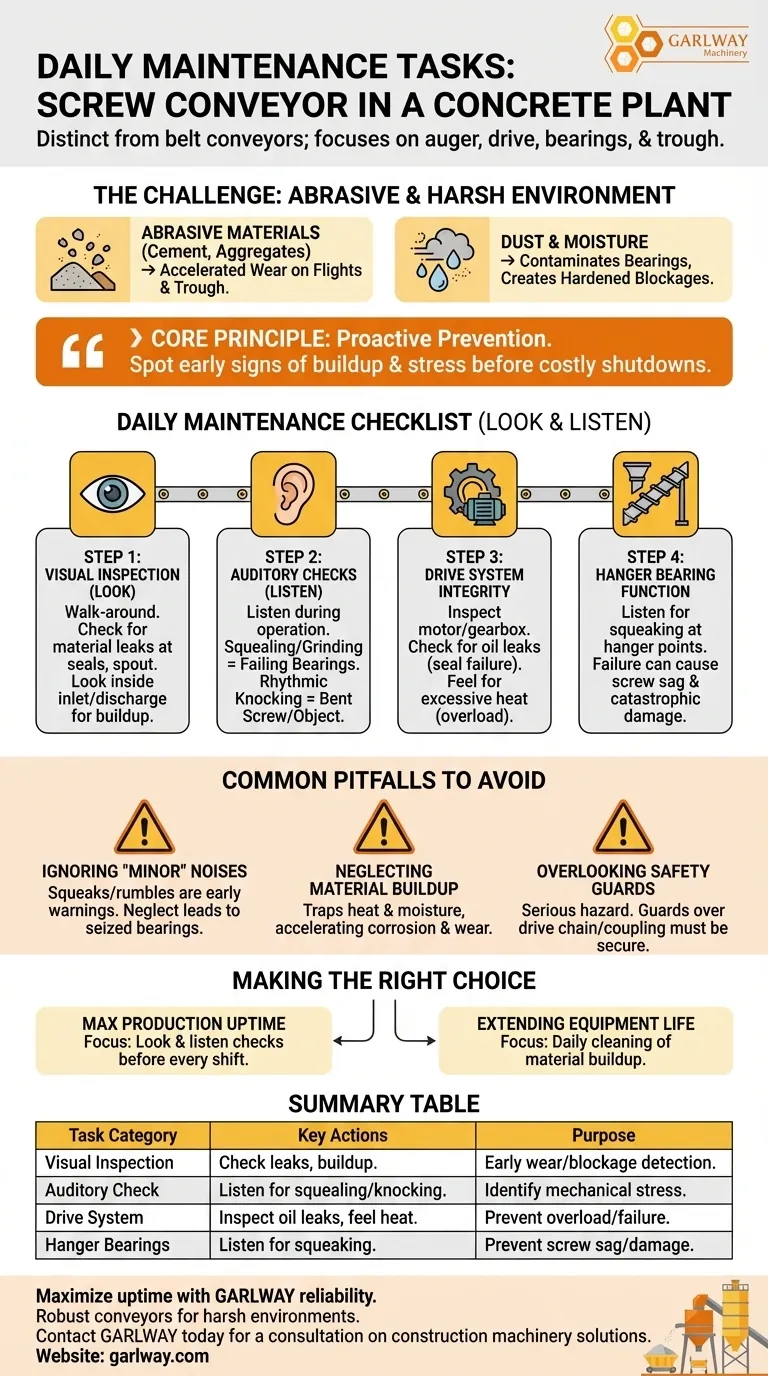
Effective daily maintenance is about using your senses—looking and listening for signs of trouble. This routine should take only a few minutes but can save hours of downtime.
Visual Inspection (Look)
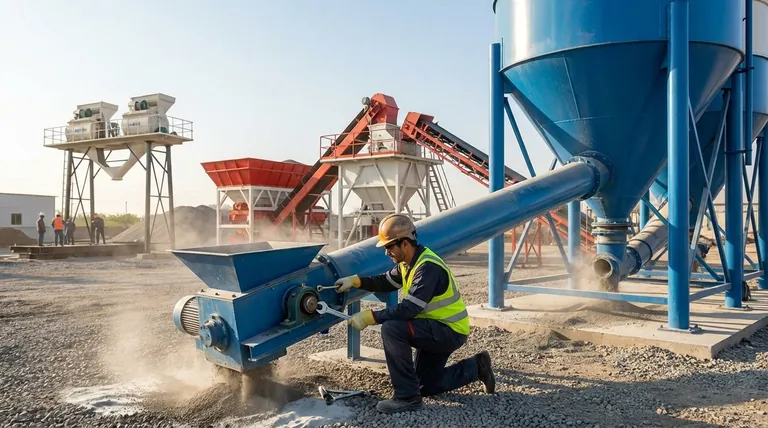
Begin with a walk-around inspection with the equipment locked out. Check for any material leaking from the trough, cover seals, or discharge spout, as this can indicate wear or loose connections. Look inside the inlet and discharge points for any signs of material buildup or blockages.
Auditory Checks (Listen)
During operation, listen carefully for any unusual noises. Squealing or grinding sounds often point to failing bearings, while rhythmic knocking can indicate a bent screw or foreign object in the trough.
Drive System Integrity
Visually inspect the motor and gearbox. Look for any oil leaks, which are a clear sign of a failing seal. Briefly and safely place your hand near the motor and gearbox to feel for excessive heat, which suggests overloading or lubrication problems.
Hanger Bearing Function
Hanger bearings support the screw in the middle of long runs. Listen for squeaking from these specific points during operation. A failing hanger bearing can cause the screw to sag, leading to catastrophic damage to both the screw and the trough.
Common Pitfalls to Avoid
Simply going through the motions is not enough. Understanding the common failure points is critical for effective maintenance.
Ignoring "Minor" Noises
A new squeak or a low rumble is the earliest warning of a developing failure. What sounds minor today can become a seized bearing or a destroyed gearbox tomorrow, stopping production instantly.
Neglecting Material Buildup
Do not allow cement or other materials to build up on the outside of the conveyor, especially around the bearings and drive system. This buildup can trap heat and moisture, accelerating wear and corrosion.
Overlooking Safety Guards
All guards, especially over the drive chain or coupling, must be securely in place. The rotating screw presents a significant safety hazard, and missing guards are a serious violation of safety protocol.
Making the Right Choice for Your Goal
Your maintenance intensity should match your operational demands.
- If your primary focus is maximum production uptime: Perform the look-and-listen checks before every shift, as a five-minute check is the best insurance against an hours-long shutdown.
- If your primary focus is extending equipment life: Pay special attention to cleaning material buildup daily, as this prevents the corrosion and heat-trapping that degrades components over time.
Ultimately, consistent daily observation is the most powerful tool you have for ensuring your screw conveyor's reliability.
Summary Table:
| Task Category | Key Actions | Purpose |
|---|---|---|
| Visual Inspection | Check for material leaks, buildup at inlet/discharge. | Early detection of wear and blockages. |
| Auditory Check | Listen for squealing (bearings) or knocking (bent screw). | Identify mechanical stress before failure. |
| Drive System | Inspect for oil leaks, feel for excessive heat. | Prevent gearbox/motor overload and failure. |
| Hanger Bearings | Listen for squeaking during operation. | Prevent screw sag and catastrophic damage. |
Maximize your concrete plant's uptime with GARLWAY reliability. Our robust screw conveyors are engineered for the harsh, abrasive environment of moving cement and aggregates. Let our experts help you select or maintain the right equipment to minimize downtime and extend service life.
Contact GARLWAY today for a consultation on construction machinery solutions, including winches, concrete mixers, and batching plants, tailored for contractors and construction companies worldwide.
Visual Guide
Related Products
- Shaft Mixer Machine for Cement and Regular Concrete Mixing
- HZS90 Large Multiquip Concrete Mixers for Construction
- HZS120 Ready Mix Concrete Batching Plant Commercial Mud Cement Mixer
- HZS180 Ready Mix Concrete Plant for Foundations with Sand and Cement
- Construction Products Concrete Plant Machine Mixing Concrete Mixer
People Also Ask
- How do cement mixers enhance safety on construction sites? Reduce Strain, Hazards, and Accidents
- What are the key benefits of using a cement mixer on a construction site? Boost Efficiency, Quality & Safety
- What are the efficiency advantages of cement mixers? Boost Project Speed, Quality, and ROI
- How does cleaning a cement mixer after use benefit its performance? Maximize Lifespan and Mix Quality
- Can a cement mixer be used for mixing mortar? Understanding the Risks and Best Practices